The Polish Lowland Sheepdog: Poland‘s Best Kept Canine Secret

As a lifelong dog lover and veterinarian, I‘m always on the lookout for unique, intelligent, and hardworking breeds that deserve more attention. One such hidden gem is the Polish Lowland Sheepdog, also known as the Polski Owczarek Nizinny (PON for short). With their shaggy coats, lively personalities, and rich history, PONs have captured my heart and the hearts of a growing number of lucky owners around the world. If you‘re looking for a devoted, active, and clever canine companion, the PON may just be your perfect match. Let‘s take a closer look at this remarkable herding breed.
A Resilient Breed with Ancient Roots
The Polish Lowland Sheepdog is a true survivor, with origins dating back to at least the 13th century. According to breed historians, PONs likely descended from Tibetan Terrier-type dogs brought to Eastern Europe by Tatar invaders. These dogs interbred with local Polish herding dogs and possibly other ancient breeds like the Puli from Hungary, gradually developing into the distinctive PON we know today.
For centuries, PONs served as invaluable working dogs on Polish farms, herding and guarding livestock including sheep, cattle, goats, and poultry. Their thick, weatherproof coats and fearless attitudes made them well-suited to the variable climate and working conditions of the Polish lowlands. PONs also earned their keep as watchdogs, ratters, and loyal family companions.
Sadly, the PON breed nearly went extinct after World Wars I and II ravaged the Polish countryside. Thanks to the dedication of Polish fanciers like Dr. Danuta Hryniewicz and her dog Smok (born in 1923), the PON slowly recovered in the mid-20th century. The Polish Kennel Club officially recognized the PON in 1959. However, these resilient dogs remain relatively rare outside of Poland to this day.
Some key dates in PON history:
- 13th century: Tibetan Terrier-type dogs brought to Poland, eventually developing into PONs
- 1514: Polish merchant trading grain for Scottish sheep brings 3 PONs to Scotland, thought to be early ancestors of Bearded Collies
- Early 1900s: PONs nearly extinct after World Wars I and II
- 1923: Smok born, becomes important sire in re-establishing PON breed
- 1959: Polish Kennel Club recognizes PON breed standard
- 2001: American Kennel Club accepts PON into Herding Group
Physical Characteristics: Not Just Another Pretty Face
At first glance, the Polish Lowland Sheepdog looks like an adorable mop on four legs. But beneath that tousled, shaggy exterior lies a robust working dog built for herding and guarding. Here‘s a detailed look at the PON‘s physical traits:
-
Size: PONs are medium-sized dogs, standing 17-20 inches tall at the shoulder and weighing between 30-50 pounds. Males are typically larger than females.
-
Head: PONs have a moderate, proportional head with a slightly rounded, broad forehead. The muzzle is slightly shorter than the skull, tapering towards the nose.
-
Eyes: Almond-shaped eyes are medium-sized, typically brown or hazel, with an alert, intelligent expression. PONs often have a characteristic "worried" look due to their pronounced brows.
-
Ears: Heart-shaped, drop ears are set moderately high on the head, with the tips reaching the corners of the eyes when pulled forward.
-
Body: PONs have a compact, muscular body that is slightly longer than tall (about 10%). The chest is deep and moderately broad, with well-sprung ribs. The topline is level, with a slight arch over the loin.
-
Legs & Feet: Strong, straight legs have moderate bone and oval-shaped, well-arched feet with thick pads.
-
Tail: Traditionally docked to half-length or naturally bobbed, the tail is set low and carried in a curve or sickle shape when alert.
-
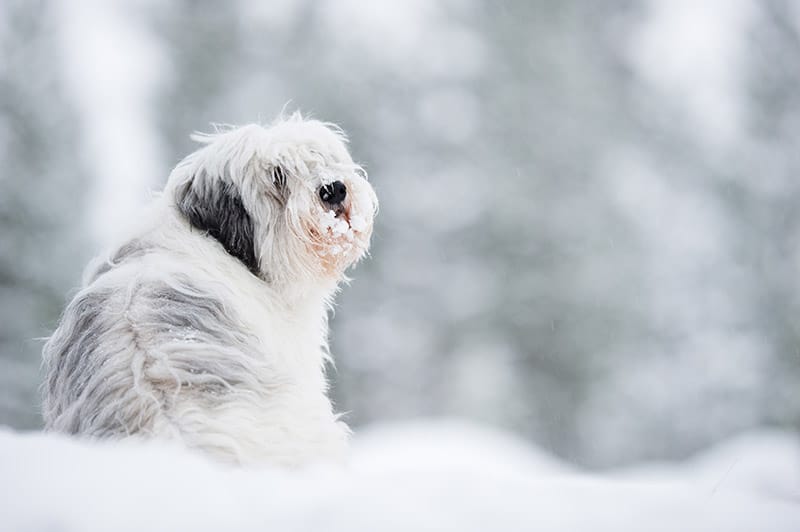
Coat: Perhaps the PON‘s most distinctive feature is their dense, shaggy double coat. The outer coat is long (4-6 inches), thick, and either wavy or straight. The undercoat is soft and dense. The abundance of hair often covers the eyes and gives the PON a "pouty" expression. Coat colors include white, gray, brown, black, and sandy, often with patches or splotches.
That gorgeous coat doesn‘t come without some work, though. PONs require regular brushing (at least 2-3 times per week) to prevent matting and distribute skin oils. Occasional bathing and trimming around the eyes, ears, and feet helps keep PONs comfortable and tidy. Like most double-coated breeds, PONs "blow" their undercoats twice a year, leading to extra shedding that may take over your home without extra grooming.
Temperament: Lively Minds, Loyal Hearts
As herding dogs, Polish Lowland Sheepdogs are known for their energetic, outgoing, and hardworking natures. They thrive on having a job to do, whether that‘s herding livestock, learning new tricks, or keeping watch over their families. PONs bond very closely with their people and can be protective, making them excellent watchdogs that bark to alert you of anything unusual.
With their loved ones, PONs are affectionate, playful, and sometimes downright silly. They enjoy being part of all family activities and can be wonderful companions for active older children. PONs generally get along well with other dogs and pets, especially if socialized from a young age. However, their strong herding instincts may lead them to chase or nip at other animals or kids, so supervision and positive training are key.
Speaking of training, PONs are highly intelligent dogs that need mental stimulation to stay happy and well-behaved. Boredom can quickly lead to destructive chewing, excessive barking, or other mischief. The good news is PONs are eager learners that excel at a variety of dog sports and activities including:
- Herding trials
- Agility
- Obedience
- Rally
- Tracking
- Flyball
- Dock diving
- Therapy work
That said, PONs can also have an independent (okay, stubborn) streak, especially if they sense their handler is inconsistent or too lenient. These sensitive yet strong-willed dogs respond best to positive reinforcement training with clear boundaries and lots of rewards for good behavior. According to one PON breeder I interviewed, "You have to be smarter than your PON, or they will outsmart you at every turn!"
With their endearing personalities, PONs have a way of worming into your heart and becoming devoted family members. As one long-time PON owner shared, "My PON is my shadow, my clown, my therapist, and my best friend all rolled into one shaggy, perpetually smiling package. I can‘t imagine life without a PON by my side."
Exercise: Happiest on the Move
With their herding heritage, Polish Lowland Sheepdogs are high-energy dogs that need lots of daily exercise to stay physically and mentally fit. A short walk around the block won‘t cut it for these active pups. PONs thrive with:
- Long walks (at least 30-60 minutes twice a day)
- Hiking or backpacking trips
- Jogging or running with their human
- Vigorous play sessions with toys or other dogs
- Swimming (PONs are strong swimmers)
- Participation in dog sports
- Puzzle toys and games to exercise their minds
Without adequate outlets for their energy, PONs can become bored, frustrated, and destructive. A tired PON is a happy PON! Many PON owners find that enrolling in a dog sport or two (like agility or herding) is the key to keeping their clever canines mentally and physically challenged.
Access to a securely fenced yard is also ideal for PONs. These independent thinkers should never be left off-leash in unfenced areas, as they may decide to take themselves on an adventure chasing a rabbit or herding a bicycle. Yards also provide space for PONs to play, train, and engage in their natural herding behaviors.
While PONs can adapt to apartment or condo life with sufficient exercise, a home with a yard in a suburban or rural area is often a better fit. Bonus points if you have farmland or access to a herding facility where PONs can keep their livestock moving skills sharp.
Health & Longevity: Polish Longevity
The Polish Lowland Sheepdog is generally a robust and healthy breed, with an average lifespan of 12-14 years according to most sources. A 2004 health survey by the Polish Lowland Sheepdog Club of America found that over 80% of PONs lived to be 11 years or older, with some reaching 17 years or more. Now that‘s impressive for a medium-to-large breed dog!
Of course, like all purebred dogs, PONs can be prone to certain genetic health issues including:
- Hip dysplasia (reported in 14.5% of PONs according to the Orthopedic Foundation for Animals)
- Progressive retinal atrophy (PRA)
- Hypothyroidism
- Allergies
- Epilepsy
The good news is responsible PON breeders conduct health testing on their breeding stock to minimize the risk of passing on inherited disorders. When considering a PON puppy, be sure to ask for proof of health clearances on the parents, including OFA hip scores and PRA genetic tests.
To keep your PON healthy, I recommend:
- Feeding a high-quality, balanced diet
- Maintaining a healthy weight (excess pounds strain joints)
- Providing age-appropriate exercise and mental stimulation
- Keeping up with preventive care like vaccines, parasite control, and dental cleanings
- Scheduling regular check-ups with your veterinarian
With good genes and conscientious care, PONs can enjoy long, healthy lives as cherished companions.
Popularity & Presence: The Rarity Factor
Despite their many wonderful qualities, Polish Lowland Sheepdogs remain a relatively rare breed, especially outside of their native Poland. According to registration statistics from the American Kennel Club, PONs ranked 155th out of 195 recognized breeds in 2020, with only 208 individual dogs registered. Compare that to the most popular breed, Labrador Retrievers, with over 98,000 registrations!
Globally, PONs have a slightly larger presence but are still considered an uncommon breed. The Federation Cynologique Internationale (FCI) reports PON registrations in several European countries, with the highest numbers in Poland, Sweden, and Denmark. However, even in these countries, PONs are vastly outnumbered by more familiar herding breeds like Border Collies and Australian Shepherds.
So why haven‘t PONs caught on like some other shaggy herding dogs such as Old English Sheepdogs or Bearded Collies? One reason may be their relative novelty on the world stage. While PONs have existed for centuries in Poland, they didn‘t gain FCI recognition until 1963 and weren‘t accepted into the AKC Herding Group until 2001.
Another factor is their coat maintenance. PONs require regular brushing and grooming to keep their long, thick coats healthy and tangle-free. Some owners opt to keep their PONs in a shorter "puppy cut" to reduce grooming time. However, many PON fanciers believe the breed‘s signature shaggy look is worth the extra effort.
For those seeking a unique, intelligent, and devoted companion, the PON‘s rarity can be part of their appeal. As one breeder told me, "PONs are like a hidden gem in the dog world. Those who discover them often become lifelong fans of the breed."
Is a PON Your Perfect Match?
Now that you know more about the delightful Polish Lowland Sheepdog, you may be wondering if this shaggy shepherd is the right fit for your lifestyle. PONs can make wonderful companions for active, experienced dog owners who have the time and energy to keep up with their physical and mental needs.
You may be a great match for a PON if you:
- Enjoy spending lots of time outdoors walking, hiking, and playing with your dog
- Are interested in participating in dog sports or activities like herding, agility, or obedience
- Work from home or have a flexible schedule to provide companionship and exercise
- Have experience training and socializing intelligent, independent-minded dogs
- Don‘t mind regular brushing and grooming to maintain the PON‘s coat
- Appreciate a watchful, protective dog who will bark to alert you of strangers or unusual sights and sounds
- Want a loyal, affectionate, and entertaining companion to share your home and heart
On the other hand, a PON may not be the best choice if you:
- Live a sedentary lifestyle or work long hours away from home
- Prefer a low-shedding, low-maintenance coat
- Have very young children who may unintentionally injure or overwhelm a bouncy, nippy herding dog
- Want a quiet, reserved dog who won‘t bark or require much exercise
- Lack experience with positive training and socialization for intelligent, independent breeds
If you think a PON may be your ideal match, be prepared to do your homework to find a reputable breeder. Demand for PON puppies often outpaces supply, so you may need to join a waiting list. Expect to pay $1,800 to $3,000 or more for a well-bred PON puppy from health-tested parents.
You can also contact the Polish Lowland Sheepdog Club of America (PLSCA) or PON Club of America (PNCA) to inquire about adult dogs in need of rehoming. While still rare, PONs occasionally become available through rescue due to owner lifestyle changes or other unforeseen circumstances. Adopting an adult PON lets you skip the puppy stage while providing a forever home to a dog in need.
The PONderful Polish Lowland Sheepdog
From their hardworking heritage on Polish farmlands to their modern roles as beloved companions around the world, Polish Lowland Sheepdogs have proven their adaptability, resilience, and enduring appeal. While still a rare breed, PONs are slowly but surely winning hearts with their shaggy charm, lively intelligence, and devoted personalities.
As a veterinarian and dog lover, I‘ve had the pleasure of meeting many wonderful PONs over the years. I‘m always impressed by their eagerness to learn, their loyalty to their families, and their irrepressible zest for life. Whether herding sheep, racing through an agility course, or simply romping in the backyard, PONs tackle every activity with infectious joy and enthusiasm.
If you‘re looking for an active, clever, and affectionate companion to share your life‘s adventures, a Polish Lowland Sheepdog may be the perfect addition to your pack. These shaggy shepherds may not be as well-known as some other breeds, but that just means you‘ll have the pleasure of introducing everyone you meet to the delights of the PON. And trust me, once you‘ve been charmed by a PON, you‘ll wonder how you ever lived without one of these magnificent mop-tops by your side.
Want to learn more about Polish Lowland Sheepdogs? Check out these resources for breed-specific information, health research, training tips, and more: