The Bold and Beautiful Black Miniature Schnauzer: A Comprehensive Guide
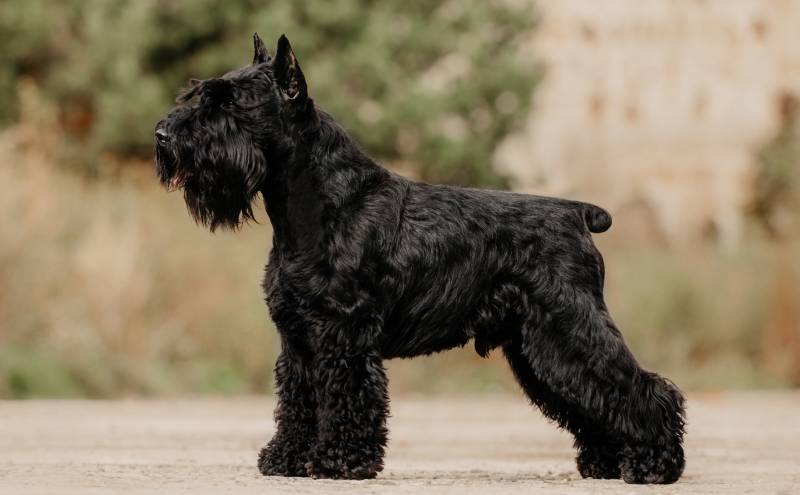
Sleek, striking, and full of personality, the black miniature schnauzer is a head-turning variation of this popular German breed. With their luxurious jet-black coats, keen expressions, and signature facial furnishings, these dapper little dogs command attention wherever they go.
But there‘s so much more to the black mini schnauzer than just a pretty face. This intelligent, athletic, and affectionate breed has won the hearts of dog lovers worldwide. Whether you‘re already enamored with these onyx beauties or you‘re thinking of adding one to your family, read on to learn everything you need to know about the bold and beautiful black miniature schnauzer.
History and Development of the Black Miniature Schnauzer
The miniature schnauzer breed originated in Germany in the late 1800s, developed by selectively breeding the standard schnauzer to a smaller size. According to breed historians, the initial goal was to create a tenacious yet compact farm dog adept at ratting and guarding.
To achieve the desired petite stature, standard schnauzers were likely crossed with smaller breeds like the miniature pinscher, affenpinscher, and poodle. The result was a diminutive dog with the same squarely proportioned build, whiskery face, and wiry coat of its larger cousin, just in a more portable package.
Miniature schnauzers made their way to the United States in the early 1920s, with the first registered mini schnauzer being a female named Dorem Eldorado born in October 1924. The American Kennel Club officially recognized the breed in 1926, classifying it as a terrier.
While the salt and pepper color variety has always been the most prevalent in the breed, black and black and silver mini schnauzers have been around since the breed‘s inception. However, these solid-colored variations took longer to catch on in popularity.
"In the early days of the breed in America, the focus was on establishing the breed type and temperament, with less emphasis on color," explains miniature schnauzer breeder and historian Joyce Miller. "Salt and pepper was the color variety that most closely aligned with the standard schnauzer, so that‘s what many breeders initially concentrated on perfecting."
It wasn‘t until the latter half of the 20th century that black and black and silver mini schnauzers started gaining traction. A new generation of breeders and owners were drawn to the striking good looks and relative rarity of the solid-colored dogs. Dedicated fanciers began selectively breeding for quality black and black and silver lines.
Today, all three color varieties have their admirers, but salt and pepper still reigns supreme in the show ring and as the most popular pet color. According to a 2022 analysis of AKC registration statistics, 52% of miniature schnauzers were salt and pepper, 28% were black and silver, and 20% were solid black.
| Miniature Schnauzer AKC Registration Numbers by Color (2022) |
|---|
| Color |
| :————— |
| Salt and Pepper |
| Black and Silver |
| Black |
| TOTAL |
Source: American Kennel Club
While black mini schnauzers may never overtake salt and pepper in popularity, their eye-catching ebony coats have earned them a dedicated following among breed enthusiasts. And for owners like Mark Jacobs, the ability to have a mini in a relatively uncommon color was part of the appeal.
"I grew up with mini schnauzers and always loved the breed, but I wanted one that was a little different," says Jacobs. "When I saw an ad for an all-black litter, I knew I had to have one. My Samson turns heads everywhere he goes. People are always asking me what kind of dog he is because they‘ve never seen a pure black schnauzer before."
Coat Color Genetics
So what exactly determines if a miniature schnauzer will be black versus salt and pepper or black and silver? It all comes down to genetics.
The gene that controls whether a mini schnauzer will have a salt and pepper or solid-colored coat is called the Merle gene, represented by the letter M. This gene is dominant, meaning a dog only needs one copy to express a salt and pepper coat. Dogs with two copies of the M gene (MM) will be salt and pepper, as will those with one copy of M and one copy of the recessive non-merle gene (Mm).
To be a solid color like black or black and silver, a mini schnauzer must inherit two recessive non-merle genes (mm). Here‘s where it gets a bit trickier – the actual shade of a solid-colored dog is determined by a different set of genes. The Agouti gene (A) controls the banding pattern of the hair shaft, dictating whether a dog will be black and silver or solid black.
Black and silver mini schnauzers have at least one dominant agouti gene (AA or Ay), causing each individual hair to be banded with alternating black and silver coloring. Solid black mini schnauzers, on the other hand, inherit two copies of the recessive non-agouti gene (aa). This prevents any banding pattern and results in the solid black color.
To summarize:
- Salt and pepper: MM or Mm
- Black and silver: mmAA or mmAy
- Solid black: mmaa
Since the gene for solid color is recessive, both parents must carry it to potentially produce black puppies. Breeding two solid black mini schnauzers will result in all black offspring, but breeding a black to a salt and pepper or black and silver can produce any of the three colors depending on the parents‘ genotypes.
"When breeding for black minis, the key is to select for parents with the right genetic makeup, while also prioritizing health, structure and temperament," says Miller. "The most ethical breeders will perform genetic testing on their breeding stock to better understand what colors and patterns they may produce."
Grooming the Black Coat
One of the most distinctive features of the miniature schnauzer is its dense, wiry double coat. The breed is considered low-shedding and relatively hypoallergenic compared to many other dogs. But don‘t let that fool you into thinking these portable pups are low maintenance when it comes to grooming.
All mini schnauzers, regardless of color, require regular brushing, combing, and trimming to keep their coats looking and feeling their best. The black variety is no exception. In fact, some owners and groomers say the rich, dark color can actually require a bit of extra effort to maintain.
"With a black mini, dirt and debris may be less visible against the dark backdrop of the coat compared to a salt and pepper or parti-color dog," notes professional groomer Jenn Park. "But that doesn‘t mean it‘s not there. In some ways, a black coat is less forgiving because any flaws in the grooming, like missed tangles or uneven scissoring, can be more noticeable."
To keep a black mini schnauzer‘s coat looking sleek and inky, Park recommends brushing and combing at least every other day, being sure to get down to the skin to prevent mats and tangles from forming in the dense undercoat. The coat should also be trimmed or clipped every 4-6 weeks.
One potential perk of the black color when it comes to grooming? Those signature schnauzer eyebrows and beard may be quicker to shape.
"With a salt and pepper, you have to be really precise with the shaping because the banding pattern makes any flaws more obvious," says Park. "But with a solid black, you have a little more wiggle room. As long as the overall shape is correct, minor imperfections won‘t stand out as much against the monochromatic backdrop."
Health Concerns and Lifespan
Like all purebred dogs, miniature schnauzers can be prone to certain inherited health conditions. Some of the most common health issues seen in the breed include:
- Hereditary eye diseases like progressive retinal atrophy, cataracts and retinal dysplasia
- Orthopedic problems like luxating patellas, Legg-Calve-Perthes disease and hip dysplasia
- Endocrine disorders such as diabetes and hypothyroidism
- Urinary stones and bladder infections
- Certain cancers, especially melanoma and mammary tumors
- Skin allergies and flea sensitivity
Responsible miniature schnauzer breeders will screen their breeding stock for known genetic health issues and work to produce the healthiest puppies possible. When looking for a black mini schnauzer puppy, be sure to ask the breeder for documentation of health clearances on the parents, such as OFA (Orthopedic Foundation for Animals) and CERF (Canine Eye Registration Foundation) certifications.
"Choosing a puppy from health-tested parents is one of the best things you can do to stack the deck in favor of a long and healthy life for your mini schnauzer," advises veterinarian Dr. Christa Wrigley. "Of course, genetics are only one piece of the puzzle. Proper nutrition, an appropriate exercise and grooming routine, and regular check-ups with your vet are also key."
According to a 2022 survey by the Miniature Schnauzer Club of America, the average lifespan for the breed is around 12-15 years, with some minis living well into their late teens. This puts them on the higher end of the lifespan spectrum compared to breeds of similar size, like the Yorkshire terrier (11-15 years) and the pug (12-15 years).
"Miniature schnauzers are generally a long-lived and resilient breed," says Dr. Wrigley. "And there is no difference in lifespan or overall health between the coat color varieties. A well-bred black mini with responsible owners has just as much potential for a long, healthy life as a salt and pepper or black and silver."
Living with a Black Miniature Schnauzer
So what‘s it really like to share your life with a black mini schnauzer? Owners describe them as spunky, lively companions with an outsized zest for life.
Despite their small stature, most minis are fearless and adventurous, always up for an outing or activity. They typically do well with children and other dogs when raised together and properly socialized. Many enjoy being the center of attention and will eagerly perform tricks or play games to earn praise and interaction.
"My black mini schnauzer Raven is the life of the party wherever she goes," gushes owner Elena Hastings. "Whether we‘re on a hike, at a dog-friendly cafe, or just hanging out at home, she approaches everything with this infectious enthusiasm. It‘s impossible not to smile when you‘re around her."
As terriers, miniature schnauzers can have a strong prey drive and a tendency to bark at anything that moves. Training and plenty of mental and physical exercise from puppyhood on are a must to keep those natural instincts under control.
Fortunately, the breed is known for its keen intelligence and biddability, excelling in obedience, agility, and other canine sports. Many minis also put their smarts and gregarious personalities to work as therapy dogs, visiting nursing homes and hospitals to brighten patients‘ days.
Black minis may be at a slight disadvantage when it comes to breaking into the entertainment world, as the solid color can be more challenging to photograph and film compared to the salt and pepper or parti-color variety.
"In terms of pop culture representation, you definitely see more salt and peppers or parti-colors, like the dog who played Max in the 2000 live-action Grinch movie," notes Hastings. "But for companion dogs, I think black minis are just as delightful. And you could argue that the solid color makes them look more like their standard schnauzer cousins, which some people really like from a historic and aesthetic perspective."
Finding Your Perfect Black Mini Schnauzer
With their combination of portable size, lively personalities, and striking good looks, it‘s no wonder that demand for black miniature schnauzers has been on the rise in recent years. But potential owners should be prepared to do their research and be patient in their search for a well-bred dog.
"Quality black mini schnauzers may be harder to find and have longer wait lists compared to the more common salt and pepper," cautions breeder Joyce Miller. "And you should expect to pay a bit of a premium, since breeding for an excellent black dog often requires going outside of the immediate gene pool."
Miller advises potential owners to seek out reputable breeders who health test their breeding stock, provide documentation of pedigrees and genetic screening, and prioritize temperament and structure over color. Avoid breeders who charge more for "rare" colors without proof of health testing or seem to always have black puppies available with no wait.
Another option for finding a black mini schnauzer is through rescue organizations. While you may have to wait for one to become available, it can be a rewarding way to provide a forever home to a dog in need.
"There are several miniature schnauzer rescues across the country, and they occasionally get in black dogs," says Christi Taylor, a volunteer with Minis and Friends Rescue in Texas. "Some are retired breeding dogs, others are surrendered by owners who couldn‘t keep up with the grooming or had lifestyle changes. But with a little patience and flexibility, rescue can be a great way to find an amazing black mini schnauzer companion."
Conclusion
From their commanding good looks to their larger-than-life personalities, black miniature schnauzers are a captivating subgroup of this already fascinating breed. With their rich, inky coats and striking features, these onyx gems are sure to turn heads and capture hearts wherever they go.
But as any mini schnauzer owner knows, these dogs are so much more than just a pretty face. They are brilliant, bold, and unwaveringly devoted to their favorite humans. They tackle life with a zest and enthusiasm that is both endearing and contagious. And with their portable size and generally robust health, they make an ideal companion for all sorts of households and lifestyles.
As the breed standard states, "The Miniature Schnauzer is a robust, active dog of terrier type, resembling his larger cousin, the Standard Schnauzer, in general appearance, and of an alert, active disposition." And that certainly holds true for the black variety.
These spunky little powerhouses may be small in stature, but they are mighty in heart and spirit. With their luxurious ebony coats and outsized personalities, black mini schnauzers are truly something special. And for the lucky owners who share their hearts and homes with one, life is never, ever dull.