The Rottsky: Your Ultimate Guide to the Rottweiler Husky Mix
Are you looking for a dog that‘s as brave and powerful as a bear, with the endurance and spirit of a wolf? Look no further than the Rottsky, a designer mix that combines the best traits of the Rottweiler and Siberian Husky. As a dog lover and experienced owner, I‘ve become fascinated by this relatively new cross and its potential as an adventure buddy, family guardian, and multi-purpose working dog.
In this ultimate guide, we‘ll dive deep into the world of the Rottweiler Husky mix, exploring their history, characteristics, care requirements, and what it‘s really like to live with one of these magnificent mutts. Whether you‘re considering adding a Rottsky to your family or just curious about this intriguing hybrid, read on for an inside scoop from someone who knows and loves this breed.
Breed Origins and History
The Rottsky‘s story begins with two ancient and respected breeds: the Rottweiler and the Siberian Husky.
Rottweilers descend from mastiff-type dogs used by the Roman legions to drive cattle that fed the army as it marched through Europe. In the German town of Rottweil, these dogs were refined over centuries into the ideal herding and guard dog – large and powerful enough to control unruly cattle on the way to market, yet loyal and protective of their owners.
In the 1800s, cattle driving was outlawed and the Rottweiler nearly went extinct. But in the early 1900s, the breed‘s courage and trainability made them standouts as police, military and service dogs. Today, Rottweilers are the 8th most popular breed in the U.S. (source)
Siberian Huskies, on the other hand, were developed thousands of miles away by the Chukchi people of Siberia as endurance sled dogs that could travel long distances in harsh Arctic conditions. In the early 1900s, Huskies were brought to Alaska for sled dog racing and proved their worth as reliable working dogs and loyal companions. A famous Husky named Balto even helped save the children of Nome, Alaska by leading a sled team 674 miles in the serum run of 1925. (source)
While still prized as racing and working sled dogs, Huskies have also become popular family pets, known for their outgoing nature, striking appearance, and love of human companionship. They consistently rank in the top 20 most popular breeds. (source)
So what happens when you mix these two storied breeds? You get a powerful, intelligent, head-turning hybrid that‘s up for any adventure – the Rottsky.
Physical Characteristics and Appearance
Rottskies are large, muscular dogs that tend to have the sturdy, substantial build of the Rottweiler with some of the longer leg length, athleticism and wolflike features of the Husky. Here‘s a breakdown of their typical size and appearance:
| Characteristic | Male | Female |
|---|---|---|
| Height | 24-26 inches | 22-24 inches |
| Weight | 75-100 pounds | 55-80 pounds |
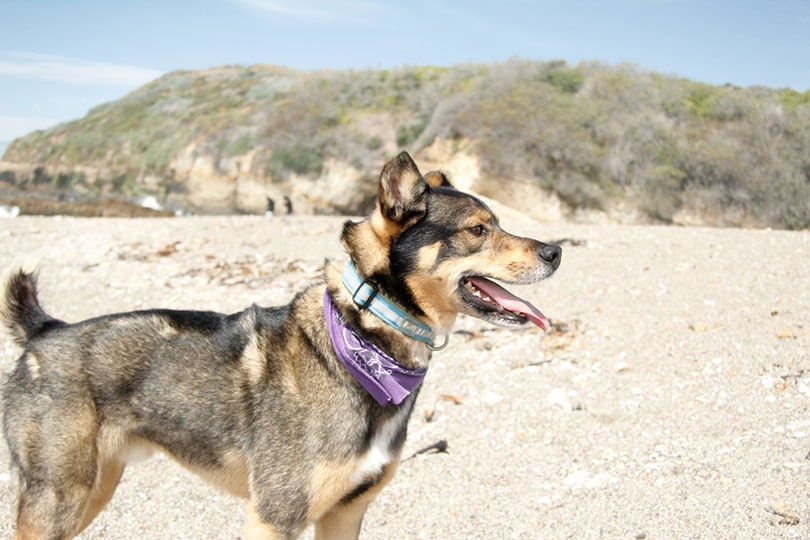
Most Rottskies have a black or dark base coat color with tan, rust or cream markings on the face, chest, and legs, and occasionally some white. Their double coat is usually medium length and dense, but can range from the Rottie‘s short, thick coat to the Husky‘s longer, fluffier fur. Prepare for moderate to heavy shedding year-round with a ‘blow out‘ once or twice a year.
Rottskies have a broad, wedge-shaped head with a medium-length muzzle, and upright, slightly rounded ears. Their almond-shaped eyes are typically brown but can be blue, bi-eyed or parti-colored. A long, brushy tail carried over the back is common, but some may have a shorter Rottie-like tail.
Overall, Rottskies are impressive, powerful dogs with an air of confidence and keen intelligence in their expressions. Their striking looks and obvious strength make them natural deterrents to would-be intruders.
Temperament and Personality
The Rottsky combines the steady, watchful demeanor of the Rottweiler with the friendly, mischievous nature of the Husky for a loyal, affectionate and energetic companion.
Rottskies bond deeply with their people and are happiest when included in daily activities. They are generally good with kids but may play too rough for toddlers. Early socialization is a must to prevent shyness or aggression toward strangers and other animals.
Rottweilers are famous for being aloof with strangers while Huskies are more outgoing, so a Rottsky‘s reaction to new people can vary. They make excellent watchdogs and will bark to alert you of anything suspicious, but are not typically aggressive unless threatened. Their intimidating size and bark are usually enough to deter intruders.
As working dogs, Rottskies need plenty of physical and mental exercise daily. They excel at obedience, agility, rally, weight pulling, and other dog sports that challenge their minds and bodies. Puzzle toys and interactive play help prevent boredom and destructive behaviors.
True to their sled dog heritage, many Rottskies love to run and have a strong prey drive to chase small animals. A secure fence is essential, as is leash training to control their tugging tendencies. Some may also howl or ‘talk‘ like a Husky.
With proper training and socialization, Rottskies can be friendly, adaptable dogs that make loyal companions for active households. They are smart, eager to please and thrive on human interaction. Just be sure you can meet their exercise needs and provide consistent leadership.
Training and Socialization
Training and socialization are critical for the strong-willed, intelligent Rottsky. Start from day one with positive reinforcement methods like praise, play and high value treats. Short, frequent training sessions work best to hold their attention.
Enroll in a puppy obedience class right away to learn basic manners and commands. Socialize extensively with people of all ages and appearances, as well as other dogs and animals. Take your Rottsky everywhere – parks, pet stores, outdoor events – to build their confidence in different settings.
Rottskies need consistent rules and leadership to respect you as the alpha. They can test boundaries, so don‘t let them get away with bad behavior. Reward the good and ignore or redirect the bad. Never use force or harsh corrections, which can trigger stubbornness and even aggression.
Many Rottskies excel in advanced obedience, agility, rally, nosework, dock diving and other dog sports. They are eager to learn and love having a job to do. Some may also have potential as search and rescue, therapy or service dogs with specialized training.
If you‘re not experienced with dominant breeds, consider working with a professional trainer or behaviorist to help you navigate your Rottsky‘s teenage phase and any challenges that arise. With patience and consistency, Rottskies can be very trainable companions.
Exercise and Activity Level
As the offspring of two driven working breeds, Rottskies need lots of daily exercise to stay happy and healthy. Expect to provide a minimum of 60-90 minutes per day of purposeful activity, such as:
- Long walks or hikes
- Running or biking alongside you
- Playing fetch or frisbee
- Swimming
- Daycare or dog park play
- Puzzle toys and games
- Agility, rally, nose work or other training
Without proper exercise outlets, Rottskies are prone to destructive chewing, digging, howling and even escaping to burn off energy. A securely fenced yard is a must for off-leash playtime, but shouldn‘t replace daily walks and structured activities.
Rottskies are built for stamina and can make great hiking, running or biking partners for active owners. They love being outdoors and exploring new sights and smells. Just be sure to keep them leashed in unfenced areas, as their prey drive can send them chasing after small animals.
Puppy Rottskies need shorter, more frequent play sessions to avoid overexerting their growing joints. Limit jumping and high-impact activities until they are full grown to prevent orthopedic issues down the road.
Grooming and Shedding
Rottskies have a dense double coat that sheds moderately to heavily year-round, with heavier seasonal shedding. Brush weekly with a slicker brush and undercoat rake to remove loose fur and prevent matting, especially if your Rottsky has a longer Husky-like coat.
Bathe your Rottsky every 4-6 weeks or as needed. Some owners find that a good brushing and wipe down with a damp cloth in between baths is sufficient. Trim nails monthly, clean ears weekly, and brush teeth daily if possible to maintain your Rottsky‘s overall health and hygiene.
Rottskies with the Husky‘s coat will ‘blow out‘ once or twice a year, shedding excessively as they adapt to seasonal changes. During these times, daily brushing is a must to keep hair tumbleweeds at bay. A deshedding tool like the Furminator can also help remove the dead undercoat.
If you‘re looking for a low-shedding or hypoallergenic dog, the Rottsky is not for you. Even with regular grooming, you‘ll find hair on your clothes, furniture and floors. But for many Rottsky lovers, a little extra vacuuming is a small price to pay for the joy of living with this magnificent mix.
Health and Lifespan
The Rottsky is a relatively healthy breed with a lifespan of 10-12 years on average. However, like all dogs, they are prone to certain health issues based on their parent breeds. Some common health concerns in Rottskies include:
- Hip and elbow dysplasia
- Eye problems like cataracts, PRA and entropion
- Heart conditions like cardiomyopathy and subaortic stenosis
- Hypothyroidism
- Bloat (gastric torsion)
- Allergies
- Cancer, especially bone cancer
Many of these issues have a genetic component, which is why it‘s so important to work with a responsible Rottsky breeder who health tests their breeding stock and provides health clearances and guarantees for their puppies.
To keep your Rottsky healthy, feed a high quality diet, maintain a healthy weight, provide regular exercise and keep up with preventative care like vaccinations, parasite control and dental cleanings. Annual vet check-ups can catch potential problems early.
Avoid over-exercising your Rottsky puppy and limit high-impact activities to protect their joints. Consider supplements like glucosamine and chondroitin to support joint health, especially in seniors. And always monitor your Rottsky‘s weight, as obesity can shorten their lifespan and exacerbate joint, heart and other health issues.
With good care and a little luck, your Rottsky can enjoy a long, healthy life filled with adventure by your side.
Is a Rottsky Right for You?
Now that you know more about the Rottweiler Husky mix, let‘s discuss if this breed is the right fit for your lifestyle and personality.
Rottskies are best suited for experienced dog owners who are confident leaders and can commit to plenty of daily exercise and ongoing training. They thrive in active households with a securely fenced yard for playtime. If you enjoy outdoor activities like hiking, running, swimming or dog sports, the Rottsky can be your ultimate adventure buddy.
Rottskies can adapt to apartment or city living if their exercise needs are met, but they are not ideal for small spaces or sedentary owners who work long hours. As a large, high energy breed, they need room to move and plenty of interaction to stay happy and well-behaved. A bored, under-exercised Rottsky can become destructive and hard to handle.
If you‘re looking for a low-shedding, low-maintenance dog, the Rottsky is not for you. Their thick double coat sheds year-round and requires regular grooming to keep your home hair-free. Allergy sufferers may want to choose a hypoallergenic breed instead.
Rottskies can be fantastic family dogs if raised with kids and well-socialized. They are loyal, loving and protective of their pack. However, their size and strength may be too much for little ones, and their high prey drive may not mix with small pets. Always supervise interactions and teach children how to respectfully interact with dogs.
Some cons of Rottsky ownership include:
- High exercise needs and potential for destructive behavior if bored
- Strong-willed personality that requires firm, consistent training
- Tendency to pull on leash and wander if off-leash
- Moderate to heavy shedding and grooming needs
- Potential for territorial barking and alerting
- Risk of health issues common to large breeds
- Legal liabilities in areas with breed specific legislation
But for the right owner, the pros of living with a Rottsky far outweigh the cons. You‘ll have an intelligent, devoted companion that keeps you active and engaged. You‘ll always feel safe with your loyal protector by your side. And you‘ll be the talk of the town with your striking, self-assured canine partner in crime.
Real Rottsky Owner Perspectives
Don‘t just take my word for it – here are some real insights from Rottsky owners on what it‘s like to live with this magnificent mix:
"My Rottsky is the ultimate adventure dog. He‘s always up for a hike, a swim, a game of fetch. His stamina is incredible and he pushes me to be more active. But at the end of the day, he‘s a big cuddle bug who just wants to be with his people." – Sarah K.
"Training my Rottsky was a challenge at first because she‘s so smart and independent. But with consistency and positive reinforcement, she‘s become a well-mannered dog that excels at obedience and agility. The key is to keep her mind and body engaged with lots of activities." – John M.
"I love my Rottsky‘s goofy personality. He makes me laugh every day with his Husky ‘talking‘ and silly antics. But he‘s also a fierce protector of our home and family. I always feel safe with him around." – Lisa T.
"Grooming my Rottsky is a labor of love. He sheds like crazy, especially during coat blowing season. But regular brushing and a good vacuum keep it manageable. And honestly, I love burying my hands in his thick, soft coat." – Mike R.
Final Thoughts
As you can see, the Rottweiler Husky mix is a unique and captivating breed that‘s not for everyone, but can be the ultimate companion for the right owner. With their striking good looks, keen intelligence, fierce loyalty and adventurous spirit, Rottskies are sure to steal your heart and keep you on your toes.
If you‘re looking for an active, devoted and protective partner in crime, the Rottsky may be your perfect match. Just be prepared for lots of exercise, training, grooming and love in return. With patience, consistency and a sense of humor, you can bring out the best in your Rottsky and enjoy many years of adventure together.
So what are you waiting for? Start your search for a reputable Rottsky breeder or rescue today, and get ready to fall in love with this magnificent mix. Your ultimate adventure buddy is waiting for you!