The Siberian Husky: A Complete Guide to this Stunning and Spirited Breed
With their striking wolf-like appearance, ice-blue eyes, and friendly demeanor, Siberian Huskies have captured the hearts of dog lovers worldwide. Originally developed as endurance sled dogs by the Chukchi people of northeastern Asia, this working breed is now a popular family pet known for their outgoing personality, athleticism, and adaptability. However, the Husky is not the ideal companion for every household. As a veterinarian and lifelong dog enthusiast, I‘m excited to share an in-depth look at the history, characteristics, care requirements, and more to help you determine if a Husky is the right fit for your family.
History of the Breed
The story of the modern Siberian Husky begins with the nomadic Chukchi people who inhabited the harsh Siberian Arctic over 3000 years ago. The Chukchi relied on their dogs for transportation, companionship, and survival. According to genetic studies, Huskies are one of the oldest dog breeds, likely descended from very early dog populations that accompanied Paleo-Eskimo peoples across the Bering Strait into North America thousands of years ago.
To withstand the unforgiving Arctic conditions and grueling demands of sledding, the Chukchi developed dogs with unique physical and behavioral traits. These include a compact body for efficient movement and heat retention, thick fur coat for insulation, tough feet with fur between the toes for traction on ice, strong work ethic and endurance to run long distances, and a friendly demeanor to work well with humans and other dogs on a sled team.
The breed came to the United States in the early 1900s when Siberian Huskies proved their worth as sled dogs during the Alaska Gold Rush. In 1925, they cemented their legacy as heroes during the life-saving "Great Race of Mercy" to deliver diphtheria serum to the stricken town of Nome. One lead dog on that famous relay, Balto, even has a statue in New York‘s Central Park commemorating the achievement. Shortly thereafter, the breed was recognized by the American Kennel Club in 1930. Most modern Huskies in the U.S. can trace their lineage back to the foundation dogs involved in the serum run.
Physical Characteristics
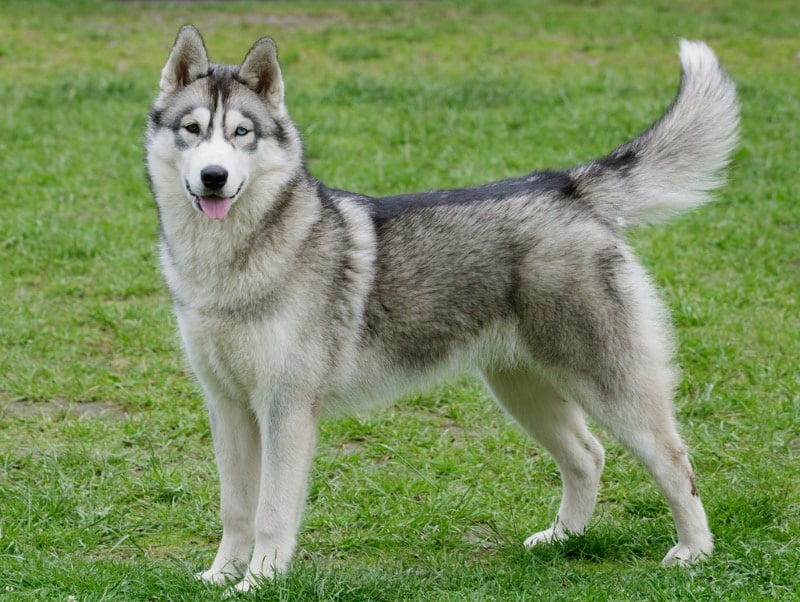
Siberian Huskies are a stunning breed, turning heads with their wolf-like appearance and often unusual eye colors. Here are some key physical characteristics:
- Height: 20-23.5 inches for males, 20-22 inches for females
- Weight: 45-60 pounds for males, 35-50 pounds for females
- Head: Medium-sized with erect triangular ears, intelligent almond-shaped eyes, and a mischievous expression
- Eyes: Blue, brown, amber, or any combination; eyes can be bi-color or parti-colored
- Coat: Dense double coat with a soft undercoat and straight, somewhat smooth outer coat of medium length, allowing the breed to withstand extreme cold; coat sheds seasonally
- Colors: Varied, most commonly seen in black and white, but can also include copper, grey, red, sable, agouti, and pure white
- Tail: Densely furred "brush" tail that curves high over the back when excited or working
- Movement: Quick and nimble with a smooth, effortless stride and impressive stamina
One common question is "How big do Huskies get?" Contrary to their substantial, wolfy appearance, Siberians are actually a medium-sized breed. They are smaller and lighter than their cousin, the Alaskan Malamute. On average, male Siberians stand 21-23.5 inches at the shoulder and weigh 45-60 pounds, while females tend to be slightly smaller at 20-22 inches tall and 35-50 pounds. This compact size allows them to be fast, efficient sled dogs.
Temperament and Personality
In developing the breed to work closely with humans in packs, the Chukchi people created an outgoing and friendly dog that thrives on human companionship. Huskies are known for being intelligent, playful, and mischievous. They often wear a characteristic expression that looks as though they are smiling. These traits make them endearing family pets who are usually good with children.
However, that keen intelligence combined with an independent nature means Huskies can have a stubborn streak. They‘ve been known to outsmart their humans – a necessary survival instinct in the wild Arctic, but a challenging trait as a domesticated pet. Huskies bore easily, especially if not provided enough exercise and mental stimulation. Bored Huskies often turn to destructive behaviors like excessive chewing, digging, or howling.
Speaking of howling, Siberians tend to be a talkative breed. While they don‘t bark excessively, they will whine, chirp, and howl to express themselves. Some owners even teach their dogs to "talk" on command. The breed‘s tendency to sing along with sirens gave rise to the nickname "sireners" in New York City.
Another key personality trait is the Husky‘s strong prey drive. Hardwired to hunt small game for survival, a Husky will instinctively chase fast-moving animals like squirrels, rabbits, cats and even small dogs. This drive is so strong that it‘s not recommended to have a Husky off-leash or leave them unattended in a yard, as they may take off after potential prey. Most Husky lovers can share a story of their dog‘s epic escape artist abilities. Early training and secure fencing are a must.
Exercise and Training
As an athletic working breed, Siberian Huskies have substantial exercise needs. Bred to run hundreds of miles in the harshest conditions, a simple walk around the block won‘t be enough to tire out these endurance athletes. Aim for at least 30-60 minutes of vigorous exercise daily, such as running, bicycling, hiking, or playing fetch. Access to a securely fenced yard is ideal for burning off steam. Without outlets for their energy, Huskies can develop behavior problems.
Training a Husky takes patience and consistency. Their independence and impulsive nature means they aren‘t always the most attentive students. Positive reinforcement methods using high-value rewards tend to work best. Start training and socialization from a young age and keep sessions short and fun to hold their interest. Many Huskies enjoy and excel in dog sports like mushing, skijoring, agility, and rally that challenge them physically and mentally.
Grooming and Care
Siberian Huskies have a dense double coat that protects them from extreme cold. The soft, dense undercoat is topped by a longer, coarse top coat. To manage shedding and keep the coat healthy, weekly brushing with a pin brush and metal comb is recommended. Expect periods of heavy shedding or "blowing coat" once or twice a year as the seasons change, during which daily brushing may be needed. Avoid shaving a Husky‘s coat, as this can interfere with their ability to regulate temperature.
Other grooming needs include regular nail trims, ear cleaning, and dental hygiene. Huskies are a naturally fastidious breed, so bathing needs are minimal unless they get into something messy.
Health and Lifespan
Siberian Huskies are generally a healthy breed with an average lifespan of 12-15 years. However, like all breeds, they can be prone to certain genetic health conditions. These include hip dysplasia, eye disorders like cataracts, corneal dystrophy and progressive retinal atrophy, and hypothyroidism. Finding a responsible breeder who health tests breeding stock can reduce the risk of inheriting these issues.
Other health considerations include sensitivity to heat and a risk of gastric dilatation-volvulus (bloat) due to their deep chest. Huskies tend to have a high metabolism and may need more calories than a typical dog their size, especially if working.
Fun Facts About Huskies
-
A Siberian Husky named Charlie holds the Guinness World Record for the longest distance pulling a sled in 12 hours. In 2022, Charlie covered an incredible 100.1 miles during the timeframe.
-
A team of Siberian Huskies accompanied Admiral Richard Byrd on his historic expedition to Antarctica in the late 1920s, braving severe conditions. A mountain range there is now named the Huskies Range in their honor.
-
Siberian Huskies served in the U.S. Army‘s Arctic Search and Rescue Unit during World War II thanks to their incredible endurance, navigational abilities, and sense of smell to locate lost service members.
-
Two of the most famous Siberian Huskies were Balto and Togo, the lead dogs of the 1925 Nome Serum Run across Alaska to deliver life-saving diphtheria medication. They covered hundreds of miles in brutal conditions and saved countless lives. Popular animated films have depicted their heroic journey.
-
A Siberian Husky named Dakota broke the Guinness World Record for most tennis balls held in the mouth by a dog in 2016, fitting six standard-sized balls in his mouth at once!
Finding Your Siberian Husky
Think a Siberian Husky might be the breed for you? As an experienced veterinarian, my advice is to carefully consider your lifestyle and whether you can meet the substantial exercise, training, and grooming needs of this working breed. Huskies require dedicated and experienced owners. First-time dog owners should be prepared for the challenges of the breed‘s independent nature and high energy.
When looking for a Husky puppy, seek out a responsible breeder who performs health testing on their breeding dogs, provides a written health guarantee, and welcomes questions. Avoid pet stores and online ads, as these often source puppies from puppy mills. Adopting an adult Siberian Husky from a breed-specific rescue organization is another great option, especially for busy households that may not have time for an energetic puppy.
Living with a Siberian Husky is an adventure. Be prepared for their mischievous spirit, talkative nature, and incredible zest for life. With patient training, plenty of activity, and a good sense of humor, a Husky will be a loyal companion always ready for the next escapade. Their irresistible charm, athleticism, and quirks have earned the breed a devoted following. With the proper care, you‘ll soon see why so many have fallen under the Husky spell.