The Truth About the "Dumbest" Dog Breeds: Debunking Myths and Celebrating Unique Intelligence
As a lifelong dog lover and veterinary professional, I‘ve heard it all when it comes to stereotypes about canine intelligence. "My Border Collie is so smart, she practically talks in complete sentences! But my friend‘s Basset Hound? Dumb as rocks." Sound familiar?
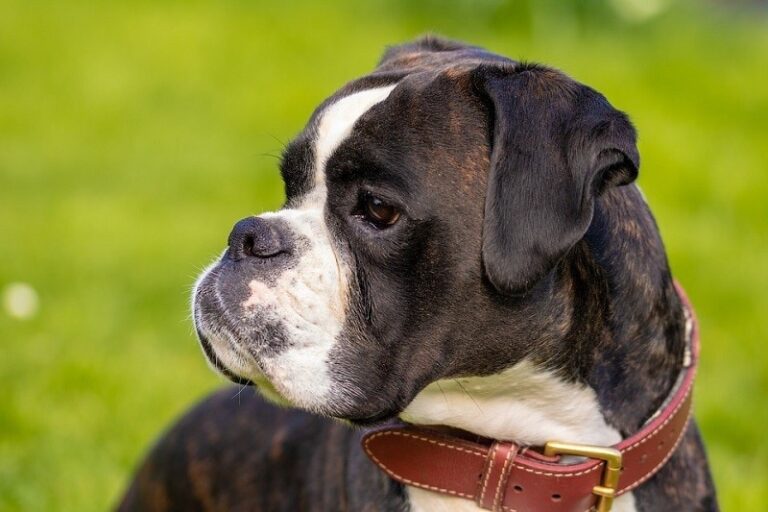
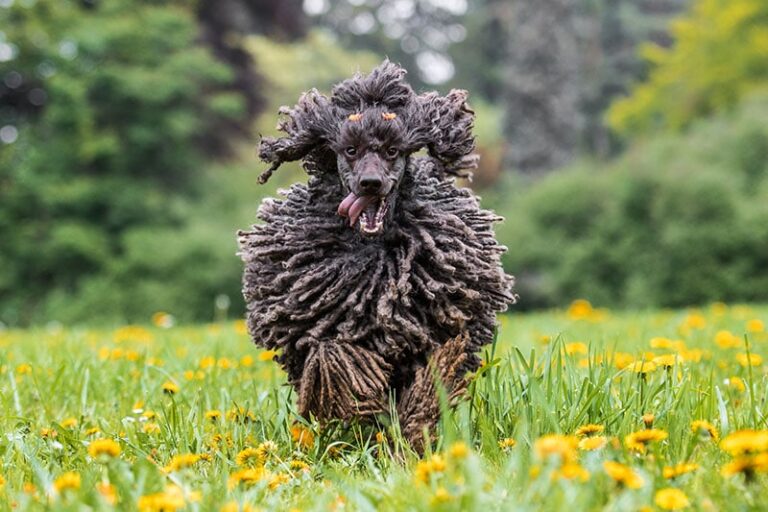
You‘ve likely seen the popular lists ranking dog breeds from most to least intelligent. Breeds like Border Collies, Poodles, and German Shepherds consistently top the "smartest" charts, while Basset Hounds, Beagles, Mastiffs, and Bulldogs often get relegated to the bottom of the barrel.
But as someone who has loved and worked with countless dogs of all breeds, I‘m here to tell you that this one-dimensional view of canine intelligence is deeply flawed. The latest canine cognition research backs me up: our doggy companions are far more complex thinkers than many give them credit for!
The Problem with Ranking Dog Intelligence
So where do these breed intelligence rankings come from anyway? The most famous list comes from psychology professor Stanley Coren‘s 1994 book, The Intelligence of Dogs. Coren surveyed over 200 professional obedience judges, asking them to rank breeds based on traits like how quickly they learned commands and how obedient they were.
And therein lies the problem. Coren‘s rankings, and many others like it, are based purely on obedience and working intelligence. Essentially, how well a dog performs in structured training settings. But as any dog lover knows, our canine friends are so much more than just how quickly they can learn to "sit" or "stay"!
Judging a breed as "intelligent" based only on trainability is like determining a person‘s IQ based solely on their math skills. Sure, Border Collies and Poodles are obedience superstars – they excel in learning complex commands. But that doesn‘t necessarily make them "smarter" than breeds who perform more independent jobs.
As veterinary behaviorist Dr. Nicholas Dodman explains, "Scenthounds like Bassets may not be great at learning parlor tricks, but they have some of the best noses in the canine kingdom. They can track a scent trail for miles through difficult terrain without getting distracted. Retrievers are great at fetching, hounds at trailing scent, and sled dogs at hauling. All are good at very different things."
A Multi-Faceted Look at Canine Cognition
Fascinating new research suggests that canine intelligence is not so black and white. A 2022 study led by cognitive ethologist Dr. Katriina Tiira at the University of Helsinki took a much more nuanced look at breed differences in cognition.
Tiira and her team tested over 1,000 dogs from 13 popular breeds on a battery of 10 cognitive tasks, assessing abilities like:
- Problem-solving
- Short-term memory
- Impulse control
- Reasoning
- Social skills
The results showed significant breed differences, but not necessarily the ones you‘d expect based on obedience intelligence rankings. For instance, Labrador Retrievers (often touted as one of the smartest breeds) actually scored near the bottom on most cognitive measures!
Some key findings that highlight the nuances of dog intelligence:
| Breed | Strengths | Challenges |
|---|---|---|
| Border Collie | Impulse control, problem solving, social skills | Can be sensitive to noise and touch |
| Australian Kelpie | Reasoning, memory, problem-solving | Less human-focused social skills |
| Belgian Shepherd | Problem-solving, memory, impulse control | More easily distracted |
| Golden Retriever | Human-directed social skills | Impulse control, reasoning |
| Labrador Retriever | Human-directed play and interaction | Impulse control, spatial problem-solving |
| Spanish Water Dog | Good all-around performance, esp. memory | Highly varied by individual |
Data from Bray et al. 2021. Cognitive characteristics of 8 breeds of domestic dog (Canis familiaris). Animal Cognition.
As you can see, different breeds have distinct cognitive strengths and weaknesses. But the study authors are quick to point out that within-breed variation is just as important as between-breed differences. In other words, an individual Golden Retriever might outperform a Border Collie on a memory task, even though Border Collies scored higher on average.
Scent Hounds: A Nose for Genius
So what about those breeds frequently deemed the "dumbest" like Basset Hounds, Beagles, and Bloodhounds? Well, as a Basset mom myself, I can assure you these scenthounds are anything but dumb. They just have very different motivations and skills than the so-called smartest breeds.
Scent hounds were bred to track game over long distances by following a trail of scent. This means they‘re remarkably single-minded and not easily distracted from their noses.
As Bloodhound breeder and trainer Lori Timberlake explains, "When a hound is on a scent, the whole world disappears. It doesn‘t matter if you‘re waving a steak in their face or the queen of England is calling them. They have a one-track mind and they won‘t stop until they‘ve solved the mystery of that smell."
That hyper-focusing skill takes a huge amount of mental aptitude. Scent hounds have to distinguish one scent from millions of others, track it over miles of challenging terrain, and memorize complex scent patterns. Just because they may not be inclined to obey commands that interfere with their tracking instinct doesn‘t make them less intelligent.
My own sweet Basset Hound, Rosie, flunked out of obedience class as a youngster because she couldn‘t resist following her nose. But that same single-minded determination made her a champion at scent work. She could find the tiniest crumb of food dropped in the house and never lost track of a bunny trail on hikes.
So next time someone calls scent hounds dumb, remind them that having a one-track mind doesn‘t equal low intelligence when that track is a stroke of olfactory genius!
Appreciating Different Types of Dog Smarts
The very traits that earn some breeds a spot on the "dumbest" list – stubbornness, independence, aloofness – can actually be signs of sharp intelligence in other contexts.
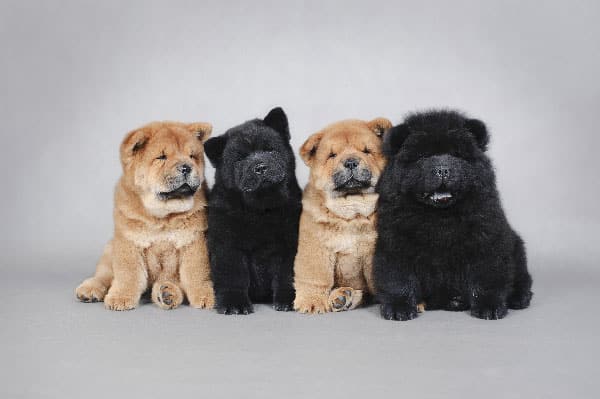
Take the tenacious Chow Chow. Chows are often pegged as one of the least trainable breeds. They have a well-earned reputation for stubbornly doing things their own way. But as Chow owner Tina Wang points out, "Chows aren‘t blindly obedient, they evaluate situations for themselves. I‘ve found my Chow‘s cautious, aloof nature makes him an amazing judge of character. He knows who is trustworthy and who isn‘t, sometimes better than I do."
Similarly, the Shiba Inu‘s cat-like independence and fastidious self-grooming habits earn them a "dim bulb" reputation in some circles. But as anyone who‘s tried to outsmart a Shiba can attest, their intelligence shines through in their ability to problem-solve and manipulate situations to get what they want. They just use their smarts to pursue their own agenda rather than obeying commands!
The takeaway? A dog who doesn‘t easily obey or follow an owner‘s every cue isn‘t necessarily less intelligent. In many breeds, independent thinking and self-reliance are hallmarks of high intellect.
Celebrating Every Dog‘s Inner Einstein
So are some dog breeds really "dumber" than others? The science says not so much. Every breed has their own unique genius that may or may not align with our human measures of intellect.
The American Kennel Club‘s Gina DiNardo puts it perfectly: "What we humans may perceive as a dog being ‘dumb‘ is often just independence, stubbornness, or aloofness. No dog breed is truly unintelligent, they just have different motivations."
Instead of writing off certain breeds as dim-witted, let‘s appreciate the glorious diversity of dog cognition and learn to work with each dog‘s individual strengths.
As dog cognition researcher Dr. Brian Hare explains, "The idea of ‘smart‘ or ‘dumb‘ breeds is a total myth. The truth is, every dog is a genius. They just display their smarts in a million different ways, whether it‘s herding, scent tracking, retrieving, or just being an amazing companion."
The next time someone tries to tell you their dog‘s breed is the smartest, go ahead and let them think that. Then give your "dumb" Basset or Bulldog an extra cuddle, secure in the knowledge that they have an inner Einstein just waiting to shine.