The Fascinating History and Unique Appeal of Corded Poodles
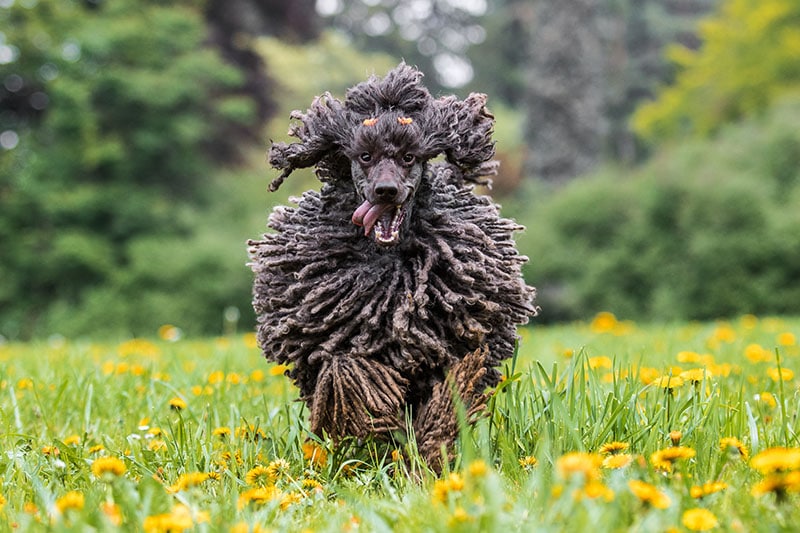

When it comes to poodles, most people picture a fluffy, brushed-out coat, often styled in the signature "poodle clip" with pompoms of hair on the legs and tail. But there is another, lesser-known variety of poodle that sports a dramatically different look – the corded poodle. With a coat that more closely resembles dreadlocks or a mop than a traditional poodle ‘do, corded poodles are a striking sight to behold.
Far from being just an eccentric fashion statement or modern grooming trend, corded poodles actually have a long and fascinating history. Let‘s take a closer look at the origins of these unique dogs, the purpose behind their eye-catching coats, and what is involved in creating and caring for a corded poodle today.
The Origins of Corded Poodles
The poodle breed originated in Germany as a water retrieving dog, with the name "poodle" coming from the German word "pudelin," meaning to splash in water. Poodles were prized for their swimming abilities, intelligence, and trainability. But what about those cords?
Purpose of the Cords
While the exact origins of the corded coat in poodles are a bit of a mystery, there are theories that it was deliberately cultivated for practical purposes. The dense, woolly texture of poodle hair is naturally water resistant, and some believe that the corded coat was developed to further enhance this quality and protect poodles from the cold as they worked in the water.
Others speculate that the cords served as a form of armor to protect the dogs from the teeth of prey or other predators as they retrieved game. The cords may have also helped poodles blend into their surroundings while hunting, serving as a form of camouflage.
Early Records and Popularity
Whatever their initial purpose, corded poodles began to emerge as a distinct variety in England in the mid-1800s. One of the earliest known corded poodles was a dog named Achilles, born in 1864, who made history as the first poodle to be awarded a championship title in England.
In the following decades, corded poodles began to appear more frequently at dog shows and gained a small but devoted following among fanciers. In 1886, the Poodle Club of England‘s breed standard officially recognized both corded and curly coated poodles, describing the ideal coat as "very profuse and of good hard texture; if corded, hanging in tight, even cords."
When poodles were first registered with the UK Kennel Club in 1874, special allowances were made to permit the use of oil or vaseline on corded coats, a practice that was otherwise banned for show dogs at the time. This exception reflected the unique grooming challenges of maintaining a corded coat.
From England, the corded poodle eventually made its way to the United States. The American Kennel Club (AKC) recognized the poodle as a breed in 1887, but it wasn‘t until 1949 that they updated the breed standard to include more detailed language about coat types, allowing for the "compact, cylindrical cords" of the corded variety.
Corded Poodles Today
Despite this long history and official show recognition, corded poodles have always been relatively rare compared to their curly coated counterparts. Experts estimate that even at the height of their popularity in the early 20th century, only about 10-15% of poodles were corded.
Today, seeing a corded poodle is an uncommon sight whether in the show ring or in homes. In a 2020 survey of 850 poodle owners, less than 2% reported having a corded poodle. The scarcity of this coat type is due in large part to the significant time and specialized care required to cultivate and maintain healthy cords, leading many owners to opt for the more manageable curly look.
The Cording Process
So how does a poodle go from a fluffy puppy to sporting an eye-catching coat of long, snake-like cords? It all comes down to strategic coat growth, separating, and shaping – along with a lot of time and patience.
Here is a step-by-step overview of the process of cording a poodle‘s coat:
-
Let it grow. The first step is simply to let the poodle‘s coat grow out without brushing or trimming it. Poodle hair grows continuously and does not shed, so as it gets longer, it will start to naturally form into twists and curls if left alone. Puppies can start this process as young as 10-12 weeks old as their adult coats start to come in.
-
Separate the cords. Once the coat has grown to about 4 inches long, it‘s time to start manually separating and shaping the cords. This is done by dividing the hair into many thin, pencil-sized sections and twisting each one tightly from root to tip, securing the end with a latex band. The cords should be carefully pulled apart anytime they try to merge together.
-
Keep cords separated. As the hair continues to grow, new growth will need to continue being separated and incorporated into the established cords every few weeks to keep them from matting or merging into larger mega-cords. Spritzing the coat with water or conditioner can help the cords maintain their tight twist.
-
Trim as needed. To keep cords at a manageable length and remove split ends, they will need occasional trims every 3-4 months. Most owners keep cords at about 6-12 inches maximum length to avoid them becoming too heavy or impractical. Face, ear, and foot hair is usually kept short.
So how long does it actually take to achieve a fully corded coat? Expect to invest about 18-24 months of diligent sectioning and separation to get cords that are completely formed from root to tip.

According to AKC data, the average growth rate for poodle hair is about 0.5 inches per month, but this can vary considerably by individual dog and coat type. A chart of approximate time to reach different cord lengths:
| Cord Length | Approximate Time from Start of Cording Process |
|---|---|
| 6 inches | 12 months |
| 9 inches | 18 months |
| 12 inches | 24 months |
Coat Care and Grooming
Once a poodle‘s coat is fully corded, the grooming process becomes less about styling the hair and more about regular maintenance to keep the cords healthy and pristine. This involves frequent bathing, drying, and cord separation to prevent matting, mildew, and skin issues.
Bathing and Drying
Corded poodles need thorough bathing every 1-2 weeks with a moisturizing shampoo to keep the cords clean. The dense cords can easily trap dirt, debris, and moisture close to the skin which can cause irritation or infection, so it‘s critical to fully saturate the coat down to the skin and rinse thoroughly.
After bathing, the cords must be meticulously separated to ensure they dry completely. Failing to dry the cords fully can lead to mildew or unpleasant odors. Using a high-velocity force dryer can speed up drying time significantly, but it can still take 4+ hours for a full corded coat to dry. In between baths, spraying the cords with a detangling conditioner can help keep them moisturized.
Cord Maintenance
Even with frequent bathing, cords require regular hands-on maintenance to stay separated as new hair growth emerges. Expect to spend at least 1-2 hours per week carefully splitting apart any cords that are trying to merge or felt together, starting at the base and working all the way to the ends. Keeping the hair banded at the tips can help prevent cords from unraveling.
Over time, corded coats can become quite heavy as the hair grows longer and the cords accumulate shed hair. Most groomers recommend keeping cords trimmed to no more than 12 inches long to minimize weight and strain on the dog‘s skin and joints. Having strategic shaved areas on the legs, ears, face, and sanitary regions also helps with the dog‘s mobility and hygiene.
A Commitment to Upkeep
While there are unique benefits to cords, like their eye-catching appearance and ability to trap shed hair, there is no denying that they are extremely high maintenance compared to a typical brushed poodle coat.
"Cording a poodle is not for the faint of heart," says Sarah Smith, a certified master groomer with 15 years of experience. "It requires a huge time commitment and a lot of specialized care. I always make sure owners fully understand what they are signing up for before starting the process."
For owners who don‘t have the time, knowledge, or desire to maintain cords themselves, finding a skilled groomer is essential. However, even regular professional grooming can get expensive, with corded poodle specialty cuts costing $150 or more.
The permanence of cords is also a factor to consider. Once a poodle‘s coat is fully corded, it is very difficult to impossible to brush it out without causing severe matting and damaging the hair and skin. So cording is a long-term style choice that can‘t easily be changed.
Corded Poodles as Pets
If their grooming needs fit your lifestyle, poodles can make wonderful pets whether they have a corded or brushed coat. They are known for being intelligent, affectionate, playful dogs who bond closely with their humans and are eager to please. Poodles excel at training and can be very tuned in to human social cues and emotions.
Poodle Temperament
According to a study of poodle temperament by the AKC:
- 92% of owners describe their poodle as "friendly towards people"
- 85% say their poodle is "eager to please"
- 79% consider their poodle "playful"
- 65% report that their poodle is "outgoing"
However, poodles can also be sensitive and more prone to anxiety than some other breeds if not properly socialized. In the same survey, 40% of owners said their poodle exhibits signs of separation anxiety when left alone, and 30% have a poodle who is nervous or shy around strangers.
Like all dogs, poodles need early and ongoing socialization and positive exposure to many different people, animals, environments, and stimuli to build their confidence and prevent fearfulness. Their sensitivity also means they tend to respond best to gentle, reward-based training methods rather than punishment or harsh corrections.
Exercise and Enrichment Needs
The poodle‘s history as an active working dog means they need plenty of exercise and mental stimulation to be content. Poodles tend to be energetic and athletic dogs who need at least 60-90 minutes of physical activity per day, split between brisk walks, jogs, play sessions, and/or training activities. They tend to love swimming and water sports when given the opportunity.
Intelligent dogs like poodles also need a lot of enrichment to prevent boredom and destructive behaviors. Food puzzles, interactive toys, nose work games, and trick training are all great ways to exercise a poodle‘s mind and keep them engaged even when they can‘t be active outdoors.
A common question is whether a corded coat limits a poodle‘s ability to exercise and play. In general, cords should not restrict a poodle‘s movement as long as they are kept at a practical length and not allowed to become too heavy or drag on the ground. Having the legs and undercarriage clipped short can improve mobility. After swimming or playing in water, it‘s important to thoroughly dry the cords to prevent any moisture from being trapped against the skin.
Poodle Health and Lifespan
As a breed, poodles are generally healthy and long-lived dogs with an average lifespan of 12-15 years. However, like all purebred dogs, they can be prone to certain genetic health issues. According to a study by the Poodle Health Registry, the most common health concerns seen in poodles are:
- Hip dysplasia
- Eye disorders (progressive retinal atrophy, cataracts, glaucoma)
- Thyroid disorders
- Allergies and skin problems
- Bloat (gastric dilatation volvulus)
- Epilepsy
- Immune-mediated diseases
Working with a responsible breeder who performs applicable health screenings on their dogs can help reduce the risk of inheriting these issues. Regular vet check-ups, preventive care, and a healthy lifestyle are also key for supporting a poodle‘s overall health and longevity.
From a veterinary standpoint, corded coats do require extra vigilance to monitor the condition of the skin and catch any issues early. Dense mats can restrict air circulation to the skin and hide sores, infections, or parasites, so it‘s important to do thorough examinations and keep cords clean and separated down to the skin. Owners of corded poodles should discuss individualized care instructions and red flags to watch for with their vet.
Corded Poodles in the Show Ring
For owners interested in showing their corded poodles, it‘s important to understand how this coat type is represented and evaluated in the conformation ring. Corded poodles are shown in the same classes as those with brushed coats, and are judged by the same breed standards for overall structure, type, and proportions. The AKC breed standard describes the ideal coat as follows:
"The Standard Poodle has harsh, dense coat, whether corded or curly. It is solid-colored, parti-colored or multi-patterned. The traditional clip is required in the show ring and consists of numerous pompons and other shapes…If corded, the cords are tight and of even diameter but varying lengths."
While corded poodles are permitted in AKC shows, they are not common compared to those with shaped pompons and topknots. Achieving the ideal "even diameter" and flawlessly separated cords specified in the breed standard takes many months if not years of careful maintenance. In a 2018 review of poodle entries at AKC shows, less than 5% of exhibits were corded.
Despite their rarity, well-presented corded poodles can be competitive against their brushed counterparts. In 2017, a corded Standard Poodle named Afterglow Maverick Sabre became the first of his variety to win Best in Show at the prestigious Westminster Kennel Club Dog Show. His win demonstrated that with expert care and presentation, a corded coat can be an asset rather than a liability in the ring.
A Rewarding Challenge
Ultimately, the decision to cord a poodle‘s coat is a highly personal one that takes careful consideration of the maintenance required. It‘s not a low-effort style by any means – even poodle aficionados with a lot of grooming experience can find cords daunting. But for some dedicated owners, the uniqueness and wow factor of a well-cared-for corded coat is worth the extra elbow grease.
"It‘s definitely not a hairstyle I recommend for beginners or anyone looking for a low-maintenance pet," says poodle breeder and professional handler Laura Owens. "But for experienced poodle people who are prepared for the upkeep, there is nothing more spectacular than a corded poodle in full glory. They are truly living works of art."
With their fascinating history, striking looks, and larger-than-life personalities, corded poodles are a testament to the diversity and adaptability of this marvelous breed. While they may not be the easiest path to poodle ownership, those distinctive dreadlocks are sure to turn heads and win hearts wherever they go.