
Tri-Color Border Collie: The Smart, Stunning Herding Dog
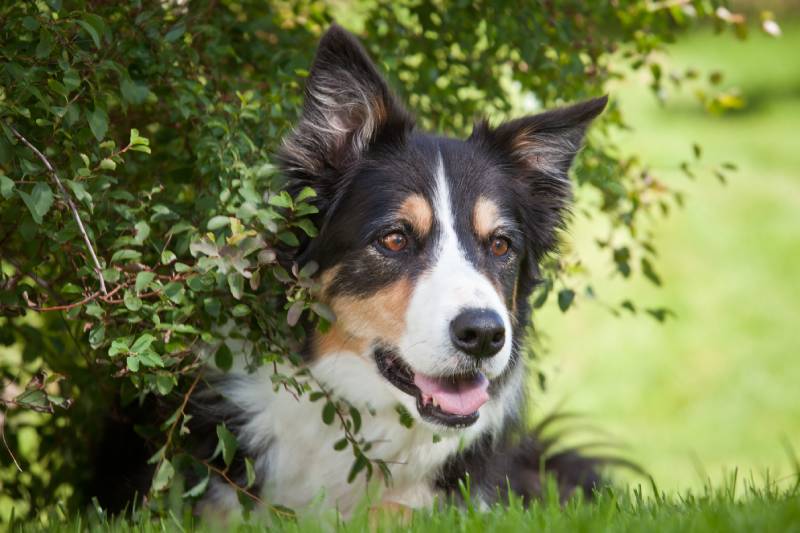
As a veterinarian and lifelong dog lover, I‘m fascinated by all the amazing dog breeds out there. But there‘s one breed that never fails to take my breath away with both their spectacular looks and incredible intelligence: the tri-color border collie. With their striking black, white and tan coat, intense gaze, and graceful yet athletic movement, these dogs are truly stunning.
But tri-color border collies aren‘t just another pretty face. They are widely considered the most intelligent of all dog breeds, capable of learning a vast array of commands, tricks and tasks. Their keen minds combined with their high energy, intense drive, and desire to work make them star performers in herding, agility, obedience, and so much more.
Whether you‘re lucky enough to share your life with a tri-color border collie already, are considering welcoming one into your family, or simply admire these amazing dogs from afar, I invite you to join me in taking a closer look at what makes them so special.
Breed History: From the Scottish Border to Farms Around the World
Border collies originated in the rugged border region between England and Scotland. Here, shepherds developed highly skilled herding dogs to help them manage their flocks on the steep, rocky terrain starting in the 1800s. The breed gets its name from this border area, although the dogs didn‘t have an official name until the 20th century.
A tri-color dog named Old Hemp, born in 1893, was one of the most influential border collies in the breed‘s foundation. Renowned for his herding prowess, Old Hemp was much sought-after as a stud dog. He sired hundreds of pups, passing down both his remarkable abilities and striking black, white and tan coat. Even today, Old Hemp appears in the pedigree of most modern border collies.
As word of their incredible intelligence and work ethic spread, border collies became popular with shepherds not just in the UK, but around the world. In the late 1800s and early 1900s, these dogs were exported to other sheep farming areas like the United States, Canada, Australia and New Zealand. Their drive and trainability proved well-suited to the vast farms and ranches in these countries.
"Old Hemp is the dog that is considered to be the ‘foundation sire‘ of the Border Collie breed. He was a tri-color dog, and his ability to herd sheep was unsurpassed in his time." – Dr. Angela Hughes, Veterinary Genetics Research Manager at Wisdom Health
While still prized for their herding skills, border collies have become increasingly popular as companions and canine athletes in recent decades. They excel at high-energy dog sports like agility, flying disc, flyball, and of course, herding trials. With the right training and plenty of mental and physical exercise, they make wonderfully devoted and fun-loving pets.
Breed Characteristics: Smarts, Speed, and Sensitivity
So what‘s it like to live with a border collie? First and foremost, life with these dogs is never dull! Border collies are famed for their incredible intelligence. In fact, they‘re considered the smartest of all dog breeds. They can learn a huge variety of words, commands, tricks and tasks with astonishing speed and eagerness.
A 2019 survey of veterinary professionals conducted by Veterinarian‘s Money Digest ranked border collies as the most intelligent dog breed out of 110 qualified breeds. Those in the animal care industry gave BCs the top score for trainability, obedience, instinctive intelligence and adaptive intelligence. An earlier 1994 study published in the Journal of Comparative Psychology also found that border collies were capable of learning a verbal vocabulary of over 200 words.
But all that brain power comes with an important caveat: border collies need a job to do. These dogs are wired with an intense desire to work, honed by nearly 200 years of selective breeding. If you don‘t give them an outlet for all that physical and mental energy, they‘ll find their own ways to stay busy – and you probably won‘t like the results! Daily physical exercise and mental stimulation in the form of advanced obedience, tricks, puzzle toys, nose work, or the chance to herd are crucial to keeping a border collie happy and well-behaved.
"It‘s important to understand that most Border Collies are never going to be happy as couch potatoes. They have been bred as working dogs and most will need to be kept mentally stimulated and physically exercised." – Dr. Taylor Truitt, DVM, CEO of The Vet Set veterinary clinic
Physically, border collies are known for their speed, agility and endurance. Developed to cover many miles a day over rugged terrain, they have strong, compact bodies that are slightly longer than tall. Males stand 19 to 22 inches tall at the shoulder and weigh 30 to 45 pounds, while females are a bit smaller at 18 to 21 inches and 27 to 42 pounds. Their effortless gait, crouching stance and bursts of speed allow them to control the movement of herds with ease.
While border collies come in several colors, including black and white, blue merle, red merle and Australian red, the tri-color coat pattern is quite striking. The name "tri-color" is a bit misleading though. All border collies are actually tri-colored, including the black and whites.
"The primary color is typically black, but the points over the eyebrows, on the cheeks, chest, legs, under the tail and sometimes on the muzzle are tan. These tan points may be hidden by white markings but most Border Collies have some amount of tan on them," explains Allison Foley, Leading Edge Dog Show Academy.
The tri-color pattern contains varying amounts of black, white and tan. The black may be solid or have white ticking or roaning mixed in. White typically appears as a collar around the neck, on the chest, belly, feet and tail tip. The tan points are commonly found on the eyebrows, cheeks, chest, legs and hindquarters. It‘s a beautiful coat that really makes these dogs stand out!
Living with a Tri-Color Border Collie
As much as I adore tri-color border collies, I‘ll be the first to admit they aren‘t the ideal dog for every family or living situation. These dogs thrive in homes with very active, engaging lifestyles. They do best with a job to do, whether that‘s herding livestock, competing in canine sports, or joining you for long jogs, hikes and adventures. Couch potatoes need not apply!
Border collies require a bare minimum of 60 to 90 minutes of physical exercise every single day, although many individuals need even more than that. They also need plenty of mental exercise to keep their big brains busy – think advanced obedience training, challenging puzzle toys, scent work and the like. All this means border collies are not low maintenance dogs by any means.
A securely fenced yard is a must for letting a border collie safely burn off some steam. Wide open spaces where they can really run and stretch their legs are even better. With their strong herding drive, chasing fast-moving objects like bikes, joggers and cars can be a real hazard, so keeping them on a leash or securely fenced is non-negotiable.
Behavioral issues like separation anxiety, destructive chewing, obsessive compulsive disorder, and noise phobias are quite common in this breed. A 2015 study on canine compulsive disorder published in PLOS One found that border collies have a higher prevalence of CCD than other breeds, likely due to a combination of their genetics and environment. Oftentimes these issues crop up when BCs don‘t get enough exercise and enrichment.
"This is a breed that absolutely requires appropriate early socialization and training, and a lifelong commitment to physical exercise and mental stimulation. Border Collies kept as companion animals may not have an appropriate outlet for their natural behavioral instincts, which can lead to problem behaviors and may also have an impact on the dog‘s welfare." – Dr. Lori Teller, DVM, DABVP, CVJ, Clinical Associate Professor at Texas A&M University
Due to their sensitivity and drive, border collies do best with positive reinforcement training methods. Heavy-handed, aversive techniques can really shut them down and damage your relationship. They also tend to be reserved or cautious with strangers, so plenty of socialization is a must starting from puppyhood and continuing throughout their lives.
For the right person, the bond you can build with a border collie is extraordinary. They often attach intensely to their special person and are happiest right by your side. If you can provide a BC with the exercise, training, companionship and work they crave, you‘ll have an incredibly loyal, smart, athletic and loving best friend.
Health and Lifespan: Concerns & Community
All purebred dogs are prone to certain genetic health conditions, and border collies are no exception. Some of the most common health issues seen in the breed include:
-
Hip dysplasia: Abnormal development of the hip joint, which can lead to pain and lameness. Affects an estimated 8-10% of border collies according to the Orthopedic Foundation for Animals.
-
Collie eye anomaly (CEA): Inherited eye disease that can cause vision defects and sometimes blindness. A 2003 study found a 31% prevalence of CEA in border collies in the UK and Netherlands.
-
Epilepsy: Neurological disorder that causes recurrent seizures. Estimated to impact up to 5% of border collies, with a strong genetic influence.
-
Deafness: Congenital (present from birth) deafness, often linked to the merle gene that causes dappled coloring. Puppies should have hearing tested early on.
-
Allergies: Includes flea, food and environmental allergies that cause skin itching and infections. More common in border collies than some other breeds.
The best way to ensure your tri-color border collie is healthy is to work with a responsible breeder who performs the recommended genetic tests, hip evaluations, and eye exams on their breeding dogs. No dog is ever guaranteed to be free of health problems, but ethical breeders are working hard to reduce the incidence of preventable diseases.
With proper care, nutrition, and exercise, the average lifespan of a border collie is 12 years, with many dogs living to 15 or even older. A 2021 survey by the Border Collie Society of America found that 11% of respondents had a BC that lived to be 17 or older, and the oldest dog reported was an impressive 23 years old!
"Border collies may be prone to certain diseases, but overall they tend to be a hardy breed with good longevity. Buying from a responsible breeder who screens for health issues is important, but so is providing a healthy lifestyle with proper vet care, nutrition, parasite control, exercise and mental enrichment." – Dr. Jean Maixner, DVM, co-owner of Animal Critical Care & Emergency Services in Seattle
One of the wonderful things about sharing your life with a border collie is the incredible community of owners, breeders, trainers and dog sports enthusiasts that exists for this breed. From the United States Border Collie Handlers Association (USBCHA) to the Border Collie Society of America (BCSA) to countless regional and local clubs, you‘ll find no shortage of folks who are passionate about border collies and preserving the breed‘s working ability, health and temperament.
For active owners, participating in herding trials, agility, disc dog, flyball, or other activities with your tri-color BC is hugely rewarding. Not only is it a great way to build an incredible bond with your dog, but you‘ll meet other committed owners and develop friendships within the dog sport world. Even if you don‘t compete, joining a local border collie club or social media group can be a wonderful way to connect with like-minded people.


