
Whippet vs. Italian Greyhound: The Key Differences (With Pictures)
How to Choose Between a Whippet vs Italian Greyhound
If you‘re looking for an elegant, athletic companion dog, you may be considering a whippet or Italian greyhound. These closely related sighthound breeds have a lot in common, including sleek physiques, gentle dispositions, and a love of running. However, there are also some key differences between whippets and Italian greyhounds to be aware of.
In this in-depth comparison, we‘ll explore the history, appearance, temperament, and care needs of whippets and Italian greyhounds. By the end, you‘ll have a clearer picture of which breed may be the best fit for your lifestyle and family. Let‘s get started!
Breed History and Origins
Both whippets and Italian greyhounds trace their lineage back to ancient sighthound breeds originally used for hunting small game. However, they were developed as distinct breeds in different parts of Europe.
Whippets originated in England in the 1700s, where they were bred by coal miners and other working class people to hunt rabbits and race for sport. These "snap dogs" provided a source of food and entertainment for their owners. The name whippet comes from an old English word meaning "small dog" or "yelping dog." Whippets were brought to America in the late 1800s and recognized by the AKC in 1888.
Italian greyhounds, on the other hand, are an older breed that dates back over 2000 years to the days of the Roman Empire. These miniature greyhounds, known as "piccoli levrieri italiani," were favored by nobility and frequently depicted in art of the time period. They served as companions and small game hunters. The breed was developed and refined in Italy and Greece before spreading across Europe as a popular companion animal for aristocratic ladies. The AKC recognized the Italian greyhound in 1886.
Appearance and Size
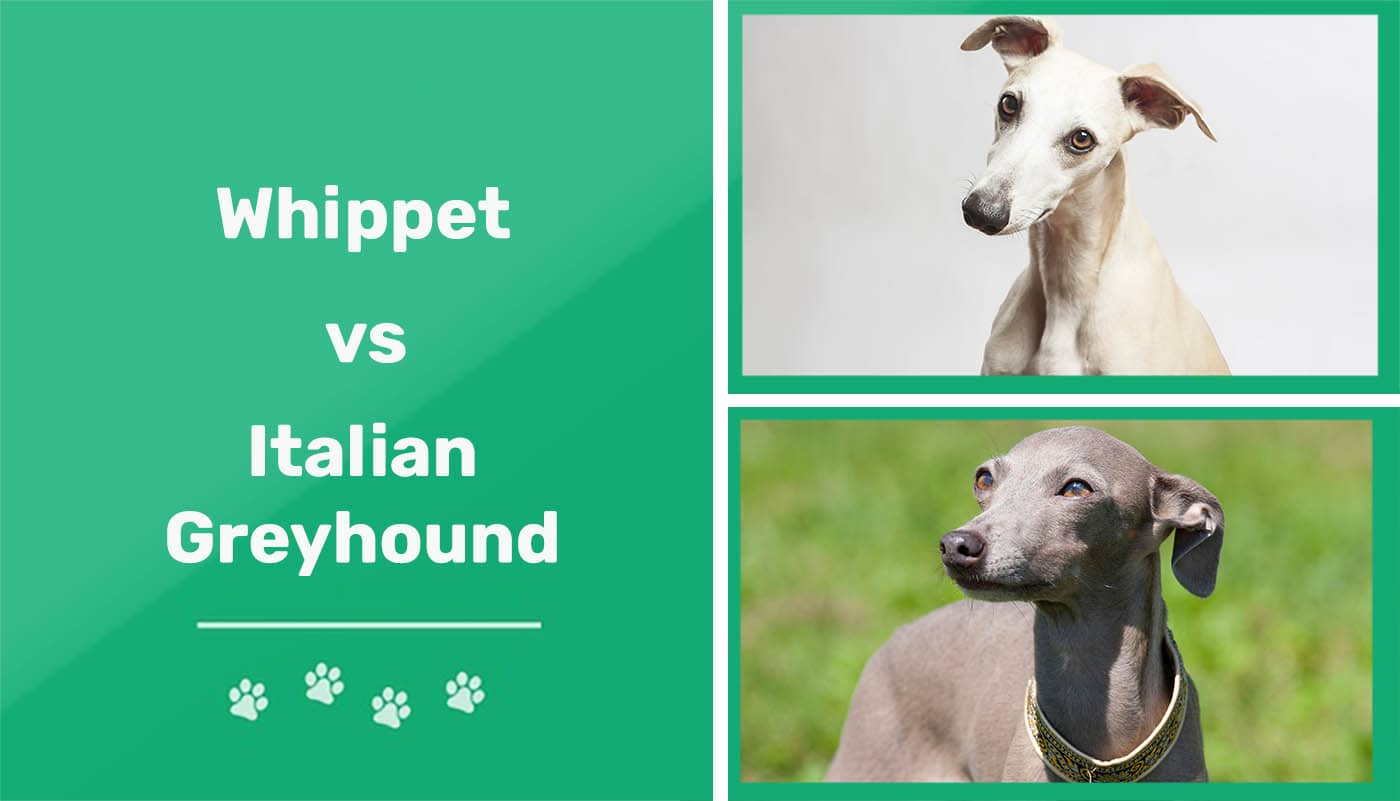
At first glance, whippets and Italian greyhounds look very similar with their sleek, slender builds. However, whippets are noticeably larger. Some key physical characteristics of each breed:
Whippets
- Height: 18-22 inches
- Weight: 25-40 pounds
- Short, close coat in range of colors including brindle, fawn, red, white, and black
- Long, arched neck
- Small, rose-shaped ears
- Tapered tail
Italian Greyhounds
- Height: 13-15 inches
- Weight: 7-14 pounds
- Short, glossy coat in similar color range as whippets
- Long, slender neck
- Folded ears
- Long, curved tail
In terms of overall body proportions, Italian greyhounds tend to be longer in the leg compared to their body length, giving them a square outline. Whippets are slightly longer than tall for a more rectangular shape. The Italian greyhound also has a more pronounced arch to the loin.
Both breeds have an elegant, deer-like appearance with long, fine-boned legs, small folded ears, and expressive almond-shaped eyes. Their coats are short and close to the body with minimal grooming required. Regular brushing and occasional baths are sufficient to maintain the coat. Neither breed has an undercoat, so shedding is minimal.
Temperament and Personality
In general, whippets and Italian greyhounds have gentle, affectionate, and even-tempered personalities. They are sensitive dogs who become deeply devoted to their people and thrive on human companionship. While generally friendly, both breeds can be somewhat reserved with strangers and may be timid in new situations without early socialization.
Some notable temperament traits of each breed:
Whippets
- Calm, quiet demeanor indoors but can have surprising bursts of energy outside
- Independent streak and can be mischievous
- Usually good with children and other dogs
- High prey drive requires caution around cats and small pets
- Playful and enjoys interactive toys and games
Italian Greyhounds
- Velcro dog that always wants to be near people
- Can be anxious if left alone and prone to separation anxiety
- Sensitive to criticism and requires gentle training methods
- Good with other dogs but may see small animals as prey
- Clever, inquisitive, and can get into trouble if bored
- Playful and entertaining personality
Neither breed is very vocal, but Italian greyhounds are more likely to bark at suspicious noises or when excited. Whippets tend to be nearly silent, with the occasional bark or whine. Both are loving lap dogs despite their athletic nature and enjoy cuddling up on the couch or bed with their people.
Exercise and Activity Level
As sighthounds, whippets and Italian greyhounds were built for speed and love to run. While they may spend much of the day napping and relaxing, they do need regular exercise in the form of walks, play sessions, and chances to sprint in enclosed areas. A securely fenced yard is a must to prevent them from taking off after small animals when their prey drive kicks in.
Whippets have moderate exercise needs and will be satisfied with a couple brisk 30+ minute walks or jogs per day along with some playtime. Many enjoy joining their owners for hikes and other outdoor adventures. Whippets tend to have an "off switch" and are generally calm and low-key indoors as long as they get enough physical and mental stimulation.
Italian greyhounds are also not as high-energy as many people assume, but they do best with daily walks of at least 20-30 minutes and regular chances to run and play in a safely enclosed area. With their smaller size, Italian greyhounds can get more exercise indoors than whippets by tearing around the house or apartment. Many get ample activity from playing chase and fetch games inside.
That said, a tired whippet or Italian greyhound is a good whippet or Italian greyhound! Without enough exercise and mental stimulation through training and play, these breeds are likely to become bored, anxious, and destructive. Puzzle toys, treat dispensers, and interactive games can help keep their clever minds busy.
Training and Living With
Both whippets and Italian greyhounds are sensitive dogs who respond best to gentle, reward-based training methods. They can be easily discouraged by harsh corrections or scolding. Whippets are generally agreeable and pick up new commands quickly with positive reinforcement and consistency.
Italian greyhounds are also smart and trainable, but they can have an independent streak which some describe as catlike. They are more likely to ask "what‘s in it for me?" and lose interest if training sessions are too long or boring. Keeping lessons short, fun, and full of praise and play helps keep Italian greyhounds engaged in the training process.
As sighthounds, whippets and Italian greyhounds can never be trusted off-leash outside of enclosed areas. They will take off after anything that moves in a flash and tune out all recall attempts once locked on to a target. A securely fenced yard or dog run is essential for allowing these breeds to stretch their legs and get out energy safely.
Socialization from an early age is important for both whippets and Italian greyhounds to boost their confidence, especially in the more timid Italian greyhound. Positive exposure to new people, places, and situations as puppies can help prevent fearfulness and anxiety later on. Whippets tend to be more naturally outgoing, while Italian greyhounds often go through a second fear period during adolescence that requires patient counter-conditioning.
With their gentle, sensitive personalities, both breeds can make excellent therapy dogs with proper training and socialization. They are naturals at providing comfort and affection to people in hospitals, nursing homes, and other care facilities.
Potential Health Issues
Whippets and Italian greyhounds are generally healthy breeds with an average lifespan of 12-15 years. However, like all breeds, they are prone to certain genetic health conditions. Some health problems seen in these breeds include:
Whippets
- Heart disease (mitral valve disease and dilated cardiomyopathy)
- Eye disorders (progressive retinal atrophy, cataracts)
- Deafness
- Von Willebrand‘s disease (bleeding disorder)
- Hypothyroidism
- Autoimmune disorders
Italian Greyhounds
- Luxating patellas (slipping kneecaps)
- Legg-Calve-Perthes disease (hip joint deformity)
- Epilepsy
- Color dilution alopecia (hair loss in blue/fawn dogs)
- Periodontal disease
- Portosystemic shunt (liver disorder)
Responsible breeders perform pre-breeding health tests on prospective parents to avoid passing on genetic disorders. When looking for a whippet or Italian greyhound puppy, ask the breeder for proof of health screenings like eye exams, cardiac evaluations, patella checks, and von Willebrand‘s testing. Avoid any breeder who does not perform these recommended health clearances.
To prevent orthopedic injuries, it‘s important not to let whippet and Italian greyhound puppies overdo it with running, jumping, or navigating stairs until their joints are fully developed. Gradual conditioning and providing traction on slippery floors can help avoid injury in these slender, fine-boned breeds.
Since both breeds are sensitive to cold, a well-fitted coat or sweater is recommended for chilly weather. Their short coats and low body fat provide little insulation. Avoiding icy or salted sidewalks can prevent irritation to their delicate paw pads.
With proper care, nutrition, and regular vet check-ups, whippets and Italian greyhounds can enjoy a long, healthy life as your devoted companion.
Conclusion
Choosing between a whippet and Italian greyhound ultimately comes down to your lifestyle and personal preferences. If you want a medium-sized, sturdier athlete, the whippet may be your ideal match. If you prefer a smaller, more portable companion to pamper and snuggle, the Italian greyhound could be your new best friend.
Whippets can adapt well to both city and country life as long as they get enough exercise and mental stimulation. They are generally good with children and make playful family pets. Whippets also excel at dog sports like lure coursing, agility, and flyball with their speed and stamina.
Italian greyhounds are perfectly apartment-sized and have moderate exercise needs that can be met with walks and indoor play. They tend to attach deeply to their primary person and can become anxious if left alone too much or in the care of others. Italian greyhounds do best in a consistent environment with plenty of attention and affection from their special human.
Both breeds have some prey drive and are not trustworthy off-leash, so a securely fenced yard or supervised leash walks are a must. Cats and other small pets are likely to be viewed as something to chase unless raised together from a young age.
No matter which breed you choose, you will have an elegant, affectionate companion who will steal your heart with their gentle soul and zest for life. If you can provide a loving home, regular exercise, and plenty of togetherness, a whippet or Italian greyhound will be your devoted friend for life.





)