Newfoundland vs Saint Bernard: A Dog Lover‘s Comparison of Two Gentle Giants

As a lifelong dog lover and veteran of the pet industry, I‘ve had the pleasure of working closely with many different breeds over the years. But few have captured my heart quite like the Newfoundland and Saint Bernard. These majestic giants are the epitome of the gentle giant archetype – massive in size but sweet and tender in temperament. While Newfies and Saints share many endearing qualities, they also have some fascinating differences that make each breed unique.
In this comprehensive comparison, we‘ll dive into the history, appearance, personality, training, health, and care requirements of Newfoundlands and Saint Bernards. I‘ll share some fun facts and personal anecdotes along the way to give you a true dog lover‘s perspective on what makes these gentle giants so special. Whether you‘re trying to decide between a Newf and a Saint or simply want to learn more about them, this guide has you covered!
Breed Histories
Newfoundland
The Newfoundland dog originated on the island of Newfoundland, off the east coast of Canada. These strong, hardy dogs were bred to be all-purpose working dogs and companions to the island‘s fishermen and settlers. Newfies were used for a wide variety of jobs, including:
- Hauling fishing nets and lines
- Carrying heavy loads as draft animals
- Retrieving objects from the water
- Rescuing drowning swimmers
- Serving as nanny dogs to watch children
With their webbed feet, dense coats, and muscular builds, Newfoundlands were uniquely adapted to the island‘s harsh conditions and icy Atlantic waters. Their strength, endurance, and swimming prowess were legendary – there are even reports of Newfies rescuing entire crews from shipwrecks.
According to the American Kennel Club, the Newfoundland was officially recognized as a breed in 1886. While no longer used extensively for water rescue or drafting, Newfies still excel as companion animals and excel in activities like water rescue, carting, draft work, and therapy work.
Saint Bernard
The Saint Bernard‘s history is equally fascinating. This giant breed was developed in the Swiss and Italian Alps by monks living in hospices along treacherous mountain passes. The most famous of these was the Great St. Bernard Hospice and Pass, where the breed gets its name.
For centuries, Saint Bernards served as hospice dogs and were sent out in pairs to find and rescue travelers buried in avalanches or lost in blizzards. The dogs‘ powerful sense of smell allowed them to locate victims even under many feet of snow. Once they found a person, one dog would lie on top of them for warmth while the other went back to alert the monks.
The Saint Bernards‘ lifesaving abilities quickly made them legendary. The most famous Saint Bernard was Barry, who lived in the early 1800s and reportedly saved over 40 lives during his lifetime. Barry‘s body was preserved and remains on display at the Natural History Museum in Berne, Switzerland.
Though no longer used extensively for Alpine rescues, Saint Bernards still retain the strength, courage and dedication that made them such valued working dogs. Today, Saints mostly enjoy life as devoted family companions, although some do compete in cart pulling, weight pulling and drafting competitions that showcase their strength.
Appearance
Both Newfoundlands and Saint Bernards are giant breeds, but there are some physical differences between them. Here‘s a quick rundown of their key characteristics:
Newfoundland
- Height: 26-28 inches (male), 24-26 inches (female)
- Weight: 130-150 pounds (male), 100-120 pounds (female)
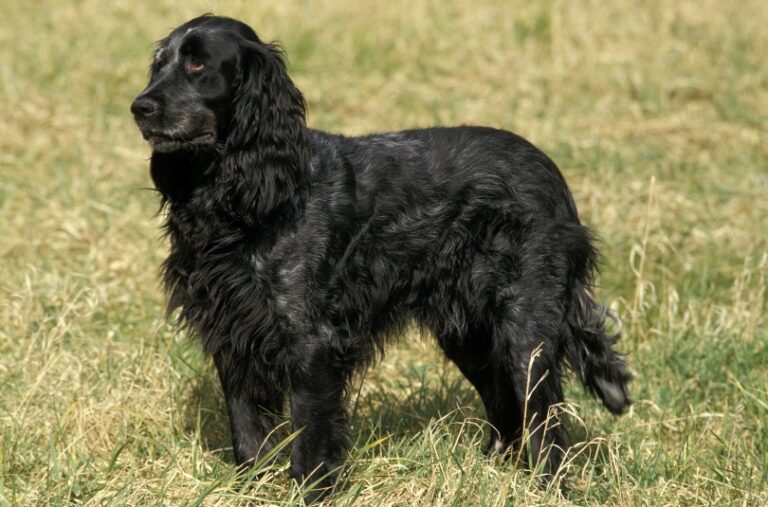
- Coat: Dense, flat double coat that is water resistant. Comes in black, brown, gray and white and black (Landseer).
- Head: Broad, massive head with small ears and gentle expression.
- Body: Muscular, heavily boned, and sturdy.
- Tail: Strong and thick, hangs down when relaxed.
Saint Bernard
- Height: 28-30 inches (male), 26-28 inches (female)
- Weight: 140-180 pounds (male), 120-140 pounds (female)
- Coat: Two coat types – smooth (short and dense) or rough (medium). Common colors are white with red, brown or brindle patches.
- Head: Very large, powerful head with wrinkles, short muzzle, and droopy lips. Ears are high set and hang down.
- Body: Powerful, muscular body with a deep chest and massive bone structure. Largest of the giant breeds.
- Tail: Long and heavy, hangs low.
In terms of sheer size and mass, Saint Bernards have a slight edge over Newfoundlands. The average Saint weighs about 20 pounds more than the average Newf and stands an inch or two taller. That said, both breeds are huge – even a "small" Newfie or Saint female is still very much a giant dog!
Coat type is another obvious difference between the breeds. Newfoundlands only come in a longer double coat that sheds moderately, while Saints can have either a smooth or rough coat. Rough-coated Saints shed more than their smooth counterparts.
Temperament
Newfoundlands and Saint Bernards are both famously good-natured, patient, and tolerant, especially with children. They tend to be calm, easygoing dogs who love nothing more than relaxing at home with their families. Both breeds are known for being especially sweet and gentle with kids, even clumsy toddlers who may accidentally poke or prod them.
However, Newfies and Saints do have some temperament differences. Newfoundlands are generally more sociable and outgoing with strangers and other animals. They tend to greet everyone as a friend unless given a reason not to. Newfs are also slightly less territorial and protective compared to Saints.
Saint Bernards, on the other hand, tend to be a bit more aloof and discriminating with people they don‘t know. They are naturally very devoted to their own families but often take a "wait and see" approach to newcomers. Once they decide you‘re okay, though, Saints are just as loving and affectionate as Newfies.
As watchdogs, Saint Bernards are more alert and bark readily to warn off intruders. Combined with their huge size and deep, booming voices, this makes them quite effective guards despite their friendly personalities. Newfoundlands also make competent watchdogs, but tend to be quieter and slower to sound the alarm.
Both breeds are fairly low-key in terms of activity level. Neither Newfies nor Saints need or want hours of vigorous exercise. Moderate walks, play sessions and opportunities to swim (for Newfies) or hike (for Saints) are usually sufficient to keep them fit and content.
Training
As with any giant breed, training is a must for Newfoundlands and Saint Bernards. Fortunately, both breeds are intelligent and eager to please, so they typically respond well to positive, reward-based training.
Newfies in particular are very sensitive and biddable, meaning they aim to cooperate and are deeply affected by harsh corrections. According to Newfoundland expert and author Margaret Booth, Newfs have "soft temperaments" and shut down in the face of punishment-based techniques. They do best with gentle guidance, plentiful rewards and lots of encouragement.
Saint Bernards are also generally agreeable and trainable using force-free methods. However, they can be a bit more willful and stubborn compared Newfies, especially during adolescence. As trainer and author Michele Welton puts it, Saints are "too large and powerful for the average person to manage without a firm hand and confident demeanor."
While Newfies sometimes get a reputation for being a bit dopey, they are actually quite smart and quick learners. In a survey of 150 Newfoundland owners, 88% rated their dogs as having "excellent" or "above average" intelligence. Many Newfs excel in advanced training, and the breed is a popular choice for service and therapy work.
Saint Bernards may not be quite as biddable as Newfies, but they are still considered fairly easy to train by giant breed standards. The key with Saints is to start training early, be consistent, and avoid power struggles. They respond best to short, upbeat training sessions with plenty of positive reinforcement.
Health
Like many giant breeds, Newfoundlands and Saint Bernards have relatively short lifespans and are prone to certain health issues. The average lifespan for both breeds is 8-10 years.
Some common health problems in Newfoundlands include:
- Hip and elbow dysplasia
- Heart disease (especially subvalvular aortic stenosis)
- Gastric dilatation and volvulus (GDV or bloat)
- Cruciate ligament tears
- Eye problems like cherry eye and cataracts
- Osteosarcoma (bone cancer)
According to the Orthopedic Foundation for Animals, the incidence of hip dysplasia in Newfoundlands is 20.4%, and the incidence of elbow dysplasia is 15.8%. Responsible breeders screen their breeding stock for these and other hereditary conditions to help produce healthier puppies.
Saint Bernards have a similar array of health concerns, including:
- Hip and elbow dysplasia
- Entropion and ectropion (eyelid defects)
- Gastric dilatation and volvulus (GDV or bloat)
- Osteosarcoma (bone cancer)
- Dilated cardiomyopathy (heart disease)
- Epilepsy
The OFA reports a hip dysplasia incidence of 41.6% in Saint Bernards and an elbow dysplasia incidence of 20.3%. Again, health testing and careful breeding can help reduce the risk of these problems.
Overall, Newfoundlands have somewhat lower rates of orthopedic problems like hip and elbow dysplasia. They also tend to have fewer eye issues and seizure disorders compared to Saints. However, Newfs are more prone to certain heart conditions, especially subvalvular aortic stenosis.
Both breeds are very susceptible to bloat, a life-threatening condition in which the stomach fills with air and twists on itself. Owners of giant breed dogs should educate themselves on the signs of bloat and know their closest 24-hour emergency vet. Feeding smaller meals, avoiding exercise after eating, and using slow feeder bowls can help prevent bloat.
To keep any giant breed healthy, it‘s important to feed a high-quality diet formulated for large breeds, avoid overfeeding, and provide joint supplements starting at a young age. Keeping your Newfie or Saint lean and exercised goes a long way towards preventing orthopedic issues down the road.
Grooming and Care
Newfoundlands and Saint Bernards both have dense double coats that require regular grooming to keep them healthy and free of mats. Weekly brushing is a must for both breeds, and baths every few months help keep their coats and skin in good condition.
One big difference between the breeds is shedding level. Newfoundlands are moderate shedders year-round, while Saints blow their coats heavily twice a year (usually in spring and fall). During these seasonal sheds, Saints may need daily brushing to keep up with the incredible amount of hair they lose.
Drool is another factor to consider with these breeds, especially Saints. Saint Bernards are notorious for their drooling due to their very loose lips and jowls. Most Saints leave ropes of drool on their chins, clothing, and furniture. Newfies also drool to some extent, but not as much as Saints.
Trimming nails, cleaning ears, and brushing teeth are other important grooming tasks for giant breeds. Many owners of giant breeds invest in a dremel tool to grind their dogs‘ nails instead of using clippers, as giant breed nails are very thick and tough.
Because of their huge size and strength, both Newfies and Saints need a firm, confident handler for things like vet visits and grooming. They also require a lot of space, oversized everything (beds, crates, bowls, etc.), and a vehicle that can comfortably transport them. Owning a giant breed dog is not for the faint of heart!
Which Breed is Right For You?
Now that we‘ve compared Newfoundlands and Saint Bernards in depth, you might be wondering which breed is the best fit for you and your lifestyle. Both breeds can make wonderful companions for the right person, but they do have some key differences to consider.
Newfoundlands may be the better choice if:
- You want a dog who is more sociable and outgoing with strangers
- You prefer a slightly smaller, less massive giant breed
- You don‘t mind moderate shedding but want to minimize drool
- You have a pool, lake or other body of water for your dog to swim in
- You are looking for a therapy, service or emotional support candidate
On the flip side, Saint Bernards may be a better option if:
- You want a very large, powerful, commanding dog
- You don‘t mind heavy shedding a couple times a year
- You‘re okay with a dog who is a bit more aloof and territorial
- You have plenty of indoor and outdoor space
- You want a dog with some protective instincts
- You enjoy hiking and outdoor adventures
Of course, these are generalizations and every dog is an individual. The best way to decide between a Newf and a Saint is to spend time with dogs of both breeds in person. Talk to breeders, owners and rescue volunteers to get a feel for their personalities and quirks.
Whichever breed you choose, remember that owning a giant breed dog is a big responsibility – literally! These dogs need abundant space, socialization, training, and care to thrive. But for the right person, the love and loyalty of a gentle giant is truly unmatched.
To sum it up, here‘s a quick comparison table of Newfoundlands vs Saint Bernards:
| Trait | Newfoundland | Saint Bernard |
|---|---|---|
| Size | 100-150 lbs, 24-28" tall | 120-180 lbs, 26-30" tall |
| Coat | Dense double coat, moderate shedding | Smooth or rough coat, heavy seasonal shedding |
| Temperament | Very friendly, sociable, sweet | Friendly but more aloof/territorial |
| Trainability | Very biddable, sensitive, eager to please | Fairly easy to train but can be stubborn |
| Exercise Needs | Moderate, 30-60 min/day | Moderate, 30-60 min/day |
| Drool | Some drool | Lots of drool |
| Health | Lifespan 8-10 years, prone to SAS, bloat, joint issues | Lifespan 8-10 years, prone to eye problems, bloat, cancer |
In the end, both Newfoundlands and Saint Bernards are incredible breeds with a special place in the hearts of dog lovers around the world. As long as you do your research, choose a responsible breeder, and are prepared for the challenges of giant dog ownership, you really can‘t go wrong with either of these gentle giants.