Are All White Pitbulls Deaf? The Surprising Facts and What They Mean for Dog Lovers
Introduction
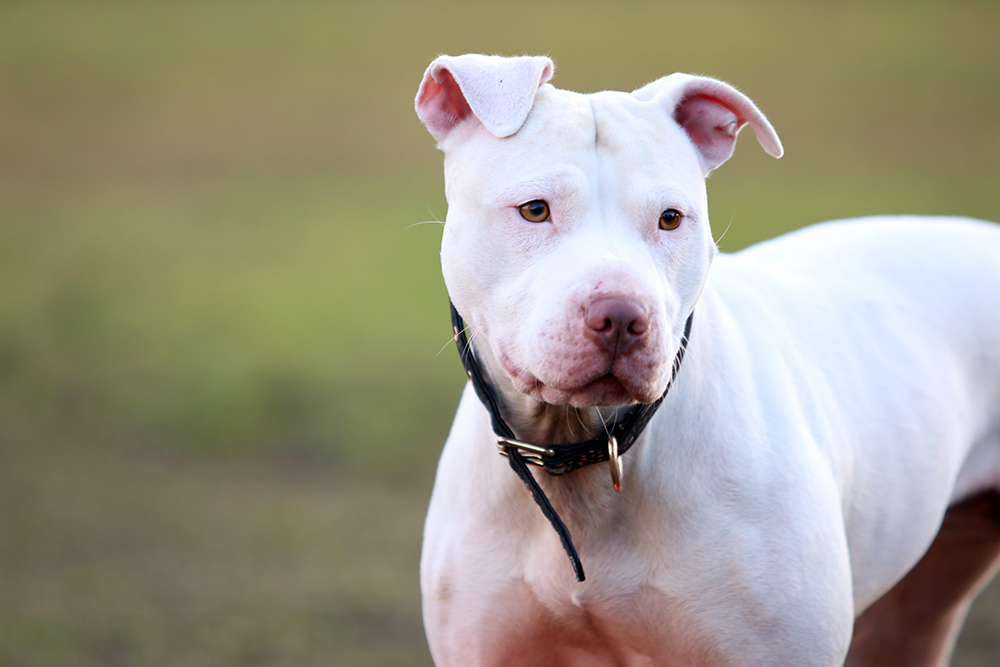
For animal lovers, there is perhaps no sight more arresting than a pure white pitbull. With their sleek, muscular bodies and piercing eyes, they seem to almost glow against their snowy coats. But as stunning as these rare pitties are, their unique coloring comes with a hidden cost – a significantly higher risk of deafness.
As a pitbull owner and enthusiast myself, I‘ve always been drawn to the ethereal beauty of all-white pits. But when I first learned of their heightened likelihood of hearing impairment, it gave me pause. Would a deaf pitty still be able to form a strong bond with their human family? Could they ever be truly safe in a world full of auditory dangers?
Driven by these questions, I set out to investigate the complex intersection of coat color and deafness in pitbulls. What I found was a nuanced picture that defies simple answers, but offers both cautions and hopes for would-be owners of these special dogs.
The Genetic Roots of Deafness in White Pitbulls
To understand why so many white pitbulls are born deaf, we first have to examine the genes that control their striking coloration. A 2018 study published in PLOS Genetics identified a mutation in a gene called MITF that causes pure white coats across many dog breeds, including pitbulls.
The MITF gene is responsible for the development of pigment-producing cells called melanocytes. Normally, melanocytes not only give color to a dog‘s fur, but also play a key role in the formation of the cochlea – the spiral cavity of the inner ear that allows dogs (and humans) to hear.
In dogs with two copies of the MITF mutation, melanocytes fail to mature properly, resulting in all-white fur. But that same lack of melanocytes in the inner ear often leads to an underdeveloped cochlea and profound hearing loss. In effect, the genetic quirk that makes white pitbulls so visually remarkable also robs many of them of their hearing.
Just how many white pitbulls are affected by congenital deafness? Frustratingly, there is no universal consensus, as different studies have yielded varying estimates.
A 2019 analysis of 1,000 BAER (Brainstem Auditory Evoked Response) tests conducted by the Orthopedic Foundation for Animals found that 18.6% of all-white pitbulls were bilaterally (completely) deaf, compared to just 2.1% of pitbulls with colored coats. When unilateral (one-sided) deafness was included, the prevalence rose to 30.9% in white pits.
However, other estimates have placed the rate of deafness in white pitbulls even higher. Dr. George Strain, a leading veterinary neuroscientist and expert on canine deafness at Louisiana State University, has stated that "the prevalence of deafness in white pitbulls runs between 40-50%, versus under 10% in pitbulls with color."
These disparities likely reflect differences in the populations studied and diagnostic criteria used. But the takeaway is clear – all-white pitbulls are at a much higher risk of hearing disabilities compared to their more colorful counterparts. To illustrate this gap, consider the following data from a 2012 study of deafness prevalence in 1,000 pitbulls:
| Coat Color | Percent Bilaterally Deaf | Percent Unilaterally Deaf | Percent with Any Hearing Loss |
|---|---|---|---|
| All White | 21.3% | 17.5% | 38.8% |
| Colored | 1.8% | 6.2% | 8.0% |
As you can see, white pitties were over 10 times more likely to be completely deaf compared to colored ones, and nearly 5 times as likely to have any degree of hearing loss. For dog lovers considering a white pitbull, these numbers underscore the importance of proactive deafness screening and a realistic understanding of the challenges ahead.
Identifying Deafness in White Pitbull Puppies
Given the high rates of deafness in white pitbulls, ethical breeders will conduct BAER testing on any white puppies before placing them in homes. This test, typically performed when pups are 4-6 weeks old, uses electrodes to measure the brain‘s response to auditory stimuli.
"A BAER test is really the only way to definitively diagnose deafness in a young puppy prior to adoption," emphasizes Dr. Katie Grzyb, a veterinarian at One Love Animal Hospital in Brooklyn, NY. "While there are certain behaviors that can hint at hearing loss, you can‘t rely on things like response to noises or commands to determine if a puppy is deaf."
Still, would-be adopters of white pitbull puppies can watch for some potential red flags:
- Lack of response to sudden loud noises, like clapping, whistling, or squeaky toys
- Excessive or prolonged barking, often louder than normal due to an inability to self-modulate volume
- Deep, uninterrupted sleep without stirring at noises that would wake a hearing dog
- Unresponsiveness to verbal cues and commands, even when the puppy is looking directly at you
Keep in mind, however, that these signs aren‘t foolproof. Even hearing puppies often sleep soundly or ignore commands, and a deaf pup may still feel and respond to vibrations. Only a BAER test under the guidance of a veterinarian can provide a definitive answer.
If possible, ask the breeder for proof of BAER results for both the puppy you are considering and its parents. Pups with one or two deaf parents are at an elevated risk, as deafness is a highly heritable trait. Conversely, a white pitbull with two BAER-normal parents is less likely (though not guaranteed) to be affected.
Raising and Training a Deaf Pitbull
So what does life look like with a deaf white pitbull? While their inability to hear certainly presents challenges, trainers and owners emphasize that it in no way precludes them from being fantastic companions.
"The biggest misconception is that deaf dogs can‘t be trained. But they absolutely can learn and follow commands – you just have to shift to a visual language versus a verbal one," says Stefanie Schwartz, a certified professional dog trainer and behavior consultant based in California.
Schwartz recommends teaching deaf pitties hand signals for important cues like sit, stay, come, and down. The signals should be simple, clear and consistent – a closed fist for sit, a sweeping arm motion for come, a downward palm for down. Pair each hand sign with a reward like a treat or playtime to reinforce the association.
Of course, getting a deaf dog‘s attention to deliver those hand signals requires some creativity. Many owners use flashlights, laser pointers or even stomping on the floor to create vibrations. Once you have your pup‘s eyes on you, immediately give the cue and reward.
Aside from training modifications, deaf pitbull owners also have to take extra precautions to keep their dogs safe. Deaf dogs should only be let off-leash in securely fenced areas, as they can‘t hear you calling them back from potential hazards.
"I have a deaf pitbull myself, and I would never dream of having him off-leash in an uncontrolled environment," notes Schwartz. "The risk of him running into traffic or getting into an altercation with another dog is just too high."
Other management tools, like vibrating collars, bells on tags for locating your dog, and even doggy doorbells to alert you when they need to go out, can all help deaf pitties navigate the world more safely.
But perhaps most importantly, deaf pitbull owners emphasize the need for an extra dose of vigilance and awareness. "You have to be your dog‘s ears and always be alert to potential dangers they might not notice," says Kimberly Morrow, director of Deaf Dogs Rock, a non-profit that promotes adoption and wellbeing of deaf dogs.
The Unique Joys of Loving a Deaf Pitbull
While the challenges of raising a deaf dog are undeniable, so too are the profound rewards. Anecdotally, many owners report that their deaf pitties are especially attuned to their body language and form incredibly deep bonds with their humans.
"My girl may not be able to hear me, but I swear she can read my mind sometimes," muses Theresa Faiola, a longtime deaf pitbull owner in Austin, Texas. "She is so in-tune with my facial expressions, physical cues, even my mood. It‘s like we have our own private language."
This heightened physical connection is a common refrain among deaf dog owners. Morrow theorizes that it stems from an increased reliance on visual communication and physical touch. "Deaf dogs really key into their other senses, particularly sight and touch, to understand and interact with their world. And that includes their humans," she explains.
Some also find that the process of consciously teaching a deaf dog hand signals strengthens the human-canine bond from an early stage. "With my hearing dogs, verbal communication came so naturally that I didn‘t put as much intentional effort into training," reflects Faiola. "But with [my deaf dog], I had to be so engaged and focused on connecting with her through visual cues. It made our bond that much more powerful."
Deaf pitbull owners also frequently point to their dogs‘ resilience and adaptability as a source of inspiration. "Watching my dog navigate the world so confidently and joyfully, you almost forget he has a disability," says Marcus Capone, a deaf pitbull foster in Detroit. "He‘s a constant reminder to focus on what you can do, rather than what you can‘t."
For Capone and many other deaf dog advocates, this spirit of focusing on ability over impairment is desperately needed in a world that often stigmatizes both pitbulls and disabled pets.
The Controversy Over Breeding White Pitbulls
The high prevalence of deafness and other health concerns in white pitbulls has made the ethics of deliberately breeding them a topic of heated debate. Critics argue that knowingly bringing more dogs into the world at elevated risk of disability is irresponsible and cruel.
"We should be selecting for health, not aesthetics," contends Dr. George Strain, the LSU deafness expert. "Intentionally breeding dogs with a known genetic risk of deafness goes against everything we know about responsible animal husbandry."
This view is echoed by numerous animal welfare organizations and even some pitbull breed registries. The United Kennel Club, for example, disqualifies all-white pitbulls from conformation events, stating that "the health and welfare of the dog must be the foremost consideration in breeding decisions."
However, some white pitbull enthusiasts argue that with proper genetic testing and selective breeding, the prevalence of deafness can be greatly reduced. "The problem isn‘t the breeding of white pitbulls in and of itself, it‘s the indiscriminate breeding of untested dogs," asserts Sarah Crandall, a white pitbull breeder in San Diego.
Crandall requires BAER testing for all her breeding stock and puppies, and only pairs dogs with bilaterally normal hearing. She contends that this results in far lower rates of deafness, though she acknowledges some hearing impaired pups are still unavoidable.
Other breeders take a more moderate stance, arguing that white pitbulls should still be bred but with full transparency about the risks. "I think it‘s unethical to breed all-white litters knowing a significant portion will likely be deaf," says Anthony Solesky, a pitbull breeder in Baltimore. "But if a responsibly bred litter happens to have a white pup or two, those pups deserve to find loving homes with informed owners."
Still, for many in the animal welfare world, the breeding of a trait associated with disability can never be justified. "Why take that risk when there are so many wonderful hearing pitbulls in need of homes?" questions Morrow of Deaf Dogs Rock. "Our goal should be to reduce the number of dogs born with preventable challenges, not create more of them for the sake of a specific look."
Ultimately, the ethics of white pitbull breeding remains a complex and contentious issue without a clear consensus. As a society, we must grapple with difficult questions about if and when aesthetic preferences can take precedence over potential health implications. But one thing everyone seems to agree on is that the wellbeing of the dogs should be the primary driver of breeding decisions.
Famous Deaf Pitbulls and Positive Representation
Despite the challenges deaf dogs face, many have gone on to lead remarkable lives and even achieve a degree of celebrity. Their stories serve as powerful examples of both the resilience of differently-abled pets and the impact of positive media representation.
Perhaps the most famous deaf pitbull was Hector, a former Michael Vick fighting dog who went on to become a certified therapy animal. As a survivor of unimaginable abuse, Hector‘s gentle spirit and ability to trust and comfort humans inspired people around the world. His story was featured in numerous documentaries, books and articles, shattering stereotypes about both pitbulls and deaf dogs.
Another deaf pitbull who rose to internet fame was Blu, a social media star with over 178,000 Instagram followers. Blu‘s account showcased his adventures paddle boarding, hiking, and even skateboarding, all while sporting an array of adorable outfits and costumes. For his many fans, Blu embodied the idea that deafness was no barrier to living life to the fullest.
Deaf dogs have also gained prominence beyond the pitbull world. The 2019 winner of the American Humane Hero Dog Awards was a deaf and partially blind Australian Shepherd named Piglet. Born the runt of his litter and initially struggling to thrive, Piglet proved to be a quick learner of sign language and became a certified therapy dog. He now serves as an ambassador for special needs pets and even "wrote" a children‘s book based on his life.
While not every deaf dog will achieve this level of fame, their stories matter immensely in terms of shifting public perceptions. Media representation has the power to educate, destigmatize, and inspire. The more people see thriving deaf dogs living joyful lives, the more open they may be to considering one as a pet.
Of course, this positive representation must be balanced with a realistic portrayal of the unique responsibilities of caring for a deaf dog. But when done right, showcasing successful deaf dogs can be a powerful tool for increasing adoption and acceptance.
Conclusion
The intersection of canine genetics, disability, and breeding ethics is a complex and often emotionally charged space. The dramatically higher prevalence of deafness in white pitbulls is an undeniable reality that any potential owner or breeder of these dogs must grapple with.
But it is equally true that deaf pitbulls can and do make wonderful companions, enriching the lives of their humans in unique and profound ways. With proper training, management, and an extra dose of mindfulness, their disability need not define or limit them.
As dog lovers, we must approach the issue of breeding white pitbulls with nuance, compassion, and a commitment to prioritizing welfare over aesthetics. We should celebrate the incredible resilience and spirit of deaf dogs while still working to minimize preventable disabilities.
Ultimately, the question of whether all white pitbulls are deaf is less important than the question of how we can best support the ones who are. By providing them with informed and devoted homes, advocating for their wellbeing, and sharing their stories, we can not only improve their lives but the lives of deaf and differently-abled dogs everywhere.
The bonds we form with our canine companions have never been predicated on "perfection" – they are built on a foundation of unconditional love, mutual respect, and understanding. In that light, a white pitbull‘s deafness is not a deficit, but rather a unique aspect of who they are. And in a world where so many dogs are discarded for far more superficial reasons, that‘s a perspective we could all stand to embrace.