
Cane Corso vs Mastiff: The Differences (With Pictures)
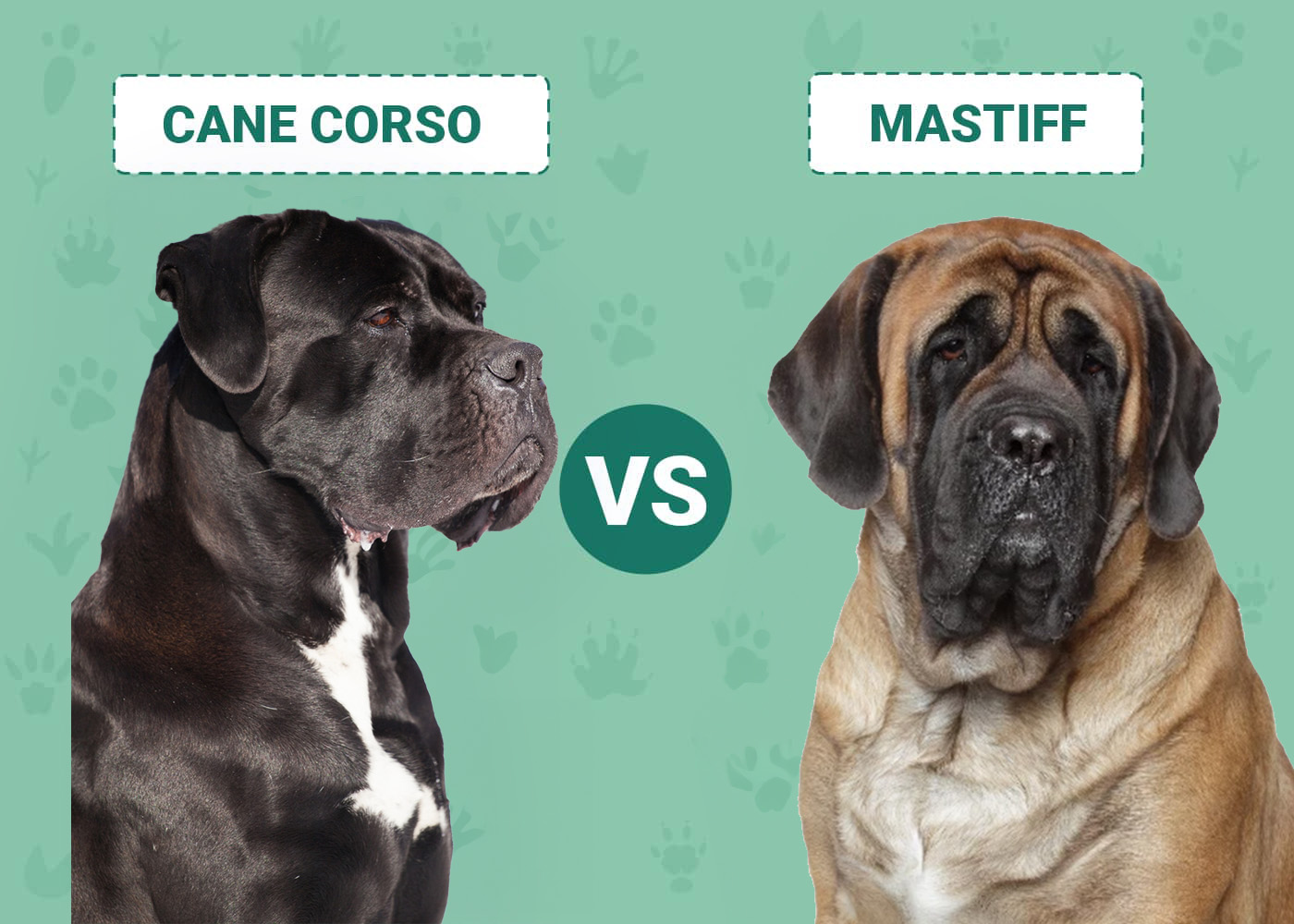
When it comes to choosing a large and loyal canine companion, two breeds that often come to mind are the majestic Cane Corso and massive Mastiff. Both of these impressive dogs have a long history as protectors and guardians, and they share many admirable qualities such as courage, devotion to family, and an imposing presence that can deter would-be intruders. However, there are also some key differences between the Cane Corso and Mastiff that are important to understand before deciding which breed is the best fit for your lifestyle and home.
Let‘s start by looking at the similarities that the Cane Corso and Mastiff have in common. Firstly, there‘s no denying that both of these dogs are big – really big! A male Cane Corso typically weighs between 99-110 pounds and stands 25-27.5 inches tall at the shoulder, while male Mastiffs tip the scales at a gargantuan 160-230 pounds and tower 30 inches tall. Females of both breeds are somewhat smaller in stature but still substantial dogs. With their muscular build, broad head, and powerful jaws, the Cane Corso and Mastiff were bred to guard and defend, a job they still take seriously to this day.
As working dogs, both breeds have a natural instinct to protect their pack, which in modern times is their human family. They form incredibly strong bonds with their owners and are happiest when they are in close proximity to their people. This loyalty and devotion is a hallmark of the Cane Corso and Mastiff temperament, but it also means these dogs are not well-suited to being left alone for long periods or isolated from their family. Both breeds need plenty of quality interaction and time with their humans to be emotionally fulfilled.
Another shared trait of the Cane Corso and Mastiff is their need for early and ongoing socialization to ensure they develop into well-adjusted adult dogs. As puppies, they should be exposed to a wide variety of people, animals, environments and situations so that they learn to take new experiences in stride. Proper socialization is especially important for the Cane Corso, as they have strong guarding instincts and a natural wariness of strangers that needs to be tempered through positive training. Without adequate socialization, both breeds are prone to becoming overly suspicious or even aggressive toward unfamiliar people and dogs.
Speaking of training, the Cane Corso and Mastiff are both intelligent dogs that are capable of learning and responding to commands, but they can also be independent thinkers that need a firm and consistent hand to guide them. For the Cane Corso in particular, an experienced owner who knows how to establish clear boundaries and leadership is a must. This breed is highly protective and territorial, and in the wrong hands their natural instincts can lead to aggression or other problem behaviors. Mastiffs, while still requiring structure and training, tend to have a more agreeable nature and are not as prone to challenging their owner‘s authority.
So what are some of the key differences between the Cane Corso and Mastiff, aside from size? One important distinction is energy level and exercise needs. The Cane Corso is a more athletic and energetic dog that needs a good deal of daily exercise and mental stimulation to be happy and well-behaved. A long walk or jog plus some vigorous playtime will help keep the Cane Corso balanced and prevent destructive boredom behaviors. Mastiffs, on the other hand, are more mellow and have lower activity needs. They still require regular walks and some opportunity to stretch their legs, but overall are content with a slower pace of life as adults.
Temperament is another area where some distinctions can be observed between the Cane Corso and Mastiff. As mentioned previously, the Cane Corso is the more protective and territorial of the two breeds, and can be aloof or even intimidating when encountering new people. They are fiercely devoted to family but take time to warm up to strangers. Mastiffs also make excellent watchdogs and have an imposing appearance, but they are typically more even-tempered and friendly with visitors once they realize there is no threat. Mastiffs are famous for being gentle giants with a sweet and affectionate nature, especially toward children.
Unfortunately, Mastiffs have a notably shorter average lifespan of just 6-10 years compared to the Cane Corso‘s 9-12 year life expectancy. The massive size and rapid growth rate of Mastiff puppies places great strain on their joints and skeletal system, and bloat, hip dysplasia, elbow dysplasia and certain cancers occur frequently in the breed. Cane Corsos also have their share of health issues, including hip and elbow dysplasia as well as eye disorders like ectropion and entropion, but tend to live a couple years longer on average than Mastiffs. Both breeds should be purchased from responsible breeders who health test their stock to help limit the incidence of inherited disease.
Grooming is one area where the Cane Corso and English Mastiff are fairly similar – both sport a short, dense coat that sheds moderately and requires regular brushing to remove loose fur, but overall their grooming needs are quite manageable. Mastiffs may drool quite a bit due to their loose jowls, so that is something fastidious owners will have to get used to. Other routine care requirements like dental hygiene, nail trimming and ear cleaning are equally important for both breeds to keep them looking and feeling their best.
As you might expect given their size, both the Cane Corso and Mastiff need a home with ample space to accommodate their bulk and free movement. They are not well-suited for small apartments, as they can easily knock over furniture and may feel cramped without room to stretch out. A house with a securely fenced yard is ideal. Both breeds can also be expensive to care for in terms of food bills, medical expenses and purchasing necessary gear like an extra large crate and bed.
The deep history of the Cane Corso and Mastiff is also worth mentioning as a final point of comparison. The Cane Corso descends from ancient Roman war dogs and later served as an all-purpose farm dog in Southern Italy, guarding livestock and property. The Mastiff‘s origins trace even further back to the Molossus dogs of Assyria, Babylon, Egypt and Asia. The Mastiff made its way to England by the time of Julius Caesar and was used in the blood sports of bear-baiting and dog fighting before becoming a popular estate guardian for the nobility and gentry.
While the Cane Corso and Mastiff share a noble heritage as protectors and defenders, today they are primarily kept as loyal and devoted companion animals. Both breeds form unbreakable bonds with their humans and have a dignified, commanding presence that is sure to draw attention and admiration from all who meet them. The choice between a Cane Corso and Mastiff ultimately comes down to personal preference and finding the dog whose temperament, activity level, and care requirements best align with your experience and lifestyle. Whichever breed you choose, rigorous socialization and training plus responsible ownership practices are key to having a well-mannered gentle giant by your side.


)