
Double Doodle vs. Labradoodle: Key Differences (With Pictures)
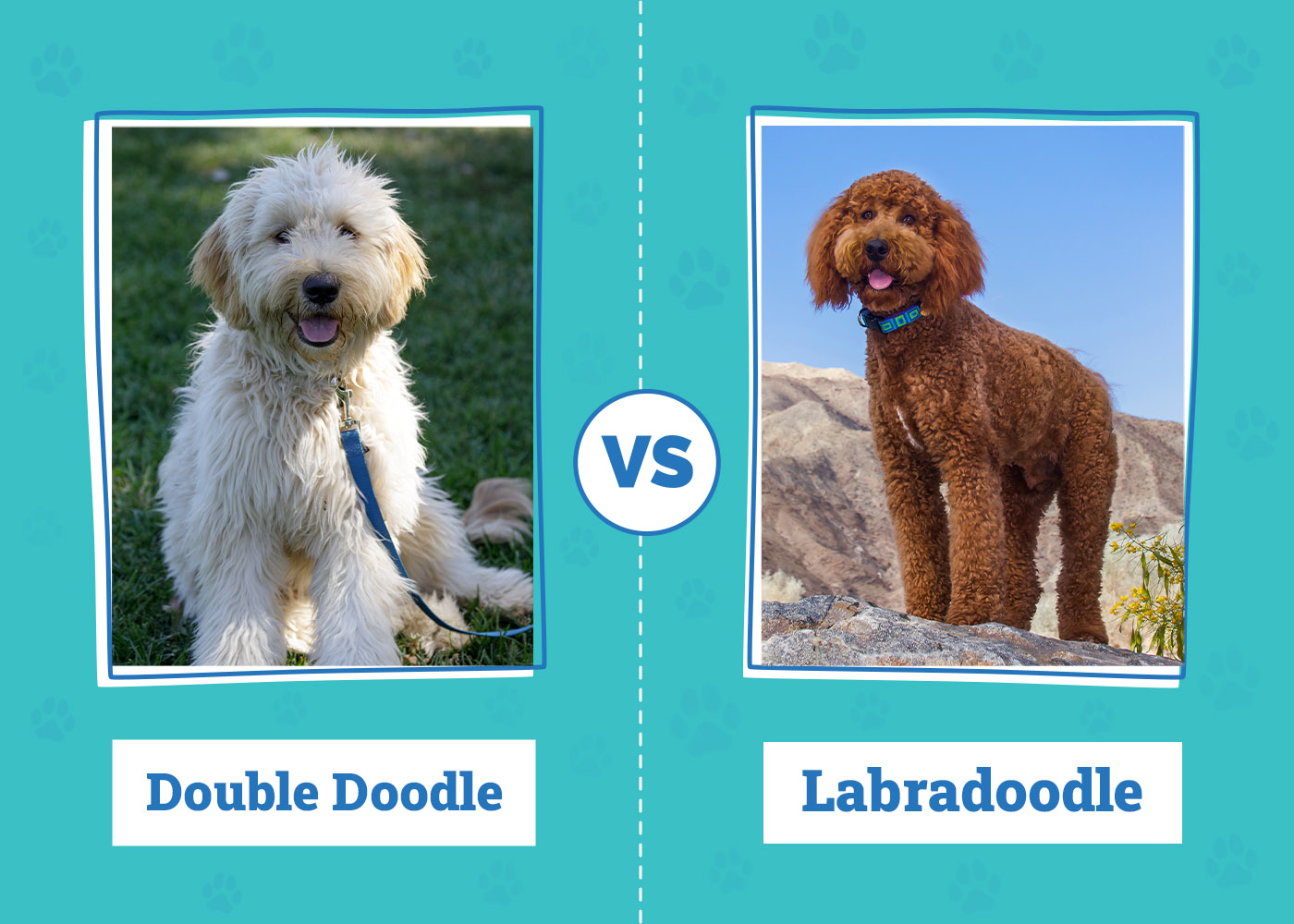
Double Doodle vs Labradoodle: Which Doodle Dog is Right For You?
With their cute, fluffy appearances and friendly personalities, it‘s no wonder Doodle dogs like the Double Doodle and Labradoodle have been gaining popularity in recent years. If you‘re considering adding one of these adorable pups to your family, you may be wondering about the similarities and differences between the two breeds. As a veterinarian and dog lover, I‘m here to break it all down for you. We‘ll compare the Double Doodle vs Labradoodle in terms of appearance, temperament, training needs, grooming requirements, health and more. By the end, you‘ll have a clearer idea of which breed might be the best match for your lifestyle and family. Let‘s dive in!
Origins and History:
The Double Doodle and Labradoodle are both relatively new breeds that were created by crossing Poodles with other popular dog breeds. The Labradoodle was first developed in Australia in the 1980s when a breeder crossed a Labrador Retriever with a Standard Poodle in hopes of creating a guide dog that would also be suitable for people with allergies. The result was a smart, friendly, low-shedding dog that quickly gained popularity around the world.
The Double Doodle, as the name implies, is a "double cross" – a hybrid of three breeds instead of two. They are the result of crossing a Goldendoodle (Golden Retriever/Poodle mix) with a Labradoodle (Labrador/Poodle mix). This "doubling up" on Poodle genes aimed to produce an even more consistent low-shedding, hypoallergenic coat. While the exact origins are unclear, Double Doodles likely first emerged in the early 2000s in the wake of the Labradoodle‘s rising popularity.
Appearance and Size:
One of the first things you‘ll notice about Double Doodles and Labradoodles is their cute, teddy bear-like appearance. Both breeds have fluffy, wavy or curly coats that tend to be low-shedding and hypoallergenic compared to many other breeds. However, there are some key differences when it comes to size and coat types.
Labradoodles come in three main size varieties:
- Miniature (weighing 15-25 lbs)
- Medium (30-45 lbs)
- Standard (50-65 lbs)
Thanks to the influence of the Poodle genes, their coats can range from wavy to tightly curled. Coat colors include chocolate, black, yellow, red, cream, parti, and various patterns.
Double Doodles are typically medium-to-large dogs. A full grown Double Doodle usually ranges from 50-80 lbs, with some larger individuals topping 90 lbs. They tend to be slightly taller and heavier than standard Labradoodles on average. So if you‘re looking for a big, cuddly lap dog, a Double Doodle may be the way to go! Their coats also vary from wavy to curly and can be found in a range of colors including black, chocolate, red, apricot, cream, and parti varieties.
Temperament and Personality:
Both Double Doodles and Labradoodles are known for having friendly, outgoing personalities. They are typically very affectionate with their families and are great with children. Both breeds tend to get along well with other dogs and pets when properly socialized.
However, the Double Doodle usually has an even more easy-going, adaptable personality. They are less prone to anxiety and tend to go with the flow in new situations. Labradoodles, especially those with a higher percentage of Poodle genes, maybe a bit more sensitive and need a little extra socialization to build their confidence.
With their retriever heritage, both breeds have a fair amount of energy and enjoy being active. However, they are usually not overly hyper and are content to chill out on the couch with you during downtime too. Double Doodles and Labradoodles make great companions for moderately active families.
Training and Exercise Needs:
If you choose a Double Doodle or Labradoodle, you can expect to have a smart, trainable pup on your hands! Both breeds are highly intelligent and usually pick up new commands quickly with positive reinforcement.
The eager-to-please Labradoodle may have a slight edge in the obedience department, as they tend to be a little more focused than the happy-go-lucky Double Doodle. But you really can‘t go wrong with either breed if you are looking for a dog that will be a star in the training department.
To be well-behaved, well-adjusted dogs, Double Doodles and Labradoodles need a fair amount of daily activity. Expect to provide at least 30-60 minutes per day of exercise in the form of walks, jogs, games of fetch, and play sessions. Access to a securely fenced yard is a big plus.
Without enough exercise and mental stimulation, these smart dogs can become bored and destructive. But with proper activity outlets, they are usually quiet, calm companions in the home. Consider activities like obedience classes, trips to the dog park, and food puzzle toys to keep these brainy breeds entertained.
Grooming and Care:
One of the biggest draws of Doodle dogs is their low-shedding, hypoallergenic coats. However, this perk comes with some extra grooming requirements. Both Double Doodles and Labradoodles need regular haircuts and brushing to prevent painful mats from forming.
Plan to brush your Double Doodle or Labradoodle at least 2-3 times per week, more often if their coat is long or very curly. Many owners opt to keep their Doodles in a shorter clip to make brushing more manageable. You‘ll also need to factor professional grooming into the budget. Taking your dog to the groomer every 6-8 weeks for a trim and a bath is usually necessary to keep that fluffy coat in tip-top condition.
In addition to coat care, you‘ll need to attend to other grooming tasks like regular nail trims, ear cleanings, and dental care. Luckily, both breeds tend to be pretty patient on the grooming table as long as you get them used to the process from a young age.
Health and Lifespan:
As with all breeds, Double Doodles and Labradoodles can be prone to certain genetic health issues. Hip and elbow dysplasia, certain eye disorders, and allergies and skin problems are some of the most common conditions to be aware of.
One of the benefits of mixed breed dogs like these is that they often benefit from "hybrid vigor." This means that by widening the gene pool, they may have a lower incidence of some of the problems seen frequently in purebreds.
However, it‘s still very important to work with a responsible breeder who does health screening on their dogs before breeding. Look for hip and elbow scores, eye exams, and any breed-relevant genetic tests. Doing your homework upfront to find a breeder who prioritizes health can save a lot of heartache and vet bills down the road.
With proper care and screening, you can expect a Double Doodle or Labradoodle to enjoy a lifespan of 12-15 years on average. Feed a high-quality diet, keep your dog at a healthy weight, provide lots of exercise and mental stimulation, and schedule regular check-ups with your vet. This will give your Doodle dog the best chance at a long, healthy life.
Suitability as Family Pets:
If you are looking for an affectionate, trainable, low-shedding family dog, you really can‘t go wrong with a Double Doodle or Labradoodle. Both breeds are excellent with children and are adaptable to a variety of living situations. They can do well in apartments as long as they get enough daily exercise.
Labradoodles may be a slightly better choice if you have a very busy household with lots of coming and going, as they are usually confident and less likely to develop separation anxiety. Double Doodles are a bit more dependent on human companionship and may be more prone to anxiety if left alone frequently.
Consider your grooming preferences as well. If you like the look of a fluffier, teddybear-like coat and don‘t mind more frequent brushing and trips to the groomer, either breed could work well. If you prefer a shorter, more wash-and-wear coat, you may lean towards a Labradoodle, as their coats are not always quite as thick and curly as a Double Doodle‘s.
Where to Find a Double Doodle or Labradoodle:
The growing popularity of Doodle breeds has unfortunately attracted some irresponsible breeders looking to make a quick buck. To stack the odds in favor of getting a healthy, well-adjusted puppy, do your research to find a reputable breeder.
Look for a breeder who:
- Does health screening on their dogs before breeding
- Raises puppies in the home with lots of socialization
- Is willing to answer all your questions and let you meet the parent dogs
- Provides a written contract and health guarantee
Avoid purchasing a puppy from a pet store, as these often come from puppy mills. You can also check with breed-specific rescue organizations. Sometimes Double Doodle or Labradoodle puppies and adults end up in rescue due to no fault of their own and are looking for loving homes.
Conclusion:
The Double Doodle and Labradoodle are both wonderful family dogs that share many positive traits like friendliness, trainability, and low-shedding coats. While they have a lot in common, there are some subtle differences in terms of size, coat type, and personality.
The Double Doodle is often larger, fluffier, and more dependent on human companionship. The Labradoodle comes in a wider range of sizes, has a coat that may be easier to maintain, and tends to be a bit more confident and adaptable.
Every dog is an individual, so the best way to choose between a Double Doodle and Labradoodle is to assess your own lifestyle and what you‘re looking for in a canine companion. Whichever breed you choose, you can expect to gain a loyal, loving friend for life!




)