White Miniature Schnauzer: A Complete Guide to This Rare and Charming Companion Dog

When most people think of miniature schnauzers, shades of black, salt-and-pepper, and black-and-silver typically come to mind. But did you know this popular and beloved small terrier breed also comes in a stunning pure white variation? While still quite rare, white miniature schnauzers have been steadily gaining fans in recent years for their unique look and all the same wonderful traits that make mini schnauzers such fantastic companion dogs.
As a veterinarian and lifelong schnauzer enthusiast, I admit I have a soft spot for these beautiful white pups. Let‘s take a closer look at the history, characteristics, care needs and more for white miniature schnauzers to help you decide if one might be the perfect addition to your family.
The Origins of White Miniature Schnauzers
Miniature schnauzers were first developed in Germany in the late 19th century as a smaller version of the standard schnauzer, intended to be an efficient ratter on farms. The breed was created by crossing standard schnauzers with affenpinschers and poodles to decrease size while maintaining the bold terrier personality.
The earliest documentation of a miniature schnauzer dates back to 1888, and while the breed likely existed in multiple colors from the beginning, the white variation was not an original focus for breeders. Instead, they concentrated their efforts on producing the salt-and-pepper, black-and-silver and solid black colors seen in standard schnauzers. This meant that while white minis definitely existed in the breed‘s early history, they remained quite rare.
Initially bred as a working dog, miniature schnauzers‘ friendly, affectionate nature soon earned them a place as beloved companion dogs as well. They spread across Europe and were first imported to the United States in 1924, though they didn‘t become extremely popular pets until after World War II.
In their native Germany, the breed was officially recognized as distinct from standard schnauzers in 1899. The American Kennel Club followed suit in 1926 and the American Miniature Schnauzer Club was founded shortly after in 1933 to promote and protect the breed.
Physical Characteristics of White Mini Schnauzers
Other than their snowy white fur, white miniature schnauzers share all the same physical traits as their colored counterparts. They are sturdy, compact little dogs with a square build, standing 12-14 inches tall at the shoulder and weighing between 11-20 pounds.
Their most distinctive feature is of course the hallmark schnauzer beard and eyebrows, giving them an alert, whiskery expression. They have dark brown eyes, neat, V-shaped drop ears, and a moderately long neck leading to straight shoulders and a deep chest. The tail is often docked to a short stump where allowed, though some owners opt to keep it natural.
A white mini schnauzer‘s double coat is straight and wiry, with a dense, soft undercoat. Aside from being pure white rather than parti-colored or patterned, the white variation‘s coat is identical in texture to the breed‘s standard coat. Regular professional grooming or hand-stripping is needed every 6-8 weeks to maintain the coat‘s tidy appearance and wiry texture.
One common misconception is that white schnauzers are more hypoallergenic or non-shedding than other colors. In truth, coat color has no impact on a dog‘s allergen production or shedding – all schnauzers shed minimally year-round and are considered a hypoallergenic breed, regardless of color. No dog is ever truly non-allergenic, but most people with mild allergies tend to do well with miniature schnauzers.
White Mini Schnauzer Temperament and Personality
Miniature schnauzers of all colors are known for being smart, affectionate and full of personality in a compact package. They are playful, energetic dogs who love being the center of attention and thrive on human companionship. Most mini schnauzers are very attached to their families and don‘t like to be left alone for long stretches.
As one would expect from a terrier, mini schnauzers have a feisty streak and an independent mind of their own. They are alert watchdogs who will bark enthusiastically to announce visitors or anything unusual. This tendency to bark, along with their high energy level, means mini schnauzers may not be ideal for apartment dwellers or those bothered by frequent noise. Training and plenty of exercise can help minimize excessive barking.
Speaking of training, miniature schnauzers are whip-smart and very trainable with a positive, consistent approach. They excel at obedience, agility, and all kinds of canine sports and activities. Housetraining can sometimes be a challenge, so crate training is recommended for puppies. Balancing a schnauzer‘s clever mind with patience and positive reinforcement is key to avoiding stubbornness.
Proper socialization from an early age is also important, as mini schnauzers can be aloof or even anxious around strangers if not extensively socialized as puppies. Schnauzers tend to get along well with other dogs and can coexist peacefully with cats, especially if raised together. They are loving with children but may be a bit too rambunctious for very young kids and could knock over toddlers inadvertently.
Unique Facts About White Miniature Schnauzers
-
They are the only terrier group member not developed in the British Isles. All other recognized terrier breeds can trace their origins to England, Scotland, Ireland or the Isle of Man, while miniature schnauzers stand alone as a purely German creation. Some argue this contributes to slight differences in their personality compared to more "classic" terrier temperaments.
-
The white color is recognized in their breed standard by some international kennel clubs. For example, the Federation Cynologique Internationale, which represents kennel clubs across Europe and beyond, includes white as an acceptable color for mini schnauzers. However, the American Kennel Club does not recognize white and won‘t allow white minis to be registered or compete in the conformation ring, though they can still participate in other AKC sports.
-
Miniature schnauzers are far and away the most popular of the three schnauzer varieties. Standard and giant schnauzers are much less common as pets, but miniature schnauzers consistently rank in the top 20 most popular breeds in the US according to AKC registration statistics. At their peak in the 1960s-80s, they even cracked the top 5 on occasion! While black remains the most common color, salt-and-pepper and black-and-silver have grown more popular over time.
Health Concerns and Average Lifespan
Overall, miniature schnauzers are a generally healthy breed with an average lifespan of 12-15 years. Of course, there is no guarantee of health for any individual dog, and schnauzers can be prone to a few specific genetic disorders that responsible breeders should test for, including:
- Progressive retinal atrophy (PRA): A degenerative eye disease that can lead to blindness
- Myotonia congenita: A rare condition causing muscle stiffness and difficulty moving
- Schnauzer comedo syndrome: A skin disorder involving clogged hair follicles and comedones (blackheads)
- Urolithiasis: A tendency to form bladder/kidney stones
- Portosystemic shunt: An abnormal blood vessel that lets blood bypass the liver
White miniature schnauzers are just as prone to these issues as any other color. However, because the white color is more uncommon and in lower demand, there is a higher risk of irresponsible breeding practices by those trying to capitalize on their "rare" status. This can lead to inbreeding, health problems, and temperament issues being perpetuated.
It‘s crucial to only buy a white mini schnauzer puppy from a reputable breeder who does thorough health testing on their breeding stock and stands behind the health of the puppies they produce. In Europe, where white is an accepted color, there are many respected, established breeders of white minis to choose from. In the US, it may take more research and diligence to find an ethical breeder focusing on whites. Avoid breeders marketing white mini schnauzers as "rare" and charging exorbitant prices.
Grooming and General Care
Miniature schnauzers‘ wire coats require some upkeep to stay looking neat and tidy. Plan on scheduling professional grooming appointments every 6-8 weeks for a clipping or hand-stripping. Hand-stripping, the process of manually removing dead coat, is the traditional grooming method for schnauzers and results in a more vibrant color and wiry texture. However, many pet owners opt for clipping for convenience or if their dog‘s coat quality isn‘t ideal for stripping. Brush your mini schnauzer weekly between full groomings to prevent matting and distribute skin oils.
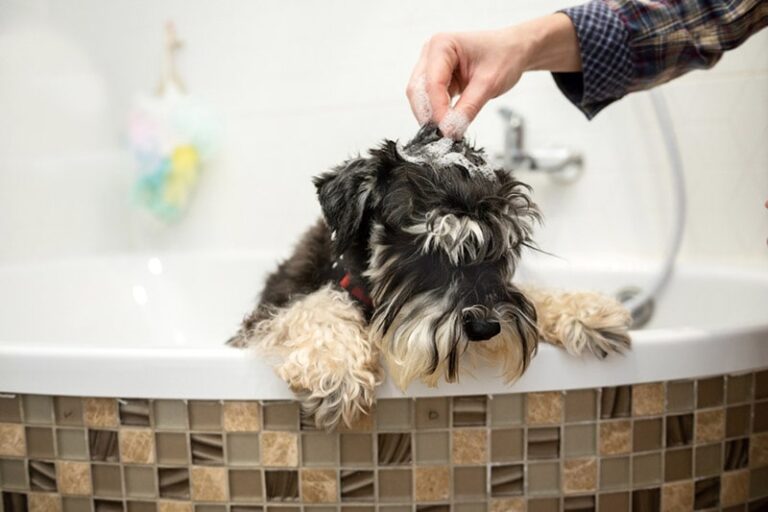
Those hallmark beards and eyebrows also require some extra care. Food, dirt and debris can easily get stuck in the long facial fur. Many owners keep a small washcloth or wet wipes handy to clean the beard after meals and outdoor adventures. Gently combing through the furnishings a few times a week will also help avoid tangles. Tearstains are common in white dogs and regular face-washing can help minimize any discoloration.
Brush your mini schnauzer‘s teeth daily, or at least a few times a week, to prevent periodontal disease and tooth decay. Regular nail trims are also important every 3-4 weeks to keep your dog comfortable. Check and clean your dog‘s ears weekly to avoid infections, especially after swimming or bathing.
Exercise and Activity Level
Miniature schnauzers are energetic and athletic little dogs who need plenty of physical and mental stimulation to stay happy and out of mischief. Plan on at least 45-60 minutes per day of intentional exercise – this could mean brisk walks, fetch sessions, playtime with dog buddies, or participating in an activity like agility. Without adequate exercise schnauzers can become bored, destructive and yappy.
These smart cookies also need mental enrichment through puzzle toys, games, training sessions, or nosework to keep their busy brains engaged. A mini schnauzer left to their own devices will often find their own "entertainment" by digging, chewing and barking. Luckily their combination of brains and athleticism makes them ideally suited for all kinds of fun dog sports!
While a fenced yard is ideal for play sessions and potty breaks, mini schnauzers are adaptable to many living situations as long as their exercise needs are met with walks and outings. These spunky companions are up for any adventure, whether it‘s a hike in the woods or a stroll around town. They‘ll be happiest with owners who lead an active lifestyle and include their dog in the fun.
Is a White Mini Schnauzer Right for You?
Miniature schnauzers have so many wonderful qualities that make them excellent companion dogs for all kinds of households. They are smart, loyal, playful and up for anything with their favorite humans by their side. A well-bred, well-socialized mini schnauzer is great with kids, gets along with other pets, and is adaptable to many living situations.
Their small-to-medium size, portable sturdiness and eminently trainable nature mean they are as comfortable joining you on a trip as they are snoozing on the couch. Minis are an ideal size for those wanting a robust, athletic dog without the space requirements of a larger working breed. However, they do need plenty of mental and physical exercise to remain happy and well-behaved.
Schnauzers‘ tendency to bark at every passing leaf also can‘t be overlooked. While this makes them excellent little watchdogs, it can become problematic if not kept in check with training. Consistent positive training from an early age is a must for raising a well-mannered, well-adjusted mini. Grooming requirements and possible health issues should also be considered.
As for adding a white mini schnauzer to your family, their rarity means you may need to spend more time searching for a responsible breeder and be prepared to wait for the right puppy. In the US especially, avoid breeders touting whites as "rare" and charging premium prices. Above all, make sure your puppy‘s breeder does health testing on their dogs and provides a health guarantee, regardless of color.
If you can meet a mini schnauzer‘s needs for exercise, training, grooming, and companionship, you‘ll be rewarded with a spunky, smart, endlessly charming best friend. And if you have your heart set on a stunning white mini, go into your search armed with knowledge about responsible breeding practices and prepare to be patient. It will be worth the wait to add one of these special pups to your life!