Entropion in Dogs: A Comprehensive Guide for Caring Dog Owners
As dog lovers, we want nothing more than for our furry friends to be healthy, happy, and free of pain. We do our best to protect them from harm, but sometimes, issues can develop silently beneath the surface. Entropion, a painful eye condition, is one such problem that can significantly impact a dog‘s comfort and quality of life. In this in-depth guide, we‘ll explore everything you need to know about entropion in dogs, from causes and symptoms to treatment options and prevention strategies. By arming yourself with knowledge, you can be a proactive advocate for your dog‘s ocular health.
Understanding the Anatomy of Entropion
To grasp how entropion develops, it‘s helpful to first understand the normal anatomy of a dog‘s eyelids. Dogs have an upper and lower eyelid that work together to protect the eye surface. Healthy eyelids are held snugly against the eye by small muscles and ligaments, but are not so tight that they roll inward. A tiny strip of eyelashes grows at the lid margins, pointing outwards.
In dogs with entropion, the eyelid folds inward on itself, causing the hair and lashes to rub directly against the cornea. The cornea is the clear, protective outer layer of the eye that is highly sensitive. According to the American College of Veterinary Ophthalmologists (ACVO), "This rubbing can cause pain, corneal abrasions, corneal ulcers, and corneal scarring. If left untreated, entropion can cause permanent damage and may lead to vision loss."
Types of Entropion in Dogs
There are two main categories of entropion seen in dogs:
-
Congenital/primary entropion: This type is inherited and often seen in young puppies of predisposed breeds. It occurs due to anatomical abnormalities in the structure of the eyelids or facial conformation.
-
Acquired/secondary entropion: This type develops later in life secondary to other ocular conditions or changes. Potential causes include eyelid trauma, infections, corneal damage, severe weight loss, muscle spasms, and the effects of aging on lid tone.
A specific subtype of acquired entropion, called spastic entropion, can occur temporarily in young dogs during periods of intense ocular pain or irritation. This type usually resolves once the underlying trigger is addressed.
Breeds Predisposed to Entropion
While any dog can develop entropion, certain breeds are significantly more likely to be affected. Breeds with predisposing anatomical features, such as heavy facial skin folds, short snouts, or prominent eyes, are at higher risk.
According to a study published in the Journal of the American Veterinary Medical Association, the breeds most commonly diagnosed with entropion were (in order):
- Shar Pei
- English Bulldog
- Great Dane
- Weimaraner
- Saint Bernard
- Newfoundland
- Rottweiler
- Chow Chow
- Pug
- Boxer
Other commonly affected breeds include the Cavalier King Charles Spaniel, English Cocker Spaniel, English Springer Spaniel, Labrador Retriever, Pekingese, and Shih Tzu.
In a survey of over 200 board-certified veterinary ophthalmologists conducted by the ACVO, entropion was reported as the most common inherited eyelid abnormality across all breeds. Purebred dogs were significantly more likely to develop entropion compared to mixed breed dogs.
Recognizing the Signs of Entropion
The hallmark of entropion is discomfort due to hairs and lashes rubbing the cornea. However, dogs may exhibit a range of other symptoms depending on the severity and chronicity of their condition. As a dog owner, it‘s crucial to be aware of the signs so you can seek prompt veterinary care.
Common signs of entropion in dogs include:
- Excessive tearing or watery eyes (epiphora)
- Redness and inflammation of the eyes
- Squinting or holding the eyes partially closed (blepharospasm)
- Rubbing or pawing at the eyes
- Thick, mucoid eye discharge
- Cloudy or bluish appearance to the cornea
- Eye pain and light sensitivity
- Recurring eye infections
- Vision impairment in severe cases
If you notice any of these signs, even if mild, schedule an appointment with your veterinarian right away. Delaying treatment allows ongoing corneal damage that may lead to scarring, pigmentation, and even vision loss.
Diagnosis and Evaluation
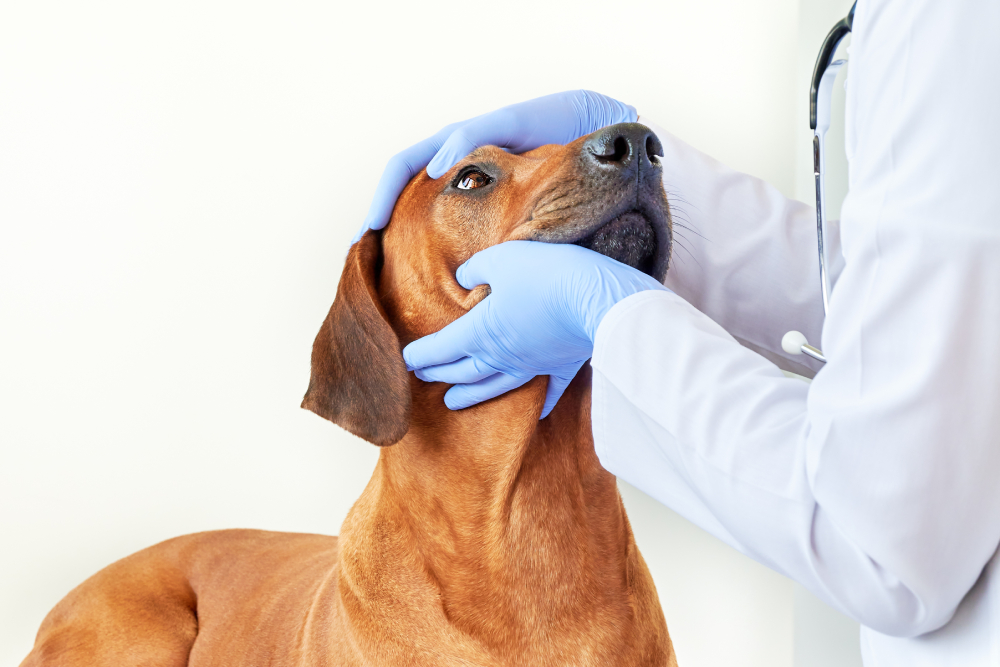
Veterinarians diagnose entropion through a combination of physical examination findings, ocular diagnostic tests, and review of the dog‘s medical history. A thorough ophthalmic exam typically includes:
- Visual assessment of eyelid conformation and position
- Fluorescein staining to check for corneal abrasions or ulcers
- Schirmer tear test to evaluate tear production
- Tonometry to measure intraocular pressure
- Slit lamp examination to visualize intraocular structures
Additional tests, such as culture and sensitivity of eye discharge, may be performed if a secondary infection is suspected. Blood work or skin scrapings may be recommended to rule out underlying metabolic or dermatologic conditions contributing to entropion.
Dr. Noelle McNabb, a board-certified veterinary ophthalmologist, emphasizes the importance of a comprehensive evaluation: "Entropion is not always a straightforward diagnosis. It‘s crucial to rule out other ocular conditions that can mimic or complicate entropion, such as dry eye, distichiasis, or lid masses. A thorough exam allows us to develop the most targeted and effective treatment plan for each individual patient."
Treatment Options: Surgical Correction
The mainstay of treatment for entropion in dogs is surgical correction of the eyelid abnormality. The goal of surgery is to reposition the eyelid margin such that the lashes and hairs no longer contact the cornea.
Temporary Tacking
In some cases, temporary eyelid tacking may be performed prior to permanent surgical correction. This is often done in young puppies who are not yet old enough for definitive surgery, or in dogs where entropion is secondary to another condition that needs to be addressed first.
Tacking involves rolling the eyelid outwards and suturing it in place using dissolvable or temporary sutures. This quick procedure spares the cornea from ongoing damage until definitive surgery can be performed. Tacking is not a permanent solution, as the eyelids will eventually return to their abnormal position once the sutures dissolve or are removed.
Permanent Surgical Techniques
There are several surgical techniques used to permanently correct entropion in dogs. The choice of procedure depends on the location and severity of entropion, as well as individual patient factors. Two commonly performed techniques are:
-
Modified Hotz-Celsus procedure: This technique involves removing a crescent-shaped strip of skin and muscle from the affected eyelid, just below the lashes. The incision is then sutured closed, everting the eyelid margin. This procedure is typically used for mild to moderate entropion of the lower lid.
-
Wyman procedure (lateral canthoplasty): This technique involves removing a triangular wedge of tissue from the outer corner of the eyelid (lateral canthus). The incision is sutured closed, tightening the eyelid and rolling it outward. This procedure is often used for more severe cases or for entropion involving both upper and lower lids.
Entropion surgery is most commonly performed by veterinary ophthalmologists or experienced general practitioners. Choosing a surgeon with specialized training and experience in eyelid procedures is key for optimal cosmetic and functional results.
Dr. Gwen Sila, a board-certified veterinary ophthalmologist, states: "Entropion surgery requires a delicate balance of tissue removal and lid repositioning. Taking too much tissue can lead to an overcorrection, while taking too little may not fully resolve the entropion. An experienced surgeon can customize the procedure to each individual dog‘s needs, minimizing the risk of complications."
Recovery after entropion surgery is generally rapid, with most dogs experiencing significant improvement in comfort within days. An Elizabethan collar is typically recommended for 10-14 days after surgery to prevent self-trauma and allow proper healing. Postoperative care may include oral pain medications, topical antibiotics, and lubricating eye drops.
While complications are uncommon, it‘s crucial to attend all recheck exams and promptly alert your veterinarian to any concerns during the healing process. In some cases, especially in predisposed breeds, entropion can recur months to years after surgery. Ongoing monitoring and follow-up care is key for long-term success.
Medical Management and Supportive Care
In some cases of mild entropion, or when surgery is not immediately feasible, medical management may be recommended to keep the dog comfortable. Medical therapy does not correct the eyelid abnormality, but rather aims to lubricate the cornea, control pain and inflammation, and prevent secondary infections.
Commonly prescribed medications may include:
- Artificial tear solutions or gels to keep the cornea moist
- Topical antibiotic ointments to prevent or treat bacterial infections
- Topical anti-inflammatory drops to control pain and swelling
- Oral pain medications or anti-inflammatories for comfort
- Cyclosporine ointment to stimulate tear production and reduce scarring
These medications are typically administered several times per day, as directed by your veterinarian. It‘s important to follow all dosing instructions carefully and complete the full course of treatment, even if symptoms improve.
Your veterinarian may also recommend specific home care measures to keep your dog‘s eyes clean and comfortable. These may include:
- Gently wiping away eye discharge with a warm, damp cloth
- Applying a warm compress to the eyes for 5-10 minutes, 2-3 times daily
- Using a protective eye lubricant before swimming or bathing
- Keeping hair trimmed short around the eyes to minimize irritation
- Monitoring for any changes in eye appearance or comfort level
By staying diligent with medical therapy and home care, you can help keep your dog comfortable until definitive surgery can be pursued. However, it‘s crucial not to delay surgery indefinitely, as ongoing corneal irritation can lead to permanent damage over time.
Monitoring and Prevention
Ongoing monitoring is key for all dogs with entropion, even after successful surgical correction. Regular eye exams allow your veterinarian to detect any recurrence of entropion early, as well as screen for other ocular health issues.
For breeds predisposed to entropion, the American College of Veterinary Ophthalmologists recommends a complete ophthalmic exam prior to breeding. Dogs with entropion should not be bred, as the condition is often inherited. Choosing a responsible breeder who performs thorough eye exams on breeding stock is one of the best ways to reduce the incidence of congenital entropion.
As a dog owner, you play a vital role in monitoring your dog‘s eye health at home. Get in the habit of routinely checking your dog‘s eyes for any signs of discomfort, discharge, or abnormality. If you notice any changes, schedule an appointment with your veterinarian right away.
Dr. Sila advises, "Don‘t ignore subtle signs like squinting or rubbing at the eyes. These behaviors can indicate an underlying problem that may worsen without intervention. When it comes to ocular health, being proactive is always better than reactive."
The Importance of Prompt Treatment
Entropion is not a condition that will resolve on its own. Without treatment, the constant rubbing of hair and lashes against the cornea can lead to significant pain, scarring, and visual impairment. In severe cases, deep corneal ulcers can develop, potentially leading to rupture of the eye.
Prompt treatment is key to relieving discomfort and preventing these serious complications. In a study published in Veterinary Ophthalmology, dogs who received surgical correction of entropion within 2 weeks of diagnosis had a significantly lower rate of corneal scarring compared to those who waited longer for surgery.
As a dog lover, it can be emotionally challenging to see your furry friend in pain. You may feel overwhelmed by treatment decisions or financial concerns. However, delaying care will only allow the problem to worsen over time, ultimately causing more suffering for your dog.
If you are struggling with the cost of entropion treatment, speak openly with your veterinarian. Many clinics offer payment plans or can recommend financial assistance programs. You can also consider pet health insurance, which can help offset the cost of unexpected medical expenses.
Conclusion
Entropion is a painful eye condition that can significantly impact a dog‘s quality of life. By understanding the signs, causes, and treatment options for entropion, you can be a proactive advocate for your dog‘s ocular health. Remember, prompt diagnosis and treatment is key to preventing long-term complications and keeping your dog comfortable.
As a dog lover, you have the power to make a difference in your furry friend‘s eye health. Stay vigilant, be proactive, and don‘t hesitate to seek veterinary care if you suspect a problem. Together, we can help ensure that all dogs enjoy a lifetime of healthy, pain-free vision.
Sources:
-
American College of Veterinary Ophthalmologists. (n.d.). Entropion in Dogs. Retrieved from https://www.acvo.org/common-conditions/entropion-in-dogs
-
Gelatt, K. N., & Whitley, R. D. (2011). Surgery of the eyelids. In K. N. Gelatt & J. P. Gelatt (Eds.), Veterinary Ophthalmic Surgery (pp. 89-140). Elsevier Saunders.
-
Krecny, M., Tichy, A., Rushton, J., & Nell, B. (2015). A retrospective survey of ocular abnormalities in pugs: 130 cases. Journal of Small Animal Practice, 56(2), 96-102. https://doi.org/10.1111/jsap.12291
-
McNabb, N. (2021). Eyelid Disorders in Dogs. MSD Veterinary Manual. Retrieved from https://www.msdvetmanual.com/eye-and-ear/eyelid-disorders/eyelid-disorders-in-dogs
-
Read, R. A., & Broun, H. C. (2007). Entropion correction in dogs and cats using a combination Hotz–Celsus and lateral eyelid wedge resection: results in 311 eyes. Veterinary Ophthalmology, 10(1), 6-11. https://doi.org/10.1111/j.1463-5224.2007.00485.x