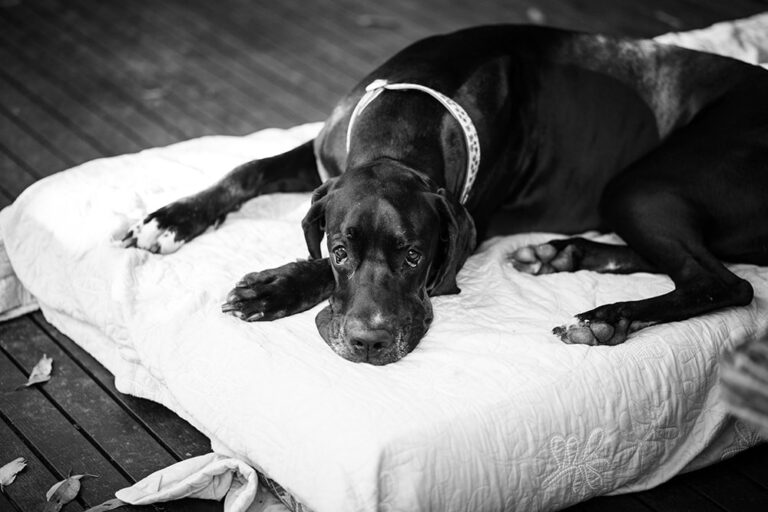
Fawnequin Great Danes: A Striking but Controversial Giant Breed Variation

As a veterinarian and lifelong dog lover, I‘ve always been captivated by the sheer majesty of Great Danes. Standing up to 32 inches tall at the shoulder and weighing as much as 175 pounds, these gentle giants are impossible to miss. While the breed comes in many beautiful coat colors and patterns, perhaps none is so eye-catching as the Fawnequin – a rare variation featuring irregular patches of fawn on a primarily white background.
However, as stunning as Fawnequin Great Danes are, they are also a source of concern and controversy among veterinary professionals and responsible breeders. The same merle gene that is necessary for producing the harlequin pattern and Fawnequin coloring is linked to a significantly higher incidence of severe health issues, especially in dogs who inherit two copies of the gene.
In this article, I‘ll take an in-depth look at the history, traits, and care requirements of this incredible breed, with a special focus on the Fawnequin variety. As much as I adore Great Danes, I believe it‘s crucial for any prospective owner to be fully informed about both the joys and challenges of living with a dog of such tremendous size and specific health needs.
The Noble History of the Great Dane Breed
The Great Dane‘s origins can be traced back to 16th-century Germany, where they were developed as powerful, fearless boar hunting dogs for the nobility. Known as "Deutsche Dogge" in their homeland, Great Danes combined the size and strength of ancient Mastiff-type dogs with the athleticism and tenacity of Irish Wolfhounds and Greyhounds.
Over the centuries, as boar hunting declined in popularity, Great Danes gradually transitioned into estate guardians and status symbols among the German aristocracy. They accompanied noblemen on carriage rides, stood watch on country estates, and even served as loyal protectors resting at the foot of their masters‘ beds.
In the late 1800s, German breeders refined the breed standard to emphasize a more elegant, rectangular head and cleanly muscled body that balanced power with graceful movement. The goal was a dog that commanded respect with its impressive stature and strength, yet still maintained a dignified, noble bearing.
Great Danes made their way to the United States in the late 19th century and were officially recognized by the American Kennel Club (AKC) in 1887. Over the decades, they have become one of the most recognizable and popular giant breeds not only in the US, but worldwide.
Understanding the Merle Gene and Fawnequin Coloring
To understand the controversy surrounding Fawnequin Great Danes, one must first understand the genetics behind their unique coat coloring. Fawnequins are essentially a variation of the harlequin pattern, which features irregular black patches on a white background. The harlequin gene is dominant, meaning a dog only needs to inherit one copy from either parent to display the coat pattern.
However, the harlequin pattern is also intrinsically tied to the merle gene. Merle is an incompletely dominant gene that causes mottled or marbled patches of diluted pigment on a dog‘s coat. It‘s responsible for the characteristic "blue" or "red" merle patterns seen in many herding breeds like Australian Shepherds and Catahoula Leopard Dogs.
In Great Danes, the merle gene interacts with the harlequin gene to replace the black patches with either grey (in blue merles) or fawn (in Fawnequins). It‘s a complex interaction of multiple genes that breeders still don‘t fully understand. What we do know is that the merle gene, while beautiful, comes with serious health risks.
The biggest concern is when two merle dogs are bred together, regardless of their base coat color. Puppies who inherit two copies of the merle gene (often called "double merles" or "lethal whites") have a significantly higher risk of being born deaf, blind, or with other severe developmental abnormalities. It‘s estimated that around 25% of double merle puppies will have hearing or vision impairments, with many being completely deaf and/or blind.
Due to these health concerns, most national kennel clubs worldwide do not recognize or encourage the breeding of Fawnequin Great Danes. The variety is not included in the official AKC breed standard, which states that "any variance from the ideal described in the standard should be penalized to the extent of the deviation."
Living with a Great Dane: Joys and Challenges
There‘s no denying that Great Danes can make incredibly loving, devoted family companions. They are famous for being patient and gentle with children, protective of their loved ones, and eager to please their owners. Many Dane owners describe them as believing they are lap dogs trapped in enormous bodies!
Indeed, one of the greatest joys of living with a Great Dane is experiencing the incredible bond these sensitive giants form with their people. They have a calm, dependable nature that makes them excellent therapy and support dogs. At the same time, their goofy, playful side shines through when romping in the yard or galloping proudly alongside a bike.
However, the breed‘s giant size comes with some very real practical considerations. Great Danes may not need a huge amount of exercise compared to more active breeds, but they still require daily walks and plenty of space to stretch out. Sharing a studio apartment with a Dane would be a challenge, to say the least!
Food costs alone can be substantial, with some adult Danes consuming up to 10-12 cups of high-quality kibble per day. Bloat, or gastric dilatation-volvulus, is an extremely serious concern for all deep-chested breeds, but especially Great Danes. This life-threatening condition occurs when the stomach fills with gas and twists on itself, cutting off blood flow. It requires immediate emergency veterinary treatment to correct.
Other health issues that prospective Dane owners should be aware of include hip and elbow dysplasia, hypothyroidism, cardiomyopathy, and certain cancers like osteosarcoma. Responsible breeders will conduct thorough health screenings on all breeding dogs to help reduce the risk of passing on genetic predispositions, but regular veterinary care is essential for catching any potential problems early.
Sadly, the average lifespan of a Great Dane is only around 7-10 years. As a veterinarian, I know all too well the heartbreak of losing these cherished companions too soon. It‘s a reality that any giant breed owner must be prepared to face.
On the positive side, Danes are typically quite easy to train due to their eager-to-please nature and sensitivity. Positive reinforcement methods, especially using food rewards, tend to work wonders. Early socialization is key to ensuring these imposing dogs develop the confidence and social skills to navigate the world calmly.
One mistake many novice owners make is not being mindful of a Dane‘s long limbs and powerful tail when furnishing a home. I‘ve treated my fair share of coffee table collision injuries! Crate training can be extremely helpful for managing a growing Dane puppy during the accident-prone adolescent stage.
Why Veterinary Professionals Advise Against Seeking Out Fawnequin Danes
As a veterinarian who has seen the devastating effects of intentional merle-to-merle breeding, it troubles me to see some breeders deliberately reproducing Fawnequin Great Danes. It‘s one thing for the color pattern to occasionally pop up accidentally as a result of responsibly breeding harlequin dogs. It‘s another matter entirely to knowingly breed two Fawnequins or harlequins together when there is a 25% chance of producing disabled puppies.
Reputable Great Dane breeders overwhelmingly avoid intentionally producing Fawnequins. For them, the health and temperament of the dogs always takes priority over chasing rare coat colors. They understand that no matter how striking a dog may look, it does that dog no good if it is born unable to see or hear.
The fact that Fawnequins still exist at all is largely a product of backyard breeders and puppy mills capitalizing on the public‘s fascination with designer dogs. They convince unsuspecting buyers to pay a premium for "rare" colors without educating them on the potential health risks and high veterinary bills down the line. It‘s a practice that repulses me as both a veterinarian and dog lover.
If you love the unique harlequin-like look of a Fawnequin Great Dane, I urge you to consider other coat patterns instead. Mantle Great Danes, with their primarily black bodies and white chests and paws, can be a striking alternative. Merle Danes also come in several attractive color combinations like blue or harlequin merle mantles.
For giant breed lovers drawn to the fawn color, a traditional fawn Great Dane with a black mask is just as majestic as a Fawnequin with none of the associated health risks. Other fawn-colored giant breeds like the Mastiff or Bullmastiff may also be good choices.
At the end of the day, sharing your life with a healthy, well-bred Great Dane of any coat color is an enormous privilege. By supporting responsible breeding practices and shining a light on the dark side of intentionally reproducing rare coat patterns, we can ensure that these gentle giants continue to thrive as the noble, beloved companions they were always meant to be.
Key Statistics:
| Breed | Average Height (inches) | Average Weight (lbs) | Lifespan (years) |
|---|---|---|---|
| Great Dane | M: 30-32, F: 28-30 | M: 140-175, F: 110-140 | 7-10 |
| English Mastiff | M: 30, F: 27.5 | M: 160-230, F: 120-170 | 6-10 |
| Irish Wolfhound | M: 32-34, F: 30-32 | M: 120-155, F: 105-135 | 6-8 |
| Newfoundland | M: 28, F: 26 | M: 130-150, F: 100-120 | 9-10 |
*M = Male, F = Female
References:
- American Kennel Club. (2021). Great Dane. Retrieved from https://www.akc.org/dog-breeds/great-dane/
- Great Dane Club of America. (2021). About the Breed. Retrieved from https://www.gdca.org/about-the-breed/
- Shanley, K. J. (1997). The New Complete Great Dane. Howell Book House.
- Schmutz, S. M., & Berryere, T. G. (2007). Genes affecting coat colour and pattern in domestic dogs: a review. Animal Genetics, 38(6), 539-549.
- Strain, G. M. (2004). Deafness prevalence and pigmentation and gender associations in dog breeds at risk. The Veterinary Journal, 167(1), 23-32.