Irish Wolfhound vs Great Dane: A Dog Lover‘s Comparison of Two Gentle Giants
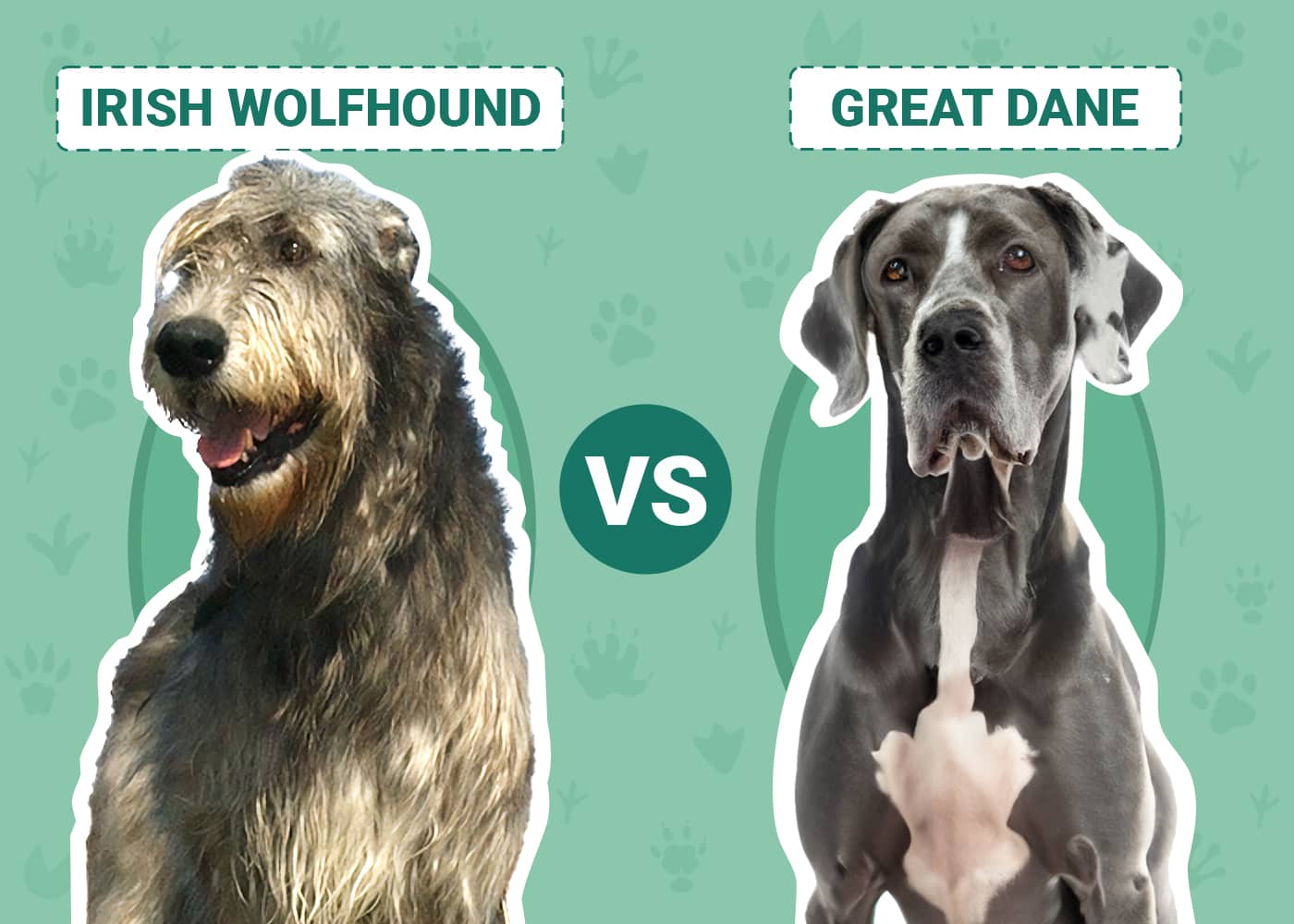
As a lifelong dog lover and veterinarian who has had the privilege of sharing my heart and home with both Irish Wolfhounds and Great Danes, I‘m often asked to compare these two majestic breeds. Both are undeniably gentle giants, capturing the imagination with their impressive size and regal bearing. But beyond their stature, the Irish Wolfhound and Great Dane are quite different dogs, each with their own unique qualities and care requirements. Let‘s take an in-depth look at what sets these breeds apart to help current and prospective owners understand their needs.
Irish Wolfhound Overview
The Irish Wolfhound is an ancient sighthound breed, once used to hunt wolves and Irish elk in its native Ireland. The tallest of all AKC breeds, Wolfhounds stand at least 32 inches at the shoulder, with males often reaching 35 inches or more. They weigh 105-180 pounds, with a lean, muscular build. The rough, shaggy coat comes in various shades of gray, brindle, red, black, and white.
Irish Wolfhounds are often described as "gentle giants" due to their calm, dignified demeanor. They are intensely loyal to their family but can be reserved with strangers. Wolfhounds have a strong prey drive, which means they may instinctively chase small animals and are not always ideal for homes with cats or small dogs. While not excessively active, daily walks and a fenced yard to stretch their legs are a must for this big breed.
Despite their imposing size, Irish Wolfhounds are relatively easy to groom, requiring only weekly brushing and occasional baths. However, potential owners must be prepared for the costs and challenges of caring for a giant breed. everything, from food to medication to beds, must be supersized for the Wolfhound. Sadly, like many giants, the breed is short-lived, with a lifespan of just 6-8 years on average. Dedicated breeding for health and longevity is critical.
Great Dane Overview
Developed in Germany as a boar hunting and estate guarding dog, the Great Dane of today is best known as a gentle, patient companion. Males typically stand 30-32 inches tall and weigh up to 175 pounds, with females being somewhat smaller. The sleek, short coat comes in brindle, fawn, blue, black, harlequin, and mantle patterns.
Great Danes are famous for their sweet, friendly temperament and affinity for children. They are eager to please and responsive to training, making them a good fit for first-time owners. However, like all big dogs, early socialization and basic obedience are a must. Danes need moderate daily exercise but are more adaptable to apartment life than the Irish Wolfhound, as long as their needs are met.
Grooming the Great Dane is straightforward thanks to their short coat. Weekly brushing and occasional baths will keep them looking sharp. However, dental care is crucial for the breed, as they are prone to tartar buildup and gum disease. Because of their deep chest and tendency to gulp food, Danes have a high risk of bloat, which can be life-threatening. Careful meal planning, feeding from raised bowls, and avoiding exercise around mealtimes can help mitigate this risk.
As a giant breed, Great Danes have a relatively short expected lifespan of 7-10 years. Responsible breeding practices that prioritize health testing and longevity are key to giving these dogs the best chance at a long, healthy life.
Size Comparison
One of the most striking differences between the Irish Wolfhound and Great Dane is their size. While both are undeniably large dogs, the Wolfhound typically outmeasures the Dane by a few inches. However, the Dane often weighs more, with a heavier, more muscular build.
| Breed | Height (Males) | Height (Females) | Weight (Males) | Weight (Females) |
|---|---|---|---|---|
| Irish Wolfhound | 32-35 inches | 30-33 inches | 120-180 pounds | 105-140 pounds |
| Great Dane | 30-32 inches | 28-30 inches | 140-175 pounds | 110-140 pounds |
Source: American Kennel Club Breed Standards
It‘s worth noting that some individual dogs may fall outside these ranges. The current record holder for tallest dog is an English Great Dane named Freddy, who stood an incredible 40.75 inches tall and weighed 196 pounds. The tallest Irish Wolfhound on record was a male named Farrell, who measured 36 inches at the shoulder.
Popularity & Ownership Costs
Both the Irish Wolfhound and Great Dane have seen their popularity ebb and flow over time. As of 2021, the Great Dane ranked 17th out of 197 AKC-recognized breeds, while the Irish Wolfhound placed 76th. The Dane‘s more adaptable nature and easier grooming likely contribute to their higher ranking.
| Breed | 2021 Rank | 2020 Rank | 2010 Rank | 2000 Rank |
|---|---|---|---|---|
| Great Dane | 17 | 16 | 24 | 32 |
| Irish Wolfhound | 76 | 77 | 86 | 84 |
Source: American Kennel Club Registration Statistics
Owning a giant breed dog comes with significant expenses, from food to medical care. Irish Wolfhounds and Great Danes both eat a lot, with an average daily intake of 6-10 cups of high-quality food. At around $2 per pound, this can add up to $1,000 or more per year in food costs alone.
Veterinary care is also pricier for giant breeds, as they require larger doses of preventives and medications. Surgeries, including spay/neuter and orthopedic procedures, can easily run into the thousands. Pet insurance is highly recommended to help offset these costs over the dog‘s lifetime.
Health & Longevity
Sadly, like many giant breeds, Irish Wolfhounds and Great Danes are prone to certain health issues that impact their longevity. Responsible breeding, including genetic testing of breeding stock and careful pedigree analysis, is crucial to producing the healthiest possible puppies.
Some of the most common health concerns seen in Irish Wolfhounds include:
- Dilated cardiomyopathy (DCM)
- Osteosarcoma (bone cancer)
- Gastric torsion (bloat)
- Hip & elbow dysplasia
- Liver shunt (portosystemic shunt)
According to a 2004 health survey by the Irish Wolfhound Club of America, the average lifespan of the breed is just 6.47 years, with bone cancer being the leading cause of death. Ongoing research into early detection and treatment of osteosarcoma is a priority for Wolfhound enthusiasts.
Great Danes face some similar health challenges, including:
- Gastric torsion (bloat)
- Hip & elbow dysplasia
- Dilated cardiomyopathy (DCM)
- Hypothyroidism
- Wobblers syndrome (cervical vertebral instability)
A 2010 Great Dane Club of America health survey found a median lifespan of 7 years for the breed, with bloat and cancer being the most common causes of death. Careful feeding practices, such as using raised bowls and avoiding exercise around mealtimes, can help reduce the risk of bloat.
Regular health screenings, including cardiac evaluations, hip and elbow x-rays, and thyroid testing, are recommended for both breeds. By catching potential issues early, owners and veterinarians can work together to give these gentle giants the best possible quality of life.
Training & Socialization
As with any dog, early socialization and positive, consistent training are essential for the Irish Wolfhound and Great Dane. Exposing them to a variety of people, animals, and environments as puppies helps ensure they grow into well-adjusted adults.
Irish Wolfhounds are intelligent and generally easy to train, but they can have an independent streak. They respond best to positive reinforcement and may shut down if treated harshly. Patience and consistency are key when working with this sensitive breed.
Great Danes are also highly intelligent and eager to please, making them a joy to train. They are often more food motivated than Wolfhounds, which can be helpful in the training process. However, their size and strength can make them a handful if not properly trained from a young age.
Both breeds do best with short, frequent training sessions rather than long, intensive ones. They are sensitive to heat and may become easily fatigued, so it‘s important to monitor their exertion level, especially in warm weather.
Living with Giants
As a veterinarian and owner of both Irish Wolfhounds and Great Danes, I can attest to the unique joys and challenges of living with these gentle giants. Their sweet, affectionate nature and goofy antics bring immense joy to my life. Watching them gallop across a field or snuggle up on the couch never fails to make me smile.
But owning a giant breed is not for the faint of heart. Their sheer size can be overwhelming, and even intimidating to some. They take up a lot of space in the home and car, and their tail can easily clear a coffee table with one happy swing.
The Irish Wolfhound‘s strong prey drive means they may not be trustworthy around small pets, and their independent nature can make them a challenge to train. They are also more aloof with strangers than the outgoing Dane.
Great Danes, on the other hand, are more adaptable and easier to train, but their size still presents challenges. They are notorious droolers, and their short coat means they are not well suited to cold weather. They also tend to be leaner on orthopedic health than the Wolfhound.
But perhaps the greatest challenge of owning an Irish Wolfhound or Great Dane is coming to terms with their heartbreakingly short lifespan. It never gets easier to say goodbye to a beloved companion, but the pain is magnified when they are taken from us so soon. I‘ve lost both breeds to cancer far too young, and it never stops hurting.
And yet, I can‘t imagine my life without these gentle giants by my side. The love, laughter, and sheer joy they bring to my world is immeasurable. For me, the rewards far outweigh the challenges, and I feel privileged to share my life with them.
Conclusion
In the end, there is no clear "winner" in the contest between Irish Wolfhounds and Great Danes. Both breeds have their own unique charms and challenges that endear them to their devoted owners. The Irish Wolfhound‘s regal bearing, loyal heart, and impressive size are the stuff of legend, while the Great Dane‘s goofy, affectionate nature and adaptability make them a wonderful family companion.
As someone who has loved both breeds deeply, my advice to prospective owners is to do your research, talk to experienced breeders and owners, and above all, listen to your heart. These gentle giants will capture it in ways you never imagined, and you‘ll be forever changed by their love.