Male vs Female Samoyed: An In-Depth Look at the Differences
As a lifelong dog lover and proud Samoyed owner, I‘m often asked about the key differences between male and female Samoyeds. While every dog is unique, there are some general trends and traits to consider when deciding between a male or female Sammy. In this comprehensive guide, we‘ll delve into the physical, behavioral, and health distinctions between the sexes and explore what makes these smiling furballs so special.
The Samoyed Breed Standard
First, let‘s cover some basics about this fascinating breed. The Samoyed, nicknamed the "Sammy," is a medium-sized spitz dog originating in Siberia. They were bred by the Samoyedic people to herd and guard reindeer, hunt, and pull sleds in the harsh Arctic climate. Their most distinctive features are their thick, white double coats and signature "Sammy smile" — an upturned mouth that gives them a happy, friendly expression.
According to the American Kennel Club (AKC) breed standard, the ideal Samoyed stands between 19 and 23.5 inches tall at the shoulder and weighs between 35 and 65 pounds, with males typically larger than females. They have a strong, muscular build suited for endurance and agility. Their coats are heavy and weather-resistant, with a soft, dense undercoat and longer, coarse outer coat that stands off from the body.
Size and Appearance
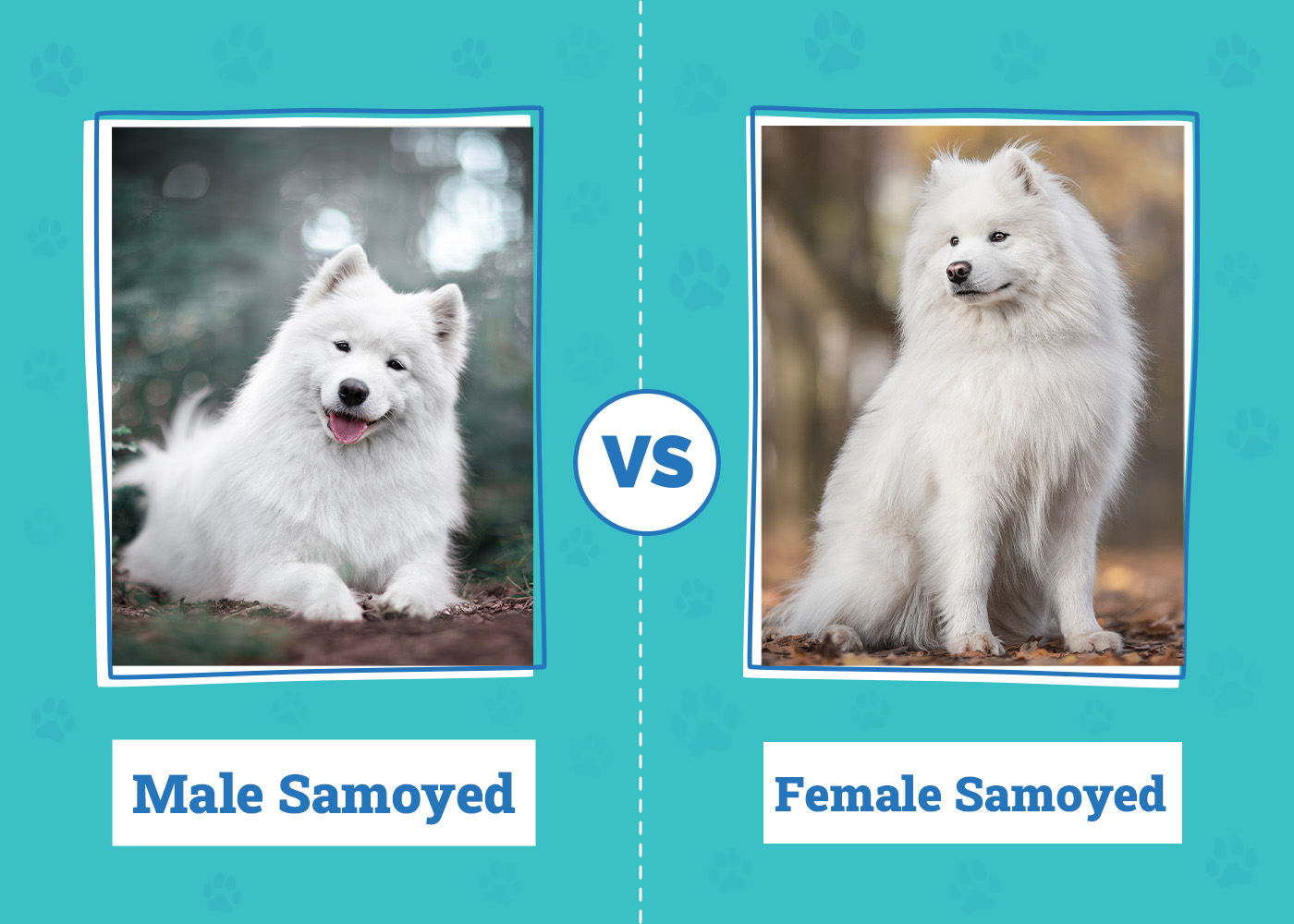
The most obvious difference between male and female Samoyeds is size. Males are noticeably bigger on average, standing 21 to 23.5 inches and weighing 45 to 65 pounds when fully grown. Females are more petite at 19 to 21 inches tall and 35 to 50 pounds. However, there can be plenty of overlap between large females and small males.
Some Samoyed fanciers claim you can spot subtle differences in head shape and facial features between the sexes, with males having slightly broader heads and muzzles. But to the average person, male and female Sammies look very similar. Both have the same striking white coats, dark almond-shaped eyes, erect triangular ears, and fluffy tails curled over their backs.
Temperament and Behavior
Samoyeds of both sexes are known for being intelligent, friendly, social, and very devoted to their families. They need lots of interaction and can suffer from separation anxiety if left alone too long. Proper socialization is a must to prevent shyness or aggression. While not typically aggressive, Sammies will bark to alert their people to anything suspicious. This instinct, along with their affectionate nature, makes them excellent watchdogs and companions.
However, many owners and experts notice some general personality differences between males and females:
-
Male Samoyeds tend to be more outgoing and adventurous, always ready to play and explore. They crave attention and affection from their favorite humans and can be real "mama‘s boys." Males may take longer to mentally mature than females.
-
Female Samoyeds are often calmer and more independent, though still playful and cuddly. They can be a bit more aloof with strangers compared to the overtly friendly males. Females mentally mature faster and may be more focused during training.
Of course, every dog is an individual, and a dog‘s specific upbringing and environment play a huge role in shaping their personality. But in general, male Sammies are goofy, happy-go-lucky teddy bears, while females are sweet and loving but a tad more reserved.
These traits are backed up by research on behavioral differences between male and female dogs in general. A 2011 study in the journal Applied Animal Behavior Science analyzed a survey of over 10,000 pet dogs and found that males scored higher than females in traits like excitability, energy, and attention-seeking. Intact (unneutered) males also showed more aggression towards other male dogs.
Training and Exercise Needs
Samoyeds are very intelligent and thrive on mental stimulation as well as physical activity. They need a job to do, whether it‘s learning tricks and commands, playing dog sports, or joining you on hikes and runs. A bored Sammy can become quite destructive! Aim for at least an hour of vigorous exercise daily — these arctic athletes have impressive stamina.
While easier to train than some spitz breeds, Sammies do have an independent streak. Positive, reward-based training works best. With their playful natures, male Samoyeds may be more distractible during training sessions, always eager to goof around or chase a squirrel. Females tend to be a bit more focused and serious, excitedly working for praise and treats.
Again, these are generalizations and every dog will progress at their own pace. The key is to start training and socialization early, stay patient and consistent, and work with your individual dog‘s strengths and motivations. A well-trained Samoyed is a joy to be around.
Health and Lifespan
Samoyeds are a hardy, relatively healthy breed with an average lifespan of 12-14 years. Like all purebreds, they are prone to certain genetic health conditions. Responsible breeders screen their stock for problems such as hip dysplasia, eye diseases like glaucoma and progressive retinal atrophy, cardiac issues, diabetes, and hypothyroidism.
There aren‘t major differences in health risks between male and female Samoyeds other than gender-specific issues. Unneutered males can develop prostate problems, while unspayed females may be prone to ovarian cysts, uterine infections, and mammary cancer.
The decision of if and when to spay/neuter is an important conversation to have with your breeder and vet. Research is evolving on the best age for sterilization based on breed size. Current recommendations are to wait until the dog has finished growing, usually around 1-2 years old, to allow normal hormonal development.
Caring for a Samoyed
Whichever sex you choose, Samoyeds have some breed-specific care needs to consider:
-
Grooming: Sammies need regular brushing several times a week to keep their plush double coats free of mats and shed fur. They blow their undercoats twice a year, requiring extra grooming. Luckily, their coats naturally repel dirt and stay white with just occasional baths.
-
Training: Early socialization and obedience training are a must. Sammies are sensitive and don‘t respond well to harsh corrections. Keep training sessions short, fun, and rewarding.
-
Exercise: Sammies need lots of physical and mental activity. Hikes, jogs, puzzle toys, and dog sports like agility, rally, weight pulling, and skijoring are great outlets. A tired Sammy is a well-behaved Sammy!
-
Diet: Samoyeds thrive on a high-quality, high-protein diet to fuel their active lifestyles. Portion control is key as they can easily become overweight, putting strain on their joints.
Famous Sammies
Samoyeds have captured hearts with their striking looks and sunny demeanors. Some famous Sammy owners and fans include:
-
Alexander Pope: This renowned English poet was one of the first to import Samoyeds to England in the 1700s. His beloved Sammy, Jack, was a gift from a Russian trader.
-
Queen Alexandra: The wife of King Edward VII also helped popularize Samoyeds in the UK in the late 1800s. A portrait of Queen Alexandra with her Samoyed, Jacko, still hangs in Buckingham Palace.
-
Emil Usenko: In the 1980s, this American breeder and Samoyed expert trekked over 10,000 miles with his Samoyeds across the Trans-Alaska pipeline, showcasing the breed‘s endurance and willingness to work alongside humans in harsh conditions.
Today, Sammies are popular on social media for their photogenic looks and goofy antics. Some Insta-famous Sammies include:
-
Maya Polar Bear: With over 190k followers, this fluffy face is known for her teddy bear looks and silly poses.
-
Alfie Thunder Paws: This London lad‘s account chronicles his adventures with sister Samoyed Sky.
-
SammyandMary: This pair showcases the breed‘s gentle, affectionate nature as therapy dogs.
Final Thoughts
When choosing between a male and female Samoyed, consider your lifestyle and what you‘re looking for in a canine companion. If you want a playful goofball who will adore you endlessly, a male may be your best bet. If you prefer a calmer cuddle buddy who‘s content to relax by your side, a female could be the way to go.
Ultimately, the individual dog‘s personality and your connection with them matter more than sex. Work with a responsible breeder who can match you with a puppy that fits your family, or visit shelters and rescues to meet adoptable adult dogs. With their intelligence, affection, and happy-go-lucky spirit, a Samoyed of either sex will brighten your life with love and laughter for years to come.