Rhodesian Husky Mix: Pictures, Info, Care Guide & More
Are you intrigued by the stunning good looks and dynamic personality of the Rhodesian Husky mix? This rare crossbreed, also known as the Ridgeback Husky or African Lion Dog Husky, combines the power and stamina of the Rhodesian Ridgeback with the agility and friendly nature of the Siberian Husky. The result is a unique, strong-willed companion with a talent for endurance sports and a devoted, protective nature.
While "designer dogs" like the Rhodesian Husky have surged in popularity in recent years, very little has been documented about these elusive crosses. If you‘re considering adding a Ridgeback Husky to your household, you likely have many questions about what to expect in terms of appearance, temperament, training needs, and more.
In this comprehensive guide, we‘ll cover everything you need to know about the Rhodesian Husky mix, from their history and traits to their ideal home environment and health issues. As a veterinarian and longtime dog lover, I‘ll help you determine whether this magnificent mixed breed is a good fit for your lifestyle. Let‘s dive in!
The Origins of the Rhodesian Husky Mix
As a very new mixed breed, the Rhodesian Husky doesn‘t have a well-documented history. These dogs likely originated sometime in the last 20-30 years, as breeders began crossing purebred Rhodesian Ridgebacks and Siberian Huskies to combine their best traits. However, to understand the Ridgeback Husky, it‘s helpful to take a closer look at the fascinating backgrounds of both parent breeds.
The Rhodesian Ridgeback was developed in southern Africa, where they were prized as versatile hunting dogs capable of keeping up with horses and holding big game like lions at bay. Ridgebacks are descended from a mix of European breeds like Great Danes and Mastiffs, plus native African dogs who passed on the signature ridge of backward-growing hair along the spine.
Rhodesian Ridgebacks were brought to the US in the 1950s and recognized by the American Kennel Club in 1955. Today, these confident, athletic dogs excel in lure coursing, tracking, agility, and obedience. They are also loyal guardians and affectionate family pets.
The Siberian Husky, on the other hand, originates from the coldest parts of Northeast Asia. The nomadic Chukchi people of Siberia relied on these tough, tireless sled dogs to pull heavy loads over long distances in subzero temperatures. With their thick coats, energy efficiency, and ability to thrive on little food, Huskies were perfectly adapted to this challenging environment.
Huskies came to Alaska during the Nome Gold Rush in the early 1900s, where they dominated sled dog racing and famously delivered lifesaving diphtheria serum to Nome in 1925. The AKC recognized the breed in 1930. Known for their striking looks, friendliness, and love of running, modern Siberian Huskies are popular family companions and excel in sledding, skijoring, and other dog sports.
Physical Characteristics of the Rhodesian Husky
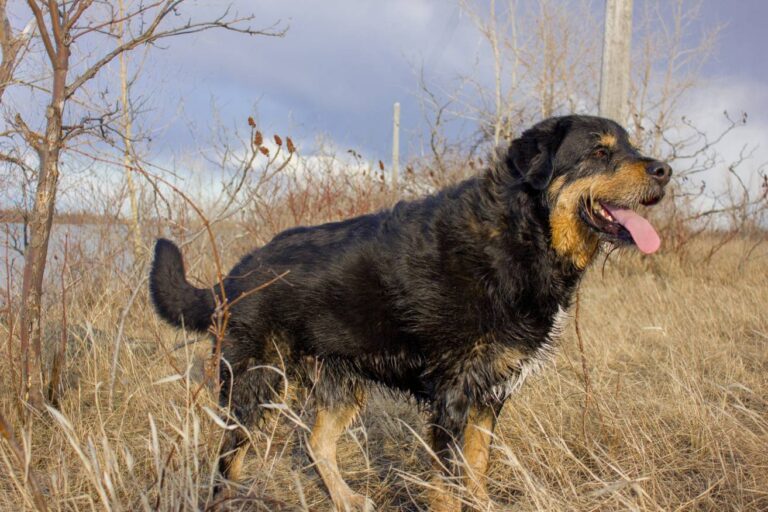
As a mix of two purebreds, the appearance of Rhodesian Husky puppies can vary considerably. Some inherit more traits from the Ridgeback side, while others favor their Husky heritage or are a more even blend of both. In general, you can expect a medium-to-large dog with an athletic build, weighing 50-80 pounds and standing 20-25 inches at the shoulder.
The coat is a defining feature of the Rhodesian Husky. Siberian Huskies are famous for their thick, lush double coats that keep them warm in extreme cold. They have a soft, dense undercoat topped by a longer, coarse top coat. Rhodesian Ridgebacks, in contrast, have short, sleek coats adapted for hot climates. They are characterized by a strip of hair growing backward along their spines.
Many Ridgeback Huskies end up with a coat that is fuller and longer than a purebred Ridgeback‘s but not quite as dense as a Husky‘s. The coat is often a striking mix of colors – from the Ridgeback‘s typically reddish-brown wheaten shades to the Husky‘s snow-white, jet black, and everything in between. Some may even inherit piercing blue eyes from their Husky parents.
Other distinguishing characteristics of this mix can include upright, triangular ears, almond-shaped eyes, long muzzles, and the powerful leg and chest muscles needed for speed and endurance. While not all Rhodesian Huskies will have the ridge of hair down their spine, when present it is a good indicator that a dog is a true Ridgeback cross.
Temperament and Personality
Both Rhodesian Ridgebacks and Siberian Huskies are strong-willed breeds with impressive stamina and work ethics. Huskies are a bit more outgoing and sociable due to their history of working closely with other sled dogs and humans, while Ridgebacks tend to have a more independent nature and strong protective instincts.
Rhodesian Huskies usually have a nice blend of both parent breeds‘ temperaments. They are typically energetic, athletic, and intelligent dogs who require plenty of exercise and mental stimulation. At the same time, they are usually friendly, affectionate, and loyal to their families.
Like Ridgebacks, Ridgeback Huskies can be aloof or suspicious around strangers and have strong guarding tendencies, making them excellent watchdogs. They usually do well with children when raised with them. Many have a high prey drive and may chase small animals, so they‘re not always trustworthy off-leash.
With their independent personalities and impressive intelligence, Rhodesian Huskies need confident, consistent training from puppyhood using positive reinforcement methods. They can have a stubborn streak and may test boundaries, so it‘s important to establish clear rules and routines.
These dogs thrive with owners who can provide strong leadership, plenty of exercise outlets, and lots of interaction. When their needs are met, Rhodesian Huskies are wonderfully devoted companions with goofy, endearing personalities. They love being active with their humans and can be world-class jogging, hiking, and adventure buddies.
Health and Care
As a relatively new mixed breed, there is limited data on the specific health issues that affect Rhodesian Huskies. However, examining the common health concerns of both parent breeds can give us some clues about what to watch out for.
Rhodesian Ridgebacks are generally healthy dogs with a lifespan of 10-12 years, but some are prone to hip and elbow dysplasia, eye disorders like cataracts, hypothyroidism, and a neurological condition called degenerative myelopathy. Siberian Huskies also typically live 10-12 years and can be at risk for hip dysplasia, eye diseases like glaucoma, and autoimmune disorders like pemphigus foliaceus.
To minimize the risk of genetic diseases, it‘s crucial to work with a responsible Rhodesian Husky breeder who performs health testing on parent dogs. Staying on top of routine veterinary care, maintaining a healthy weight and diet, and providing joint supplements can also help support your dog‘s long-term health.
One unique health concern for some Ridgeback Huskies is dermoid sinus – an inherited skin disorder linked to the ridge mutation. Dogs with dermoid sinus have narrow, tube-like indentations of the skin along their spines that can become infected. Many affected puppies need corrective surgery. Not all ridged Ridgeback mixes will have dermoid sinus, but it‘s important to screen them carefully.
In terms of grooming and routine care, Rhodesian Huskies tend to be relatively low-maintenance dogs. Those who take after their Ridgeback parents will have short, fine coats that shed lightly and need little more than a weekly brushing. If your dog inherits a thicker, fluffier Husky-like coat, expect much heavier seasonal shedding and more frequent brushing needs.
Regardless of coat type, Ridgeback Huskies should have their nails trimmed every 3-4 weeks, their teeth brushed regularly, and their ears checked for wax buildup, debris, and infection. It‘s also important to make sure they stay up to date on flea/tick and heartworm preventatives, as both parent breeds can be prone to parasites.
Exercise and Training Needs
As the offspring of two highly athletic working breeds, Rhodesian Huskies have significant exercise needs that are not for the faint of heart. Both parent breeds were developed to run tirelessly for miles, and that stamina and drive to work carries through in this mix.
At a minimum, expect to provide your Ridgeback Husky with at least 60-90 minutes of intensive exercise daily in the form of running, hiking, playing, and/or participating in canine sports. Mental stimulation through training, puzzle toys, nose work, and other outlets is also key for this intelligent, easily bored breed.
A large, securely fenced yard is ideal for giving a Rhodesian Husky room to run and play, but it‘s not a substitute for interactive exercise and training. These dogs bond very closely with their humans and need to be included in lots of family activities. They can develop behavior issues like excessive chewing, barking, howling, or attempts to escape if left alone too much.
The good news is that Rhodesian Huskies are typically easy to motivate and train using positive, reward-based methods. They excel at obedience, rally, agility, coursing ability tests, and more. Many have strong recall abilities and can be trustworthy off-leash with proper training. The key is to start socialization and training early, be very consistent, and keep lessons fun and upbeat.
While a well-bred, well-socialized Ridgeback Husky can be a great companion for active households with older kids, they are usually not a good choice for novice owners or those with limited time and energy for training and exercise. Their size, strength, and smarts can quickly become overwhelming in the wrong environment.
Is a Rhodesian Husky Right For You?
There‘s no denying the Rhodesian Husky is a spectacular mixed breed with a big personality to match their impressive stature and athletic prowess. For experienced dog owners who enjoy an active lifestyle and are seeking a loyal, affectionate adventure buddy, this unique mix can be an amazing companion.
However, it‘s important to carefully consider your household, schedule, and experience level before deciding to bring home a Ridgeback Husky. As we‘ve discussed, these dogs need ample daily exercise, mental stimulation, training, and human companionship to truly thrive. Those cute puppies can quickly grow into powerful, headstrong adults without the right guidance and care.
Additionally, finding a well-bred Rhodesian Husky puppy can be a challenge, as this is still quite a rare and little-known mixed breed. It‘s important to research breeders extensively and avoid those who cannot provide proof of health testing, who always have puppies available, or who make outlandish claims about the breed.
With the proper expectations, planning, and commitment, however, a Rhodesian Husky can make a wonderful, enriching addition to the right home. If you‘re interested in exploring this unique crossbreed further, I recommend reaching out to Ridgeback and Husky rescues to meet dogs in person, talking to other owners, and connecting with a responsible breeder for guidance.
At the end of the day, the most important thing is choosing the dog that is the best fit for you and your lifestyle – whether that‘s a magnificent Rhodesian Husky or another breed/mix entirely. Wishing you the best of luck in your search for the perfect canine companion!