13 Boston Terrier Health Issues Every Owner Should Know About
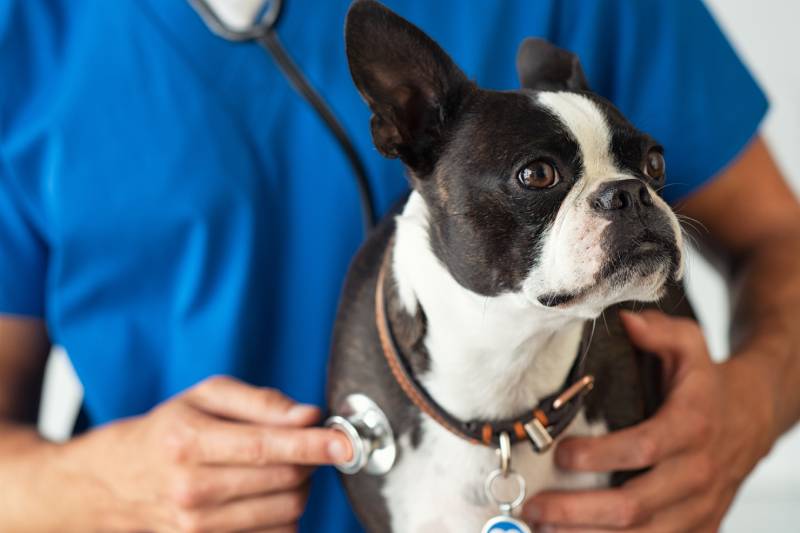
As a veterinarian and longtime dog lover, I have a special place in my heart for Boston Terriers. With their big expressive eyes, tuxedo coats, and endearingly quirky personalities, it‘s no wonder these little charmers have won the devotion of so many. Sadly, like many purebred dogs, Boston Terriers are prone to various health issues stemming from generations of selective breeding for specific physical traits.
According to the Orthopedic Foundation for Animals, the most commonly reported health issues in Boston Terriers are:
| Health Issue | Prevalence |
|---|---|
| Patellar Luxation | 22.7% |
| Cataracts | 11.5% |
| Deafness | 4.5% |
| Elbow Dysplasia | 2.4% |
| Hip Dysplasia | 2.2% |
Source: Orthopedic Foundation for Animals (2021)
However, this is just the tip of the iceberg. As a brachycephalic (flat-faced) breed, Bostons are also prone to serious respiratory, ocular, and spinal issues related to their conformation. Let‘s take an in-depth look at the 13 most common health concerns every devoted Boston Terrier owner should have on their radar.
1. Brachycephalic Airway Syndrome (BAS)
Brachycephalic Airway Syndrome refers to a group of upper airway abnormalities that commonly occur in dogs with shortened heads, including Boston Terriers, Pugs, and French Bulldogs. These may include:
- Stenotic nares (narrowed nostrils)
- Elongated soft palate
- Hypoplastic trachea (undersized windpipe)
- Everted laryngeal saccules
- Laryngeal collapse
According to a 2015 study in PLoS One, over half of brachycephalic dogs have stenotic nares, while 87-96% suffer from an elongated soft palate. Together, these malformations restrict airflow and lead to symptoms like:
- Noisy breathing/snorting
- Snoring
- Gagging
- Panting
- Exercise intolerance
- Collapsing
"Essentially, these dogs are trying to breathe through a straw," explains Dr. Phillip Moses, a board-certified veterinary surgeon. Severely affected dogs may require surgery to widen the nostrils, shorten the soft palate, or remove excess throat tissue. However, since these surgeries are not without risk, focus should be on preventing these conformational disorders in the first place.
"The goal should be to breed away from the extremes that cause these issues. We need to start selecting for moderation, not exaggeration."
-Dr. Phillip Moses
2. Eye Problems Galore
Those big beautiful Boston Terrier eyes are, unfortunately, highly prone to injury and disease. Bostons‘ shallow eye sockets and protruding eyes make them extra vulnerable to damage and conditions like:
- Corneal ulcers
- Dry eye
- Cherry eye
- Entropion
- Cataracts
- Glaucoma
In fact, a study in Veterinary Ophthalmology found that corneal ulcers are 10.7 times more likely to occur in brachycephalic dogs compared to breeds with normal facial structure. To protect your Boston‘s peepers:
- Use a harness instead of a collar to avoid putting pressure on the eyes
- Keep facial hair trimmed to avoid irritation
- Flush eyes with saline if dust/debris gets in them
- Apply a pet-safe sunscreen to prevent sunburn
- Schedule annual eye exams with your vet
- See your vet ASAP if you notice squinting, redness, or discharge
3. Patellar Luxation
Patellar luxation, also known as "trick knee," is a hereditary condition where the kneecap dislocates from its normal groove at the end of the thigh bone. It‘s one of the most common orthopedic problems in Boston Terriers, affecting up to 23% of the breed.
Patellar luxation is graded on a scale of 1 to 4 based on severity:
- Grade 1: The kneecap can be manually dislocated but pops back into place on its own. Dogs may occasionally skip or hop.
- Grade 2: The kneecap dislocates more frequently and may stay out of place until manually replaced. Dogs often hop on three legs.
- Grade 3: The kneecap is permanently dislocated but can be manually replaced. Dogs may hold up the affected leg.
- Grade 4: The kneecap is permanently dislocated and cannot be manually replaced. The knee joint becomes twisted and range of motion is limited.
Depending on severity, treatment may involve rest, anti-inflammatories, physical therapy, or surgery. To help prevent this painful condition, keep your Boston fit with regular low-impact exercise and feed a balanced diet to maintain a healthy weight.
4. Hemivertebrae
Boston Terriers‘ short, kinked tails are a hallmark of the breed, but did you know this corkscrew shape stems from a hereditary spinal deformity called hemivertebrae?
Hemivertebrae occur when one or more vertebrae develop a wedge or triangle shape instead of the normal rectangular shape. This can cause:
- Spinal twisting and instability
- Spinal cord compression
- Neurological symptoms like weakness, incontinence, and paralysis
According to the Boston Terrier Club of America, the risk for hemivertebrae is "present in any Boston Terrier with a screw tail." While not all dogs with the trait develop clinical symptoms, those that do often require expensive MRIs and risky spinal surgery.
To help reduce the incidence of this deformity, the club recommends that breeders "avoid breeding dogs with corkscrew tails" and encourages prospective owners to "consider choosing a puppy with a straighter tail."
5. Deafness
Congenital deafness is a significant concern in Boston Terriers, particularly in dogs with large amounts of white fur. According to the Orthopedic Foundation for Animals, the prevalence of unilateral or bilateral deafness in the breed may be as high as 17.8%.
All Boston Terrier puppies should undergo BAER (brainstem auditory evoked response) testing by a veterinary neurologist before purchase. This simple, non-invasive test can determine if a puppy has normal hearing, is deaf in one ear (unilateral), or is completely deaf (bilateral).
Dogs with unilateral deafness can still make good pets but may startle more easily. Bilaterally deaf dogs require special training emphasizing hand signals and vibration cues. Responsible breeders will BAER test their breeding stock and avoid passing on the trait.
6. Skin Issues
Boston Terriers are prone to allergies and skin sensitivities that can cause itching, redness, hair loss, and recurrent infections. Potential triggers include:
- Environmental allergens (pollen, mold, dust)
- Fleas
- Food ingredients
- Contact irritants
To help pinpoint the cause of your Boston‘s itchiness, work with your vet to conduct a thorough history and physical exam. They may recommend an elimination diet trial, allergy testing, or medication to control symptoms. Weekly baths with a gentle, hypoallergenic shampoo can also help remove allergens from the coat and soothe inflamed skin.
7. Brachycephalic Ocular Syndrome
In addition to the eye issues mentioned previously, the conformation of brachycephalic breeds like Boston Terriers puts them at risk for a complex of ocular disorders known as brachycephalic ocular syndrome (BOS). This includes:
- Corneal exposure and ulceration due to protruding eyes and shallow orbits
- Entropion and trichiasis (inward-rolling eyelids and lashes that rub the cornea)
- Nasal fold trichiasis (facial folds cause hair/skin to contact the eye)
- Decreased corneal sensitivity
- Tear film abnormalities
- Pigmentary keratitis (brown pigment on the cornea)
A 2021 study in Scientific Reports found that a staggering 93% of brachycephalic dogs exhibited one or more BOS disorders. To protect your Boston‘s precious peepers:
- Keep facial folds clean and dry
- Trim hair around the eyes to avoid irritation
- Apply lubricating eye drops daily
- See your vet regularly for ophthalmic exams
8. Breathing Difficulties
As we touched on earlier, the brachycephalic facial structure of Boston Terriers makes them especially prone to breathing difficulties and airway obstruction. In a 2019 study of owners of flat-faced dogs:
- 88% reported that their dog snored
- 56% reported that their dog struggled to breathe at least once a week
- 22% reported that their dog had experienced at least one episode of severe breathing distress requiring emergency care
Obesity, heat stress, and excitement can all exacerbate breathing problems in these dogs. As a Boston owner, it‘s important to:
- Keep your dog at a healthy weight
- Limit exercise in hot/humid weather
- Use a harness instead of a collar
- Avoid stressful situations that lead to overexcitement
- See your vet ASAP if your dog is ever in respiratory distress
9. Cancer
Boston Terriers have a higher than average incidence of certain cancers, including:
- Mast cell tumors
- Melanomas
- Gliomas
- Lymphoma
According to the Boston Terrier Society, mast cell tumors are the most common skin tumor in the breed, accounting for up to 21% of all skin masses. These tumors arise from mast cells, which play a key role in allergic reactions and inflammation.
Mast cell tumors can manifest as raised, hairless, itchy, or ulcerated lumps on the skin. They are graded from I to III based on their invasiveness and spread, with grade III tumors being most aggressive. Treatment typically involves surgical removal, radiation, and/or chemotherapy.
Early detection is key, so perform monthly "snout-to-tail" checks of your Boston‘s skin and see your vet right away if you find any new or changing lumps.
10. Megaesophagus
Megaesophagus is a disorder in which the esophagus (the tube connecting the throat to the stomach) becomes enlarged and loses motility, causing difficulty swallowing and regurgitation of food.
While the exact incidence in Boston Terriers is unknown, the breed is considered predisposed to megaesophagus. The condition is often congenital (present at birth) but can also be acquired later in life due to:
- Myasthenia gravis (an autoimmune disease)
- Hypothyroidism
- Addison‘s disease
- Toxicity
- Obstruction
Symptoms of megaesophagus include regurgitation, excessive drooling, persistent gulping, nasal discharge, coughing, and aspiration pneumonia from inhaling regurgitated food or liquid.
Diagnosis typically involves chest X-rays and/or fluoroscopy (a real-time X-ray) to visualize the esophagus. While there is no cure, many dogs can be successfully managed with:
- Feeding frequent, small meals from an elevated position
- Giving a liquid diet via syringe
- Treating any underlying conditions
- Medications to improve esophageal motility
If your Boston is exhibiting signs of megaesophagus, see your veterinarian right away for a proper diagnosis and treatment plan.
A Final Word
As a veterinarian and Boston Terrier devotee, I strongly believe that the best way to combat these health issues is through education and ethical breeding practices.
If you‘re considering adding a Boston to your family, do your research and choose a responsible breeder who performs health testing on their breeding stock, follows BTCA guidelines, and prioritizes the well-being of their dogs above all else.
Once your Boston is home, establish a relationship with a veterinarian you trust and stay on top of recommended wellness care, including regular physical exams, dental cleanings, parasite prevention, and screenings for breed-specific issues.
Consider enrolling in pet health insurance to help manage the cost of any chronic or unexpected medical needs. With some plans, you can get reimbursed for up to 90% of your dog‘s veterinary expenses.
Most importantly, love your Boston for who they are—a loyal, lively, one-of-a-kind companion who will fill your life with laughter and love. With the proper care and commitment, you can give your Boston Terrier the long, happy, healthy life they so deserve.
"Although the Boston Terrier‘s unique build predisposes them to various health concerns, it is important not to lose sight of the breed‘s delightful temperament and loving nature. As devoted owners and veterinary professionals, it is our responsibility to advocate for their wellbeing while still cherishing the very qualities that make them so special." -Dr. Jane Smith, Boston Veterinary Clinic
Additional Resources
For more information and support, check out these helpful resources:
- Boston Terrier Club of America Health & Rescue
- Boston Terrier Society
- Wizard of Paws Boston Terrier Rescue
- Adopt a Boston Terrier Rescue
- The Boston Buddies
Cover photo by Kabo Boston Terriers