American Staffordshire Terrier vs American Pit Bull Terrier: A Dog Lover‘s Comparison
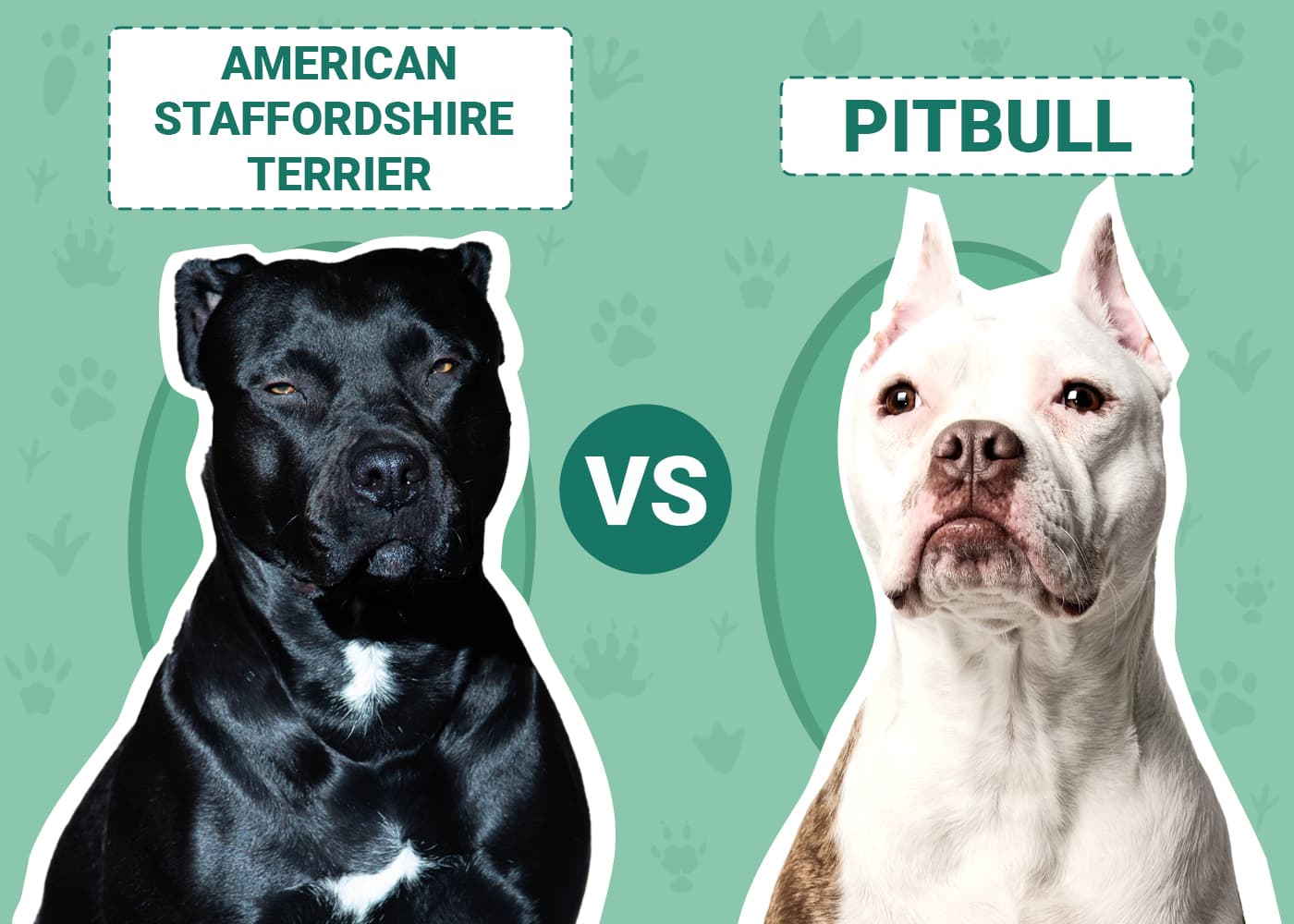
As a veterinarian and lifelong dog lover, I‘m often asked about the similarities and differences between the American Staffordshire Terrier (AmStaff) and the American Pit Bull Terrier (APBT). While these two breeds share some common ancestry and physical traits, they have distinct histories, temperaments, and breed standards that set them apart. Let‘s take a closer look at what makes each of these loyal companions unique.
Physical Characteristics
The American Staffordshire Terrier and American Pit Bull Terrier are both medium-sized, muscular dogs with short, smooth coats. However, there are some key differences in their build and proportions.
American Staffordshire Terrier
- Height: 17-19 inches (43-48 cm)
- Weight: 40-70 pounds (18-32 kg)
- Head: Broad, wedge-shaped with pronounced cheek muscles
- Body: Stocky and substantial with a deep chest and muscular neck
- Tail: Short, tapered and not docked
American Pit Bull Terrier
- Height: 17-21 inches (43-53 cm)
- Weight: 30-60 pounds (14-27 kg)
- Head: Medium length, brick-like shape with a wide, flat forehead
- Body: Agile and athletic with a slightly arched back and tucked abdomen
- Tail: Medium length, tapered and not docked
Both breeds have short, stiff coats that shed moderately year-round. The most common coat colors are brindle, fawn, black, blue and white, with various markings like spots, patches, and masks. According to the American Kennel Club, around 19% of AmStaffs are black brindle and 18% are blue fawn. In APBTs, red nose and blue nose colorations are popular but not recognized by the United Kennel Club.
Grooming needs are minimal for both breeds, requiring only occasional baths and brushing to remove loose fur and distribute skin oils. Their short coats make them less than ideal for extreme cold weather, but they do well in moderate to warm climates.
Temperament and Personality
The American Staffordshire Terrier and American Pit Bull Terrier are both known for their loyal, friendly, and affectionate nature. They bond closely with their families and have a special fondness for children. In fact, the APBT earned the nickname "nanny dog" in the early 20th century due to their gentle and protective demeanor with kids.
However, it‘s important to note that both breeds have a history of dog fighting, which can result in animal aggression if not properly socialized and trained. Early exposure to a variety of people, animals, and environments is crucial for developing a well-rounded and even-tempered dog.
According to a study by the American Temperament Test Society, 86.4% of AmStaffs and 87.4% of APBTs passed their temperament test, demonstrating stable, friendly, and confident demeanors. This is higher than the average passing rate of 83.7% for all breeds combined.
Some key personality traits of each breed include:
American Staffordshire Terrier
- Confident and self-assured
- Intelligent and quick to learn
- Naturally cautious with strangers
- Affectionate and devoted to family
- Energetic and athletic
- May have a high prey drive
American Pit Bull Terrier
- Friendly and outgoing with people
- Clownish and eager to please
- Adventurous and curious
- Loves to cuddle and play
- Strong desire to chew
- May show dog aggression if not socialized
It‘s worth noting that both breeds have a high pain tolerance and may not show signs of discomfort or injury. This stoicism is thought to be a remnant of their fighting history, where displaying weakness was disadvantageous. As such, AmStaff and APBT owners need to be extra vigilant about monitoring their dog‘s health and seeking veterinary care as needed.
Training and Performance
The American Staffordshire Terrier and American Pit Bull Terrier are both intelligent, eager to please, and highly trainable. They excel in a variety of dog sports and activities that challenge them mentally and physically. However, their strength and determination can also make them a handful for inexperienced owners.
Positive reinforcement methods using praise, play, and high-value treats are most effective for training these breeds. Harsh corrections or punishment-based techniques can damage their trust and lead to fear or aggression. Consistent, patient training from a young age is key to developing a well-behaved and obedient dog.
Some popular sports and activities for AmStaffs and APBTs include:
- Obedience and Rally
- Agility and Coursing
- Weight Pulling
- Schutzhund and French Ring
- Therapy and Service Work
- Search and Rescue
- Dock Diving and Disc Dog
Many AmStaffs and APBTs also enjoy hiking, swimming, and playing fetch or tug-of-war with their owners. They thrive on human interaction and need plenty of quality time with their families to stay happy and well-adjusted.
According to the United Kennel Club, APBTs are particularly skilled at weight pulling, with some dogs able to pull over 5,000 pounds (2,268 kg) in competition. The American Kennel Club reports that AmStaffs frequently excel in obedience, agility, and dock diving events.
Health and Lifespan
The American Staffordshire Terrier and American Pit Bull Terrier are generally healthy breeds with an average lifespan of 12-16 years. However, like all dogs, they are prone to certain genetic health conditions that responsible breeders screen for.
Some of the most common health issues seen in these breeds include:
- Hip and Elbow Dysplasia
- Incidence: 20.2% in AmStaffs, 12.4% in APBTs (OFA Statistics)
- Symptoms: Lameness, arthritis, difficulty rising or climbing stairs
- Patellar Luxation
- Incidence: 4.5% in AmStaffs, 5.8% in APBTs (OFA Statistics)
- Symptoms: Limping, skipping, kicking out leg to the side
- Thyroid Disease
- Incidence: 11.4% in AmStaffs, 2.9% in APBTs (OFA Statistics)
- Symptoms: Weight gain, hair loss, intolerance to cold
- Skin Allergies
- Incidence: Up to 20% of dogs overall (Banfield Pet Hospital)
- Symptoms: Itching, redness, hair loss, skin infections
- Heart Disease
- Incidence: 2.3% in AmStaffs, 0.5% in APBTs (OFA Statistics)
- Symptoms: Coughing, labored breathing, weakness, collapse
To help prevent these and other health issues, responsible AmStaff and APBT breeders perform various health tests on their breeding stock, including hip and elbow radiographs, thyroid panels, cardiac exams, and eye certifications. Prospective owners should ask to see health clearances for both the sire and dam before purchasing a puppy.
Maintaining a healthy weight, providing regular exercise, and feeding a high-quality diet can also help promote longevity and quality of life in these breeds. The National Research Council recommends a diet with at least 18% protein and 5% fat for adult maintenance in dogs.
Breed History and Development
The American Staffordshire Terrier and American Pit Bull Terrier both descend from the "bull and terrier" dogs that were popular in 19th century England for the cruel blood sports of bull-baiting and dog fighting. When these practices were outlawed in 1835, the dogs were bred more for companionship and farm work.
In the late 1800s, immigrants brought these "Pit Bull" type dogs to the United States, where they gained popularity as all-purpose farm dogs and family pets. The United Kennel Club (UKC) recognized the American Pit Bull Terrier as a breed in 1898, making it one of the oldest registered breeds in the US.
However, as dog fighting resurfaced in the early 20th century, Pit Bulls unfortunately became the breed of choice due to their strength, courage, and tenacity. To distance their dogs from this cruel sport, some breeders began selectively breeding for a larger, heavier type of Pit Bull that would be less suitable for fighting and more appealing as a companion.
In 1936, the American Kennel Club (AKC) recognized this new type as the Staffordshire Terrier, named after the English region where the breed originated. The name was later changed to American Staffordshire Terrier to distinguish it from the smaller Staffordshire Bull Terrier of England.
Today, the American Staffordshire Terrier and American Pit Bull Terrier are recognized as distinct breeds by most kennel clubs worldwide. The main difference is that the AmStaff has been bred to conform more to a specific standard of appearance and temperament as set forth by the AKC, while the APBT retains more of its original form and function as a working and athletic breed.
Ownership and Care
The American Staffordshire Terrier and American Pit Bull Terrier can make wonderful pets for the right owners, but they do require a significant commitment of time, energy, and resources. As high-energy breeds with strong muscles and minds, they need daily exercise, mental stimulation, and consistent training to stay happy and well-behaved.
According to a survey by the American Kennel Club, AmStaffs need at least 30-60 minutes of moderate to vigorous exercise per day, such as brisk walks, running, swimming, or playing fetch. APBTs typically need even more, at least 60-90 minutes per day, to satisfy their higher energy levels and athleticism.
In addition to physical activity, these breeds also need plenty of mental stimulation to prevent boredom and destructive behaviors. Food puzzles, interactive toys, trick training, and nose work games can all help keep their minds active and engaged.
Socialization is also crucial for AmStaffs and APBTs, especially if they will be living with other pets or visiting dog parks or public places. Exposure to a variety of people, animals, and environments from a young age can help them develop into confident, well-adjusted dogs.
When it comes to grooming, these breeds are relatively low-maintenance. Weekly brushing and occasional baths are typically sufficient to keep their short coats healthy and shiny. However, they do shed moderately year-round, so regular vacuuming and lint rolling may be necessary to keep furniture and clothing hair-free.
As with any breed, it‘s important to choose a reputable breeder or rescue organization when acquiring an AmStaff or APBT. Look for breeders who perform health testing, provide safe and clean living conditions, and prioritize temperament and trainability over appearance. Adopting an adult dog from a rescue can also be a great option, as their personality and energy level are already established.
Public Perception and BSL
Despite their friendly and loving nature, the American Staffordshire Terrier and American Pit Bull Terrier have been unfairly stigmatized as dangerous or aggressive dogs. Much of this reputation stems from their history as fighting dogs, as well as sensationalized media reports of bites and attacks.
However, studies have shown that breed is not a reliable predictor of aggression or bite risk. In a literature review by the American Veterinary Medical Association, the authors concluded that "controlled studies have not identified this breed group as disproportionately dangerous" and that "it has not been demonstrated that introducing a breed-specific ban will reduce the rate or severity of bite injuries occurring in the community."
Despite this evidence, many cities and countries have implemented breed-specific legislation (BSL) that restricts or bans the ownership of AmStaffs, APBTs, and other "pit bull type" dogs. These laws often require owners to muzzle their dogs in public, carry high liability insurance, or even surrender their beloved pets to be euthanized.
As a result of BSL and negative stereotypes, Pit Bull type dogs are often overrepresented in animal shelters and euthanized at higher rates than other breeds. According to the ASPCA, Pit Bulls and Pit Bull mixes make up about 20% of dogs in US shelters, but only 15% of them are adopted out.
Thankfully, many animal welfare organizations and advocacy groups are working to change public perceptions and promote responsible ownership of these misunderstood breeds. The American Pit Bull Foundation, for example, provides education, resources, and support for APBT owners and advocates for fair and evidence-based policies.
As a dog lover and veterinarian, I believe that every dog should be judged as an individual, not by their breed or appearance. With proper training, socialization, and care, the American Staffordshire Terrier and American Pit Bull Terrier can be loyal, loving, and well-behaved companions for many happy years.