Can Dogs Really Smile? Decoding Your Canine‘s Happy Grin

As a lifelong dog lover, I‘ve always been enchanted by my canine companions‘ uncanny ability to smile. You know the look – that big, goofy grin with tongue lolling out and eyes squinted in pure bliss. It never fails to make me smile back, my heart swelling with affection for these joyful creatures. But are dogs actually smiling at us, or is that gleeful expression something else entirely? Let‘s take a closer look at the science and emotions behind your pup‘s infectious grin.
The Anatomy of a Dog Smile
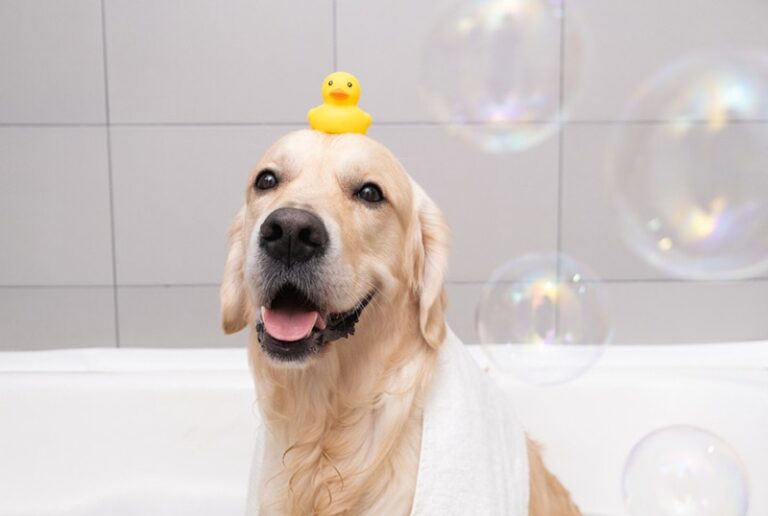
First, let‘s break down what a dog "smile" really looks like. That classic happy expression is characterized by:
- A relaxed, open mouth with tongue hanging out
- Soft, squinty eyes
- Ears held back or in a neutral position
- A wiggly body and gently wagging tail
It‘s a full-body display of relaxed contentment. But while it looks a lot like a human grin, the mechanics behind a dog‘s smiling face are quite different.
"Dogs have fewer facial muscles than humans, so they aren‘t able to make such a wide range of expressions," explains Dr. Karen B. London, a Certified Applied Animal Behaviorist. "What looks to us like a smile is more of a total-body gesture."
Rather than deliberately contracting muscles to pull the lips back, dogs‘ "smiles" are a natural result of their relaxed, open-mouthed posture. And instead of crinkling the muscles around the eyes to squint like we do, that soft gaze is simply a result of the eyes‘ position and the pull of gravity on relaxed eyelids.
So while dogs may not be able to grin exactly like us, their happy expressions are no less genuine. That blissed-out face is a true reflection of a joyful emotional state.
The Evolution of Dog Expressions
But why do dogs make facial expressions that so closely mimic our own while their wolf ancestors remain much stonier-faced? The answer lies in the incredible evolutionary journey dogs have taken alongside humans.
"Dogs have been shaped by centuries of domestication and interaction with humans," notes Dr. London. "We‘ve essentially bred them to be more expressive and in-tune with our social signals."
In fact, a groundbreaking 2022 study comparing the anatomy and behavior of dogs and wolves found that domesticated dogs have evolved unique facial muscles that allow them to more effectively make endearing expressions like raised eyebrows and puppy-dog eyes. The researchers believe selection pressures for human-friendly communication traits have physically reshaped dog faces over time.
So while wolf puppies and dog puppies are born with very similar facial features, dogs‘ expressions grow more animated as they develop close bonds with human caretakers. It‘s a striking example of dogs and humans evolving together, our two species becoming more alike to facilitate deep emotional connections. Pretty amazing stuff!
Why Dogs Smile
Now that we know dogs have the physical capability to smile, the question remains – why do they do it? Animal behavior experts believe doggie grins are primarily a learned response to positive human reactions.
"Dogs are incredibly adept at reading human body language and quickly figure out what kinds of expressions get them the most attention and rewards from people," explains Dr. London.
In other words, when your dog gives you that big, silly grin, they‘re communicating how much they adore you while also encouraging you to keep the cuddles, praise, and playtime coming. Smart pups!
Interestingly, dogs aren‘t just grinning for their own benefit – they‘re also smiling to make us happy. Research has shown that dogs and humans experience an uptick in oxytocin, the bonding hormone, when gazing into each other‘s eyes. Mimicking our facial expressions seems to be another way dogs strengthen that deep, cross-species attachment.
"When your dog smiles at you, they‘re essentially saying ‘I love you‘ in a way they know you‘ll respond to," explains Dr. London. "It‘s a mutual positive feedback loop that promotes bonding on both sides."
As a devoted dog mom, this certainly rings true for me. When my goofy pup flashes me that huge, adoring grin, I can‘t help but melt into a puddle of affection every time. And the more I laugh and snuggle her, the more she wiggles with happiness and smiles even wider. It‘s like we‘re two peas in an oxytocin-fueled pod!
Common Smiling Breeds
While all dogs can learn to smile for the camera, some breeds seem to have extra expressive faces and more readily flash those big grins. In my experience, the smiliest pups include:
- Golden Retrievers
- Labrador Retrievers
- Pitbulls/Staffordshire Terriers
- Pembroke Welsh Corgis
- Siberian Huskies
- Australian Shepherds
- Beagles
These sociable, high-energy breeds are often the first to whip out a big smile when they‘re happy and excited. Golden and Lab smiles in particular have become so iconic they‘ve launched a thousand memes!
On the flip side, brachycephalic (flat-faced) breeds like Pugs, French Bulldogs, and Boston Terriers can appear to smile less often simply due to their scrunched facial anatomy. And breeds with droopier mouths like Basset Hounds, Bloodhounds, Mastiffs, and Newfoundlands often look like they‘re frowning even when they‘re perfectly content.
But that doesn‘t mean these dogs are any less expressive or joyful – they simply show their happiness in slightly different ways. Newfies are famous for their massive, wiggly whole-body wags, while Frenchies‘ entire faces scrunch up with joy. It‘s all about looking at the full picture rather than just the mouth.
Submissive Grins vs. True Smiles
Of course, not all toothy dog expressions indicate happiness. The submissive grin, characterized by pulled back lips, squinting eyes, lowered ears, and overall tension, is often mistaken for a smile but communicates something very different.
"Submissive grins are an appeasement behavior dogs use when they‘re feeling nervous or intimidated," explains Dr. Karla N. Walborn, a board-certified veterinary behaviorist. "You‘ll often see them when a dog is unsure about a new person or animal and wants to communicate they mean no harm."
Other key body language cues that distinguish a stressy submissive grin from a relaxed happy smile include:
- A lowered head and body posture
- Tail held low or tucked under
- Lip licking and yawning
- Avoidance of direct eye contact
As a responsible dog lover, it‘s so important to learn how to tell a true smile apart from a tense grin so you can give your pup space when they need it. When I see a dog displaying submissive body language, I know to back off and let them relax rather than pushing them to interact.
The Naughtiest Grins
Okay, while we‘re talking about different doggie grins, I have to address the "guilt" smile. You know, the one your pup flashes after they‘ve stolen a slice of pizza or shredded your favorite slippers. That sheepish, squinty-eyed look seems to scream "I know I‘ve been naughty but I‘m too cute to be mad at!"
As it turns out, this "guilty" grin isn‘t a true admission of remorse but rather another appeasement gesture. When you discover your dog‘s misdeed and they pin back their ears, avoid eye contact, and curl their lips in a tentative smile, they‘re actually trying to defuse your anger and avoid a scolding.
"Dogs don‘t feel guilt in the same way humans do," explains Dr. Walborn. "But they are experts at reading our expressions and adopting submissive postures to escape punishment when they know they‘ve displeased us."
So while I can‘t help but chuckle at my dog‘s "who, me?" grin when I find her elbow-deep in the trash, I have to remember not to anthropomorphize her too much. That impish smile isn‘t saying "sorry" but rather "please don‘t be mad at me!"
Encouraging Natural Smiles
As a dog mom, there‘s nothing I love more than seeing my pups light up with joy, their faces split into big, natural grins. Here are a few of my favorite ways to encourage genuine doggie smiles:
-
Engage in plenty of their favorite activities like fetch, tug, swimming, and hiking. A tired dog is a happy dog!
-
Play the "get it" game by tossing a coveted toy or treat and cheering them on as they scramble after it. Bonus points for big, dramatic tosses!
-
Spend uninterrupted snuggle time petting them just how they like and gazing lovingly into their eyes. Oxytocin boost for you both!
-
Enroll in a fun positive reinforcement training class to help build their confidence and strengthen your bond. Clicker training works wonders for shy smiles.
-
Schedule regular doggie play dates with their favorite furry friends. Social time is smile time!
-
Tell them what good puppies they are in that high-pitched happy voice they love so much. Don‘t hold back on the silly nicknames!
The more your pup associates you with the activities that bring them the most joy, the more they‘ll want to share their happiness with a great big grin. And is there anything better than a smiling dog? I think not!
Seeing Your Dog‘s Smile
At the end of the day, even though dogs may not smile in exactly the same way humans do, those joyful expressions are undeniably real. When your best furry friend gazes up at you, face glowing with adoration and contentment, they‘re saying "I love you" in a language you both understand.
The more you learn to interpret your dog‘s unique expressions and body language, the deeper your bond will grow. Knowing how to tell a relaxed grin from a submissive one and the difference between a true smile and a guilty grimace will help you meet their needs and avoid behavior misunderstandings.
But most importantly, smiling back at your pup and sharing in their joy is one of the greatest gifts of dog ownership. Taking the time to celebrate your unique connection, whether it‘s through a silly game of tug or a cuddle on the couch, is what makes the dog-human relationship so incredibly special.
So keep grinning at your canine companion and delighting in their smiles in return. In a world of so much uncertainty, we could all use more uninhibited moments of pure, in-the-moment joy. And that‘s exactly what our smiling dogs provide.
Sources
Bremhorst A, Sutter NA, Würbel H, Mills DS, Riemer S. Differences in facial expressions during positive anticipation and frustration in dogs awaiting a reward. Sci Rep. 2022 Apr 26;12(1):6862. doi: 10.1038/s41598-022-10275-z.
Brubaker L, Dasgupta S, Bhattacharjee D, Bhadra A, Udell MAR. Differences in problem-solving between canid populations: Do domestication and lifetime experience affect persistence? Anim Cogn. 2017 Jul;20(4):717-723. doi: 10.1007/s10071-017-1093-7.
Correia-Caeiro C, Guo K, Mills DS. Perception of dynamic facial expressions of emotion between dogs and humans. Anim Cogn. 2021 May;24(3):465-476. doi: 10.1007/s10071-020-01348-5.
Kaminski J, Waller BM, Diogo R, Hartstone-Rose A, Burrows AM. Evolution of facial muscle anatomy in dogs. Proc Natl Acad Sci U S A. 2019 Jul 16;116(29):14677-14681. doi: 10.1073/pnas.1820653116.
Kramer RSS. Dogs recognize dog and human emotions. Current Biology. 2022;32(8):1711. doi:10.1016/j.cub.2022.03.013.
Somppi S, Törnqvist H, Kujala MV, Hänninen L, Krause CM, Vainio O. Dogs evaluate threatening facial expressions by their biological validity–Evidence from gazing patterns. PLoS One. 2016 Jan 13;11(1):e0143047. doi: 10.1371/journal.pone.0143047.
Sümegi Z, Oláh K, Topál J. Emotional contagion in dogs as measured by change in cognitive task performance. Appl Anim Behav Sci. 2014;160:106-115. doi:10.1016/j.applanim.2014.09.001.