Everything You Need to Know About the Adorable Chion Dog Breed
Are you looking for a small, spunky, and affectionate canine companion? Look no further than the charming Chion! This designer breed is a cross between a purebred Chihuahua and a purebred Papillon, inheriting many of the best traits from each parent breed. With their petite size, outgoing personality, and loving nature, Chions have been winning hearts as devoted lap dogs and family pets.
Whether you‘re already the proud owner of a Chion or considering adding one to your home, this comprehensive guide will tell you everything you need to know about these delightful dogs. We‘ll cover their history, physical characteristics, temperament, training and exercise needs, grooming, potential health concerns, and more. By the end, you‘ll be well-equipped to provide a Chion with a loving forever home where they can thrive.
The Origins of the Chion
Chions are a relatively new designer dog breed, believed to have originated in the United States sometime in the 1990s or early 2000s. As with many hybrid breeds, they were likely first created by accident when a purebred Chihuahua and Papillon mated. However, as their popularity grew, some breeders began intentionally mixing Chihuahuas and Papillons to produce Chion puppies.
The Chihuahua, one of the world‘s smallest dog breeds, hails from Mexico and has a long history as a companion dog dating back to ancient times. These alert, confident little dogs have a reputation for being loyal to their owners but wary of strangers. The Papillon, named for its upright, wing-shaped ears that resemble a butterfly, is an elegant toy breed that originated in Europe several hundred years ago. Prized for their friendly, outgoing demeanor, Papillons are intelligent and easy to train.
Chions were developed with the goal of creating an affectionate, low-maintenance companion dog well-suited for apartment living and families. By combining the best qualities of Chihuahuas and Papillons, the result is a small, adaptable dog with a big personality. Today, while Chions have a growing fan base, they are still a fairly rare breed. Most litters are produced by reputable breeders focused on creating healthy, even-tempered dogs.
Physical Characteristics of Chions
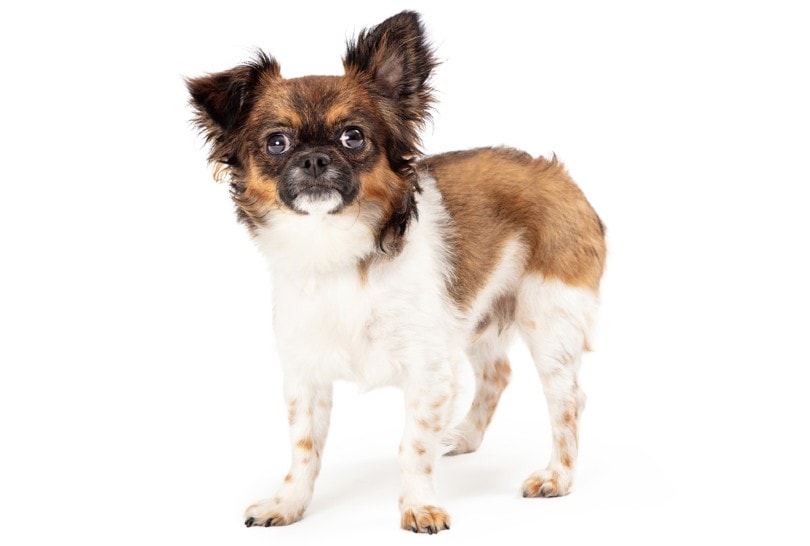
Since the Chion is a mixed breed, their appearance can vary significantly depending on which parent breed they take after more. In general, they are small dogs classified in the toy group, typically weighing between 5 and 12 pounds and standing 6 to 10 inches tall at the shoulder when fully grown. They have a lean, agile build that is slightly longer than tall.
One of the Chion‘s most distinctive features is its ears, which may resemble the upright, wing-shaped ears of the Papillon, the erect ears of the Chihuahua, or a combination of both. They have a short to medium-length muzzle, round expressive eyes, and a curved tail that is carried up and over the back.
Chions can inherit a variety of coat types and colors from their parent breeds. Most have a medium-length, straight, fine coat, but some may have longer, silky hair more similar to a Papillon or the shorter, denser coat of a Chihuahua. Common coat colors include white, black, tan, fawn, sable, brindle, and various combinations of these colors. Some Chions have symmetrical markings on the face, ears, and chest.
The Chion‘s Temperament and Personality
Chions are known for being loyal, affectionate dogs who thrive on human companionship. They bond closely with their owners and love nothing more than snuggling in a warm lap. While they may be initially shy or reserved around strangers, they tend to warm up quickly with proper socialization.
As with many toy breeds, Chions can be prone to excessive barking, especially if they are bored or feel threatened. They have a strong prey drive and will readily chase after small animals like rodents and birds, so they should always be walked on a leash and supervised in a securely fenced area. Some Chions may also show a stubborn streak or try to assert dominance, but this can usually be managed with consistent, positive training.
Despite their small size, Chions have a medium to high energy level and require daily exercise and mental stimulation to stay happy and well-behaved. They enjoy brisk walks, playing fetch, and learning new tricks. Many Chions also excel at dog sports like agility and obedience thanks to their agility, intelligence, and eagerness to please.
While Chions can adapt well to apartment living, they are not ideal for homes where they will be left alone for long periods. They thrive on attention and companionship, so they are prone to developing separation anxiety. Chions generally get along well with children and other dogs, especially if raised together, but interactions should always be supervised due to their small size. They may view smaller pets like hamsters and birds as prey.
Grooming a Chion
Chions are a relatively low-maintenance breed when it comes to grooming, but regular brushing and the occasional bath are still important to keep their coat healthy and free of tangles. Most Chions will need brushing a few times a week with a soft-bristle brush or slicker brush. Those with longer, silkier coats like a Papillon may need more frequent brushing to prevent mats and tangles.
In addition to coat care, it‘s important to trim your Chion‘s nails regularly to prevent overgrowth and discomfort. Dental hygiene is also essential. Toy breeds are especially prone to dental issues, so daily toothbrushing with a dog-safe toothpaste along with professional cleanings as recommended by your vet can help maintain healthy teeth and gums.
Training and Socialization
Like all dogs, Chions benefit from early socialization and training to help them grow into well-adjusted, well-mannered companions. Socialization should start in puppyhood and involve positive exposure to a variety of people, animals, and environments. Puppy kindergarten and obedience classes are a great way for Chions to socialize with other dogs and start learning basic manners.
Chions are intelligent dogs who are generally easy to train with positive reinforcement methods like praise, play, and treats. They can be sensitive, so harsh corrections should be avoided. Keep training sessions short and fun to hold your Chion‘s interest.
While Chions have a reputation for being yappy, excessive barking can usually be managed with consistent training. Teaching a "quiet" command and providing plenty of exercise and mental stimulation can help prevent boredom barking.
As with any toy breed, it‘s important to teach children how to properly interact with a Chion to avoid accidental injury. Chions may be initially wary of strangers, so care should be taken when introducing them to unfamiliar people and animals. With patience and positive reinforcement, most Chions can learn to be friendly and confident in new situations.
Chion Health and Life Expectancy
Chions are generally healthy dogs with a lifespan of 12 to 15 years on average. However, like all breeds, they can be prone to certain genetic health conditions. Some of the health issues seen in Chions include:
- Patellar luxation: Dislocation of the kneecap, which can cause lameness and arthritis. Surgery may be required in severe cases.
- Tracheal collapse: A condition where the trachea (windpipe) collapses, causing breathing difficulty. More commonly seen in Chihuahuas.
- Dental issues: Toy breeds have crowded jaws and are prone to tooth decay, gum disease, and early tooth loss.
- Hypoglycemia: Low blood sugar, which can cause weakness, seizures, and collapse if not treated promptly. More common in puppies and tiny dogs.
- Eye problems: Issues like glaucoma, corneal ulcers, and dry eye are sometimes seen in Chions.
Not all Chions will develop these health problems, but it‘s important to be aware of them and work with a reputable breeder who health tests their dogs. Regular check-ups, preventive care, and a healthy lifestyle can help a Chion live a long, happy life.
Is a Chion Right For You?
A Chion can make a wonderful companion for the right person or family. They are best suited for homes where someone is around for most of the day to provide attention, exercise, and potty breaks. Chions can adapt well to apartment living as long as they get daily walks and playtime.
Because of their small size, Chions are not the best fit for families with very young children who may accidentally injure them. They also have a strong prey drive and may not do well in homes with small animals like hamsters, guinea pigs, or birds.
If you‘re considering adding a Chion to your life, be prepared for a devoted companion who will want to be with you as much as possible. In return, you‘ll be rewarded with a spunky, affectionate little dog who is sure to bring a smile to your face every day.
When looking for a Chion puppy, be sure to work with a reputable breeder who health tests their dogs and prioritizes temperament. Avoid pet stores and online sellers, as these puppies often come from puppy mills. A well-bred Chion puppy typically costs between $500 and $1,500.
In addition to the initial purchase price, be prepared for the ongoing costs of dog ownership, including food, toys, grooming supplies, preventive vet care, and emergency medical expenses. Fortunately, as a small breed, Chions tend to have lower food and medication costs than larger dogs.
Fun Facts About Chions
- The name "Chion" is a combination of Chihuahua and Papillon.
- Chions are sometimes called Chi-paps, Pap-chis, or Papihuahuas.
- Many Chions have a unique "butterfly nose" with partially pigmented skin thanks to the influence of their Papillon heritage.
- Papillons were a favorite breed of royalty and nobility in Europe several hundred years ago. The breed name means "butterfly" in French.
- Chihuahuas are the national dog of Mexico and have a history dating back to the ancient Toltec civilization.
- Because the Chion is a mixed breed, they are not recognized by major kennel clubs like the AKC or UKC. However, they can be registered with hybrid breed registries.
- Celebrity owners of Chions and similar Chihuahua mixes include Jamie Foxx and Hilary Duff.
Final Thoughts
The Chion may be small in stature, but they have a big personality and even bigger heart. With their unique heritage, charming good looks, and devoted nature, it‘s no wonder these spunky little dogs are gaining fans around the world.
Whether you‘re looking for a lap warmer, a walking buddy, or a canine sports partner, a well-bred Chion could be your ideal match. Just be prepared to have a constant companion who will want to be by your side as much as possible! With love, care, and proper training, your Chion will be a cherished member of the family for many years to come.