Male vs. Female Bernese Mountain Dogs: An In-Depth Guide for Dog Lovers
Introduction
If you‘re considering adding a Bernese Mountain dog to your life, you may be wondering whether a male or female is the best fit for your household. While every dog is unique, there are some fascinating differences between the sexes in this breed that are worth exploring.
As a lifelong dog lover and Berner enthusiast, I‘ve done extensive research and consulted with numerous breed experts to bring you this comprehensive guide. We‘ll delve into the physical, behavioral, and health distinctions between male and female Berners, as well as practical considerations for living with each sex. My goal is to help you make an informed decision and set you up for success with your new best friend.
A Brief History of the Breed
To understand the differences between male and female Bernese Mountain dogs, it‘s helpful to know a bit about their heritage. The breed originated in the Swiss Alps, where they were developed as versatile working dogs who could herd cattle, pull carts, and serve as loyal companions.
According to the Bernese Mountain Dog Club of America, the breed standard was first established in 1907, with the first Berners imported to the United States in 1926. While they‘re no longer used extensively for their original working purposes, modern Berners maintain many of the traits that made them such valued farm dogs.
Physical Differences
One of the most obvious distinctions between male and female Bernese Mountain dogs is size. Males are significantly larger on average, as evidenced by this data from the American Kennel Club:
| Sex | Height | Weight |
|---|---|---|
| Male | 25-27.5 inches | 80-115 pounds |
| Female | 23-26 inches | 70-95 pounds |
As you can see, the typical male Berner is both taller and heavier than the typical female. Chris Taylor, a Bernese Mountain dog breeder with over 20 years of experience, confirms that this size difference is one of the primary factors that influences prospective owners.
"Many people are drawn to female Berners because they take up a bit less space and have lower food and medication costs over their lifetime," Taylor explains. "But for those who want a truly substantial dog, males are the way to go."
Beyond overall size, there are a few other physical differences between male and female Berners:
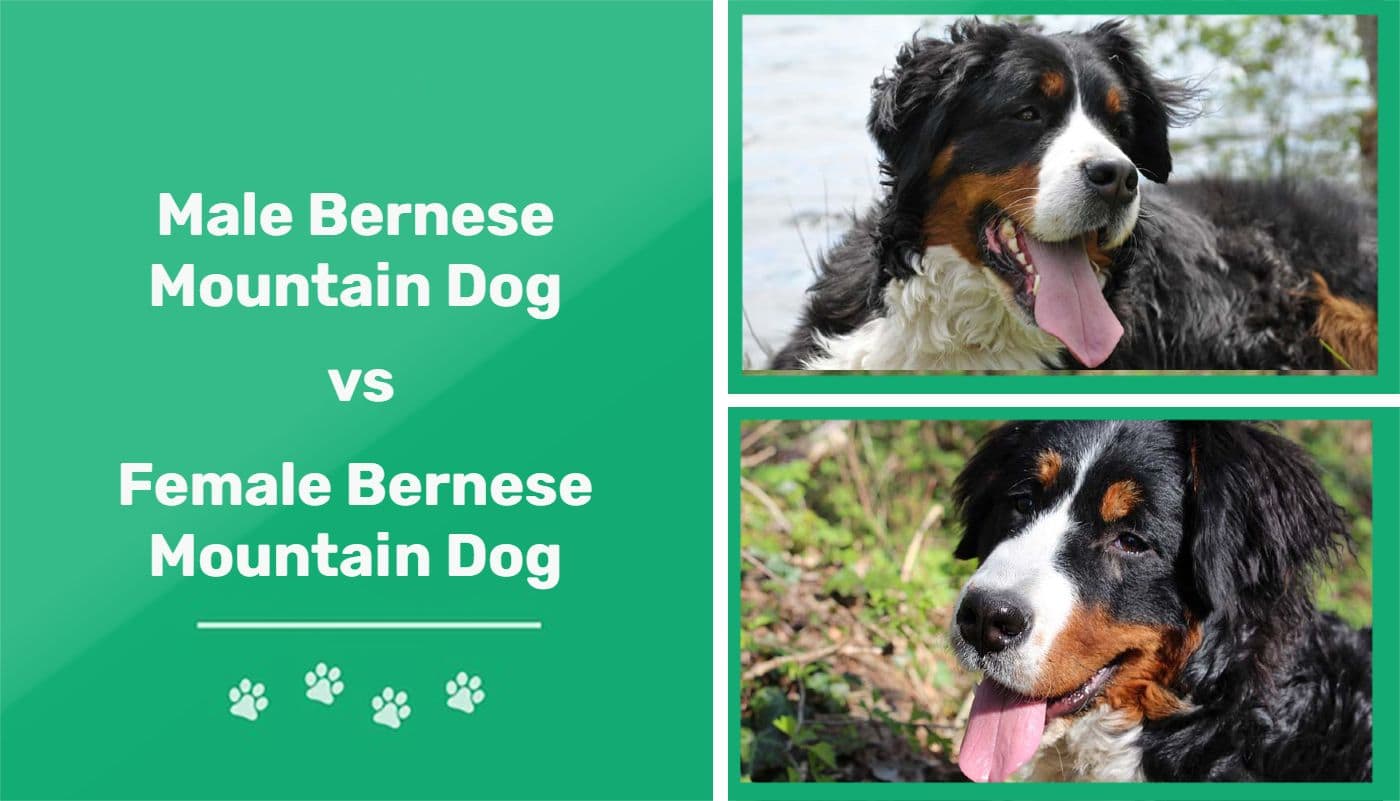
- Head size: Males tend to have larger, broader heads and more pronounced jowls.
- Build: Males are often bulkier and more muscular, while females have a slightly leaner, more streamlined look.
- Coat: Both sexes have the breed‘s signature tricolor coat, but some experts report that males are more likely to have a fuller, denser coat with more intense markings.
It‘s important to note that these are generalizations – individual dogs may deviate from these norms. Additionally, much of a Berner‘s adult appearance will depend on their genetic background, so be sure to take a look at a pup‘s parents and pedigree for a sense of how they may turn out.
Behavioral Differences
Temperament is another area where male and female Bernese Mountain dogs tend to diverge. Merry Fitzgerald, a certified professional dog trainer who specializes in working with the breed, shares her insights:
"In my experience, male Berners are typically more affectionate and people-oriented, while females are a bit more independent. Males often have a ‘velcro dog‘ personality and want to be with their person all the time. Females are loving but may be content to do their own thing more often."
Fitzgerald notes that these differences often become more pronounced as dogs mature. "Puppies of both sexes tend to be friendly, playful balls of fluff. But as they approach social maturity between 1-2 years old, males often retain a more goofy, puppy-like demeanor while females settle into themselves sooner."
Other behavioral distinctions between male and female Berners include:
- Stubbornness: Females are often more strong-willed and independent, which can make them more challenging to train. Males are typically more biddable and eager to please.
- Mood swings: Unspayed females can experience hormonal fluctuations during their heat cycles that may lead to moodiness or irritability. Males are generally more steady in temperament.
- Trainability: Because of their people-pleasing nature, males tend to be very food motivated which can make training a bit easier. Females may be more responsive to praise and physical affection.
Of course, every dog is an individual and proper socialization and training are essential for a well-behaved Berner of either sex. But in general, Fitzgerald recommends that families with young children lean towards a male. "They tend to be more patient and tolerant, while females may have less tolerance for rough play or unpredictable kid behavior."
Health Concerns
Like many large breeds, Bernese Mountain dogs are prone to certain health issues that potential owners should be aware of. While both sexes can be affected by conditions like hip and elbow dysplasia, progressive retinal atrophy, and hypothyroidism, a few disorders are seen more frequently in one sex versus the other.
Dr. Michelle Newfield, a veterinarian with a special interest in Bernese Mountain dog health, explains that one of the most significant differences is the risk of certain cancers. "Unspayed females have a much higher incidence of mammary tumors compared to spayed females or males. On the flip side, males are at greater risk for conditions like dilated cardiomyopathy, a serious heart disease."
Newfield stresses the importance of purchasing puppies from reputable breeders who perform health screenings on their breeding stock. "A good breeder will have records showing that a puppy‘s parents are free of hip and elbow dysplasia, eye diseases, and other inheritable conditions. They‘ll also be able to tell you about the longevity of a pup‘s lineage."
In terms of lifespan, Newfield says there isn‘t a significant difference between the sexes. "The average lifespan for a Bernese Mountain dog is 7-10 years. While some studies have found that females live 1-2 years longer on average, the disparity isn‘t as large as it is in some other breeds."
Spaying and Neutering
Another factor to consider when choosing between a male and female Berner is spaying and neutering. Most veterinarians recommend these procedures to prevent unintended breeding and reduce certain health risks. However, the timing of spaying and neutering is somewhat controversial in this breed.
Dr. Newfield explains: "Some studies have found that spaying or neutering large breed dogs too early – before they‘re fully grown – may increase the risk of orthopedic issues like hip dysplasia and cruciate ligament tears. For Bernese Mountain dogs, we typically advise waiting until at least 12-18 months old, especially for females."
She notes that this recommendation is based on allowing the dogs‘ bones and joints to fully develop under the influence of their natural hormones. "It‘s a balancing act because we want to prevent unwanted pregnancies and minimize the risk of mammary tumors, but not at the expense of long-term orthopedic health."
If you‘re not planning to breed your Berner, talk to your veterinarian about the best timing for spaying or neutering based on your dog‘s individual needs.
Living with Male and Female Berners
Now that we‘ve covered the key differences between male and female Bernese Mountain dogs, let‘s talk about what it‘s actually like to live with each sex.
As the proud owner of both a male and female Berner, I can attest that they each bring unique joys and challenges. My male is an absolute sweetheart who loves nothing more than cuddling up next to me on the couch. He‘s always eager to please and quick to learn new tricks – as long as there are treats involved! On the downside, he‘s a bit of a space hog and his constant need for attention can be overwhelming at times.
My female, on the other hand, is a bit more aloof. She‘s content to lay at my feet rather than on my lap, and she‘s not as food-motivated which can make training a bit trickier. However, I appreciate her independent spirit and the fact that she doesn‘t require my constant attention. She‘s also more protective of our home and family, which gives me an added sense of security.
Compatibility with other dogs is another factor to consider. In my experience, male Berners tend to do well with dogs of both sexes, while females can sometimes be more selective in their canine companions. My female gets along great with our male but is less tolerant of other females, especially if they try to challenge her authority.
With kids, both sexes of Berners can be excellent companions as long as they‘re properly socialized and trained. Males may have a slight edge due to their more patient, easy-going nature, but I‘ve known many loving and gentle female Berners as well.
Ultimately, the best way to ensure a good fit is to work with a responsible breeder who can match you with a puppy that suits your lifestyle and personality. Many breeders even offer temperament testing to help identify which pups in a litter are most compatible with different types of homes.
Conclusion
In conclusion, while there are some fascinating differences between male and female Bernese Mountain dogs, neither sex is inherently "better" than the other. Both can make wonderful companions for the right person or family.
When deciding between a male and female Berner, consider your lifestyle, living situation, and what you‘re looking for in a canine companion. If you want a larger, more affectionate dog that will stick by your side, a male may be the way to go. If you prefer a more compact, independent spirit who doesn‘t require as much constant attention, a female could be your ideal match.
Regardless of which sex you choose, be prepared for a dog with a big heart and an even bigger presence in your life. With proper care, training, and love, your Bernese Mountain Dog will be a loyal and cherished friend for many years to come.