The Dog Lover‘s Guide to Choosing and Using the Best Grooming Scissors
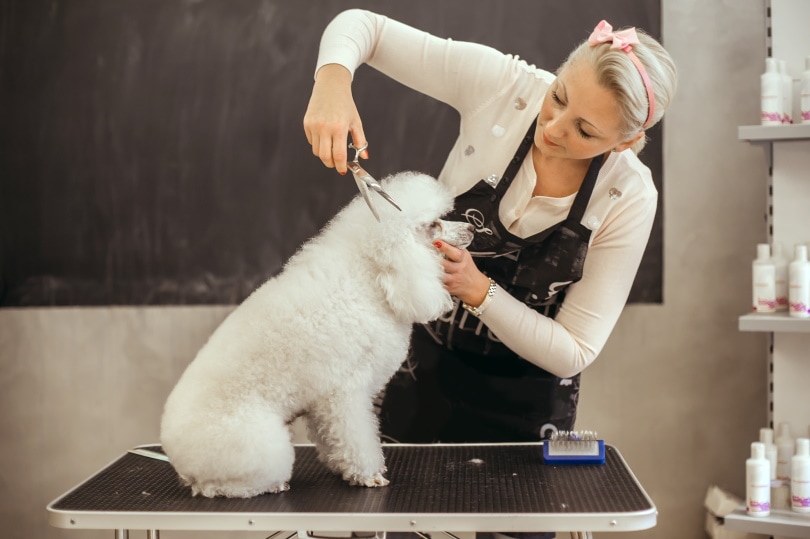
As a dog lover, you know that regular grooming is an essential part of keeping your furry friend healthy, comfortable and looking their best. While taking your pup to a professional groomer may be convenient, it can also put a significant dent in your wallet over time. According to a survey by Mobile Pet Grooming, the average cost of a basic grooming session for a medium-sized dog is $45-$75, with prices even higher for large dogs or those with special needs. Multiply that by every 6-12 weeks, and you‘re looking at $300-$600+ per year!
Luckily, with a little practice and patience, you can achieve professional-looking results at home using the right grooming tools – starting with a high-quality pair of dog grooming scissors. Investing in a good set of scissors not only saves money in the long run, but also allows you to bond with your pup through regular grooming sessions. In a 2022 survey of U.S. dog owners, 38% said they groom their dog at home at least once a month. As more owners discover the benefits and enjoyment of home grooming, this number is likely to grow.
Why Quality Matters in Dog Grooming Shears
If you‘re new to grooming your dog at home, it may be tempting to reach for any old pair of household scissors. However, using the wrong type of scissors can actually do more harm than good. Here are a few key reasons to invest in a pair of scissors made specifically for grooming dogs:
-
Safety: Dog grooming scissors have rounded tips and finer blades to prevent accidental nicks and cuts on your dog‘s sensitive skin. They are also designed to cut through fur cleanly without pulling or snagging.
-
Comfort: High-quality scissors have an ergonomic handle design to reduce hand fatigue during longer grooming sessions. Many also include comfort grips and adjustable tension knobs for a personalized fit.
-
Efficiency: Sharp, precise blades allow you to work quickly and efficiently, reducing the amount of time your dog needs to stay still on the grooming table. This is especially important for dogs who are anxious or easily bored during grooming.
-
Results: The right scissors help you achieve an even, polished trim that looks like it was done by a pro. Cheap, dull scissors can leave your dog‘s coat looking choppy, uneven or full of split ends.
Dr. Jerry Klein, Chief Veterinary Officer of the American Kennel Club, sums it up well: "Using high-quality grooming tools is not just a matter of vanity – it‘s a matter of your dog‘s health and well-being. Dull, poorly made scissors can cause painful pulling and increase the risk of injury. Investing in good scissors, along with proper brushing and bathing supplies, sets you up for grooming success."
Types of Dog Grooming Scissors and Their Uses

Different types of grooming require different tools, and scissors are no exception. Here‘s a quick overview of the most common types of dog grooming shears and what they‘re used for:
-
Straight Shears: These are the most versatile and frequently used type of grooming scissors. They have straight blades that typically range from 6.5 to 9 inches long, making them suitable for trimming the body, legs and tail on medium to large sized dogs. Smaller pairs (4-6.5 inches) are handy for more detailed work on smaller breeds.
-
Curved Shears: As the name suggests, curved shears have a slight curve to the blades that contours to your dog‘s body. This allows for easier and safer trimming around rounded areas like the ears, face, paws and sanitary areas. The curved shape also helps create a soft, natural look rather than sharp angles. Most curved shears are between 5-7.5 inches long.
-
Thinning Shears: Also called blending shears, these feature one blade with teeth and one straight blade. They are used to thin out thick or heavy coats, blend away choppy lines, and soften the transition between shorter and longer fur. Thinning shears remove less hair with each cut for a gentler effect. Available tooth counts typically range from 25-45 teeth.
-
Chunkers: Chunkers have fewer, wider teeth than typical thinning shears (usually 4-15 teeth). They quickly remove bulk and lightly texturize the coat for breeds like Spaniels and Setters. Some chunkers also feature a " skip tooth " blade for even more texture and definition.
Your dog‘s size, coat type and grooming needs will determine which types of scissors will work best. Most home groomers do well with at least one pair each of straight shears, curved shears and thinning shears in their toolbox. For an in-depth size guide, refer to the chart below:
| Dog Size/Breed Examples | Recommended Scissor Lengths |
|---|---|
| Toy (< 10 lbs.) Chihuahua, Yorkie, Pomeranian | 4-5.5" straight, 4-5" curved |
| Small (10-20 lbs.) Maltese, Shih-Tzu, Pug | 5-6.5" straight, 5-6" curved |
| Medium (20-50 lbs.) Beagle, Brittany, Collie | 6.5-8" straight, 6.5-7" curved |
| Large (50-90 lbs.) Golden, Shepherd, Poodle | 7.5-8.5" straight, 7-8" curved |
| Giant (> 90 lbs.) Newfoundland, Great Dane, Pyrenees | 8-10" straight, 8-9" curved |
*Note – These are general guidelines. The ideal size may vary based on factors such as your hand size, strength and grooming technique. When in doubt, opt for the longer end of the range for your dog‘s size.
Factors to Consider When Choosing Dog Grooming Shears
With so many different dog grooming shears on the market, selecting the right pair can feel overwhelming at first. Here are some of the most important factors to keep in mind:
Blade Material and Edge
High-end dog grooming scissors typically have blades made from stainless steel, which offers a good balance of sharpness and durability. For an even longer-lasting edge, look for scissors with blades made from high-carbon Japanese or German steel, which are prized for their hardness and corrosion resistance.
Some scissors also feature a convex edge, which means the blades are slightly curved to create a sharper cutting angle. This allows the blades to slice through hair more smoothly and stay sharp longer between professional sharpenings.
Another option is titanium-coated blades, which have a smooth, anti-stick finish. The main benefit of titanium is that it resists wear and chemical damage better than stainless steel alone. However, not all titanium coatings are created equal – look for reputable brands to ensure a quality finish.
Handle Comfort and Adjustability
Poorly designed scissors handles can quickly lead to hand cramps and fatigue, making grooming a chore. Look for scissors with handles that fit comfortably in your hand and feel balanced, not too nose or tail heavy.
Ergonomic handles may feature a slight curve or angled thumb hole to keep your wrist in a more neutral position. Padded or rubber grips can also enhance comfort, but make sure they are removable for easy cleaning.
Another useful feature is an adjustable tension knob that allows you to dial in the perfect amount of resistance in the blades‘ movement. This comes in handy to accommodate different coat types and your personal preference.
Length and Weight
The ideal length of your dog grooming scissors will depend on your dog‘s size, coat type and the area you are trimming. Longer shears work best for large areas and dogs, while shorter ones offer more control for precision work. Refer to the size chart above for recommendations.
Weight is another factor that affects control and hand fatigue. Heavier scissors may feel more substantial, but can be tiring to use for long periods. Aim for scissors that feel sturdy but lightweight enough to maneuver easily.
Price and Brand Reputation
You can find basic dog grooming shears for under $20, but investing a bit more will get you a higher quality pair that performs better and lasts longer. Expect to spend at least $30-$50 for a good entry-level pair of scissors from a reputable brand.
Professional groomers often spend $100-$400+ on their scissors, but that doesn‘t mean you need to break the bank to get great results at home. Look for brands that are well-reviewed by other home groomers and offer a warranty against defects.
Our Top Picks for the Best Dog Grooming Scissors in 2024
Taking into account the factors above, here are our top recommendations for high-quality dog grooming scissors in different categories:
Best All-Around Dog Grooming Scissors
Kamisori X4 Professional Grooming Shears 8.5"

Reasons to Buy:
- Titanium coated stainless steel blades slice smoothly and resist corrosion
- Perfectly balanced handle with removable comfort grips
- Dial adjustable tension knob and silent pivot bolt
- Includes leather storage case
- Limited lifetime warranty
Downsides: Higher price point
Best Value Dog Grooming Scissors
Chibuy Professional 8.5" Straight Shears

Reasons to Buy:
- Japanese stainless steel blades with convex edge for smooth cutting
- Lightweight hollow ground handles with removable silencer and finger rest
- Great all-around length for medium to large sized dogs
- Affordable price point with excellent review
- Includes storage pouch and 2 extra silencers
Downsides: May not hold edge quite as long as higher priced shears
Best Curved Dog Grooming Scissors
Sensei Swivel Curved Dog Grooming Scissors 7.5"

Reasons to Buy:
- Curved blades with rounded tips for safe and precise trimming of paws, ears and face
- Unique 360 degree swivel thumb allows freedom of hand movement
- Offset ergonomic handle relieves wrist strain
- Sharp stainless steel blades with hand-sharpened edge
- Comes with a sturdy storage case
Downsides: May have a learning curve if you‘ve never used swivel scissors before
Best Small Dog and Detail Scissors
ConairPro Canine Series 5" Detail Scissors

Reasons to Buy:
- Small 5" size is perfect for tiny paws and faces
- Round tip and micro-serrated edge for safety and grip
- Economical price
- Lightweight for extra control
- Smooth cutting action
Downsides: Not suitable for body trimming on larger dogs
Best Thinning/Blending Dog Shears
Purple Dragon 7" 44 Tooth Thinning Scissors

Reasons to Buy:
- 44 teeth for smooth blending with minimal lines
- Hand sharpened stainless steel blades
- Rubber comfort grips and pre-set tension
- Affordable but high quality
- Cuts up to 45% of hair with each pass
Downsides: May struggle with very thick or matted coats
No matter which dog grooming scissors you choose, remember that practice and patience are key to achieving the best results. Take your time, keep your tools clean and sharp, and most importantly – have fun bonding with your furry friend through the grooming process!
Related Reading:
- How to Give Your Dog a Bath at Home: A Step-by-Step Guide
- The 10 Best Dog Nail Clippers and Grinders for At-Home Grooming
- How Often Should You Brush Your Dog‘s Teeth? A Vet‘s Advice