
Presa Canario vs. Cane Corso: The Main Differences (With Pictures)
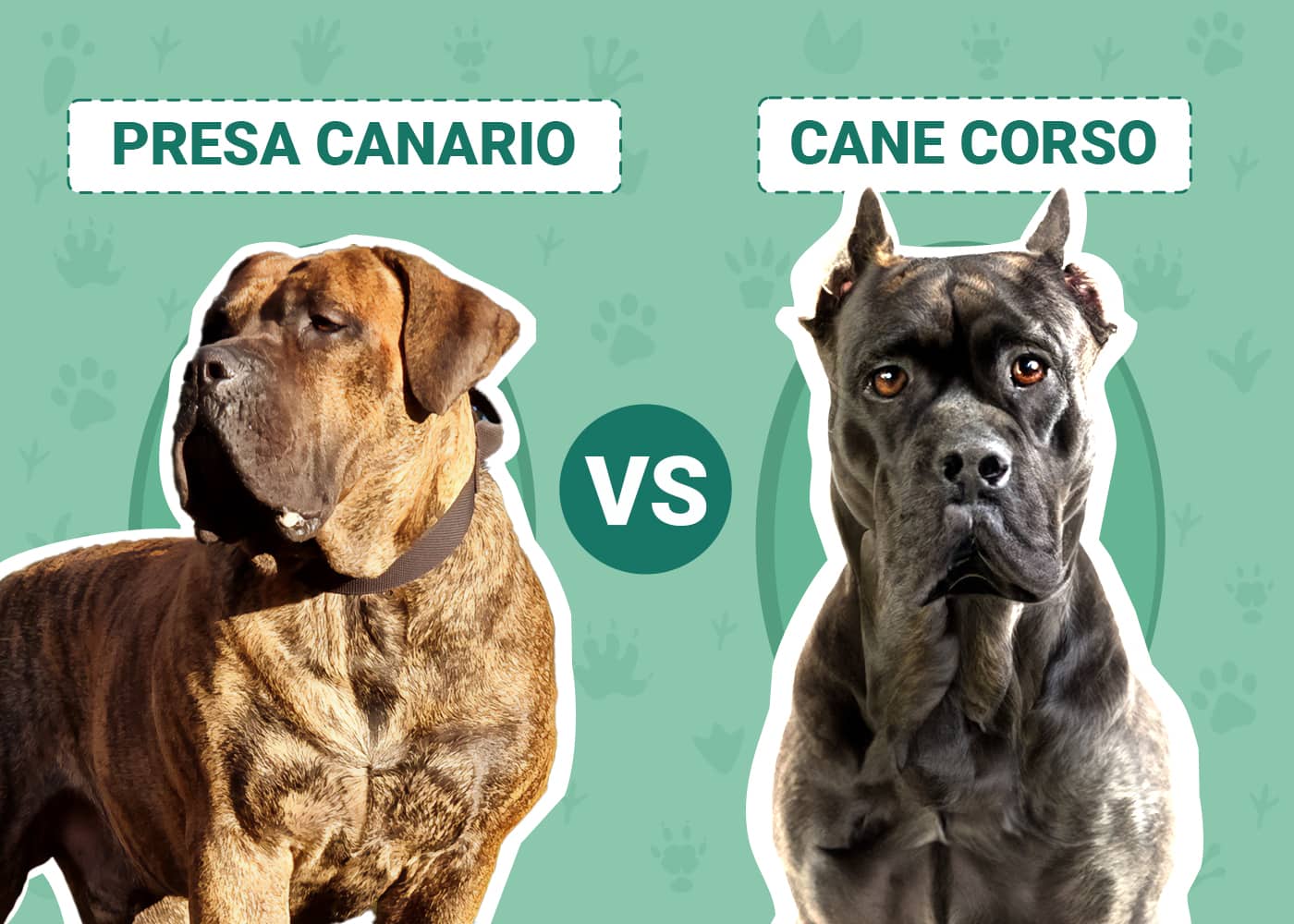
Trying to decide between a Presa Canario and a Cane Corso? These two mastiff-type breeds may look quite similar, but there are some key differences to be aware of when choosing which one is the right fit for your lifestyle. In this in-depth comparison, we‘ll cover the history, appearance, temperament, training, health, and ideal living situation for the Presa Canario versus the Cane Corso. By the end, you‘ll have a clear idea of which powerful pooch is your perfect match!
Breed History
Though the Presa Canario and Cane Corso share a mastiff lineage, they each have unique origin stories. The Presa Canario hails from the Canary Islands, where it was developed as a working farm dog in the 18th century. These dogs earned their "presa" moniker, meaning "catch," from their job of catching and driving cattle on the islands‘ farms.
Unfortunately, the Presa Canario was also used in the now-outlawed practice of dog fighting after being introduced to the island of Gran Canaria in the 1940s. The breed nearly went extinct after dog fighting was banned in the 1940s, but dedicated breeders passionate about the Presa Canario worked hard to preserve this impressive breed.
In contrast, the Cane Corso‘s history goes back much further to ancient Rome! This Italian breed was used as a war dog and guardian, prized for its strength, courage, and trainability. As the Western Empire declined, the Cane Corso transitioned to new jobs like wild boar hunting, livestock guarding, and farm work. The breed faced near extinction after World War II, but started gaining popularity again in the 1970s thanks to breed fanciers.
Today, both the Presa Canario and Cane Corso are still fairly rare breeds. The Presa Canario was recognized by the UKC in 2001 and is part of the AKC‘s Foundation Stock Service, the first step to full recognition. The Cane Corso joined the AKC‘s Working Group in 2010.
Physical Characteristics
At first glance, the Presa Canario and Cane Corso look quite similar with their large, muscular bodies, broad heads, and short coats. However, there are some distinguishing features between the two breeds.
The Presa Canario is slightly larger and more powerful looking, standing 22-26 inches tall and weighing 85-130 pounds. They have a thick and muscular neck, a barrel-shaped chest, and a heavy rectangular head. Their ears are usually cropped upright and their tail is commonly docked short. The short and flat coat comes in all shades of fawn and brindle, always with a black mask.
Cane Corsos are just a bit smaller, though still an impressive size at 23-27 inches tall and 90-110 pounds. They also have a large head and sturdy body, but are less bulky and mastiff-like than the Presa Canario. Their ears are cropped or left natural, and the long tail is typically docked. The coat is short, stiff, and comes in black, gray, fawn, and red with a black or gray mask. Some white markings on the chest, toes, and chin are allowed.
Temperament
As former guard dogs and protectors, both the Presa Canario and Cane Corso are confident, alert, territorial, and aloof with strangers. Early and ongoing socialization is a must for these powerful breeds to ensure they don‘t become overly suspicious or aggressive as they mature. With their families, both breeds are loving, loyal, and eager to please. The Cane Corso tends to bond very strongly to their primary caretaker, while the Presa Canario is more affectionate and social with the whole family.
The Presa Canario has a reputation for being strong-willed and a bit stubborn at times. They need a confident and consistent leader or they will assume the dominant role in the home. This bold and brave breed won‘t back down from a perceived threat, so it‘s critical to teach them what is a real danger versus a normal situation.
Though still protective, the Cane Corso is the more trainable and agreeable of the two breeds. They are calmer and more serious than the fun-loving Presa Canario, always on the lookout for potential danger. The Cane Corso is often described as having an "on and off switch" – attentive and protective when working, but relaxed and gentle with family.
Training
Both the Presa Canario and Cane Corso are intelligent and trainable, but they require an experienced owner committed to firm and consistent training from day one. Socialization is also extremely important for these guardian breeds so they learn to discriminate between real and imagined threats. A well-bred Presa Canario or Cane Corso should be accepting of strangers when properly introduced, never fearful or aggressive.
Given their size, strength, and guarding heritage, the Presa Canario and Cane Corso respond best to positive reinforcement techniques and trust-based training. Harsh corrections or punishment can damage your bond and provoke defensiveness in these sensitive breeds. Short, fun training sessions that emphasize obedience and impulse control are ideal. Many Cane Corsos and Presa Canarios enjoy the mental stimulation of advanced training like tracking, scent work, carting, and protection sports.
The Cane Corso may have a slight edge in the training department thanks to their calmer demeanor and strong work ethic. They excel in police and military work that requires a serious, focused temperament. The more energetic and distractible Presa Canario often needs a firmer hand to keep them on task. But with an experienced leader, both breeds are capable of learning almost anything!
Exercise Needs
The Presa Canario and Cane Corso are both large, active breeds that need ample daily exercise to stay physically and mentally satisfied. At minimum, expect to provide an hour or more of moderate to vigorous activity per day, like brisk walks, hikes, swimming, or playtime. Having a securely fenced yard is ideal so these dogs can stretch their legs and patrol their territory in between outings.
Without enough exercise, the Presa Canario and Cane Corso are prone to destructive boredom behaviors like excessive chewing, barking, and digging. Built-up energy can also bubble over into overexcitement and unruly behavior if not given a proper outlet. Puzzle toys and games like hide-and-seek are great for giving these intelligent breeds an extra mental workout.
One difference is the Presa Canario tends to have a stronger prey drive and desire to chase compared to the Cane Corso. A bored Presa may take themselves on an adventure by jumping the fence to follow an interesting scent or squirrel. Cane Corsos are usually more content to relax at home between walks and play sessions.
Grooming and Maintenance
Thanks to their short, smooth coats, both the Presa Canario and Cane Corso are relatively low maintenance in the grooming department. Weekly brushing with a rubber curry brush or hound glove will keep loose hair and dander under control. They are average shedders and may "blow coat" once or twice a year as the seasons change, requiring extra brushing during this time.
These tidy breeds don‘t tend to have any odor and only need occasional baths as needed. Their nails should be trimmed regularly to avoid overgrowth and splitting. Dental care is also important for these large breeds prone to tartar buildup on their big teeth. Brush their teeth daily or give veterinarian-approved dental chews for healthy gums.
One potential grooming difference is the Cane Corso‘s ears are more prone to infection if left natural (uncropped) due to the lack of air circulation in their small, folded ears. If you opt not to crop your Cane Corso‘s ears, be diligent about checking and cleaning them weekly to avoid painful infections. The Presa Canario‘s upright natural ears allow for better air flow and are less infection-prone.
Health
Both breeds are generally healthy, but like all dogs, they can be prone to certain genetic disorders. Responsible Presa Canario and Cane Corso breeders screen their stock for conditions such as hip and elbow dysplasia, eye disease, autoimmune thyroiditis, and cardiac issues. With proper care and nutrition, a healthy Presa Canario has an average lifespan of 9-11 years, while a typical Cane Corso lives between 9-12 years.
As large breeds, the Presa Canario and Cane Corso are both at risk for gastric dilatation volvulus (GDV), also known as bloat. This life-threatening condition occurs when the stomach fills with gas and twists on itself, cutting off blood supply. Symptoms include restlessness, pacing, unproductive vomiting, and a distended abdomen. GDV requires immediate emergency veterinary care. Feeding smaller meals and limiting activity before and after meals can help prevent bloat.
Joint disorders like hip and elbow dysplasia are always a concern with large and giant breeds as well. Keeping your Presa Canario or Cane Corso slim and avoiding excessive repetitive exercise on hard surfaces can help protect their joints. Supplementation with omega fatty acids and joint support products like glucosamine may also be beneficial.
Ideal Living Situation
Given their size and guardian nature, both the Presa Canario and Cane Corso are best suited for homes with plenty of space and a securely fenced yard. These breeds need room to roam and patrol, and do best with an experienced owner committed to training and socialization. They can adapt to apartment life if given enough daily exercise and mental stimulation, but a house with a yard is preferable.
The Presa Canario is the more social and playful of the two breeds, enjoying the company of their whole family. They get along well with children when raised with them and properly trained, though their size and exuberance can be overwhelming for small kids. The Presa Canario can also coexist peacefully with other dogs and even cats if socialized to them early, though same-sex aggression is possible between dominant males.
The Cane Corso tends to be more of a one-person dog, bonding strongly to their primary caretaker while being tolerant of other family members. They can do well with children, but are better suited for homes with older kids due to their large size and protective instincts. The Cane Corso usually does best as an only pet, though they may accept a canine companion of the opposite sex if raised together. Their higher prey drive means cats and small animals are not recommended.
Both breeds are natural watchdogs and will bark to alert you of potential danger, but they are not typically nuisance barkers. The Presa Canario and Cane Corso are territorial and protective, making them excellent guard dogs. However, they should never be aggressive without cause and must have a secure, escape-proof enclosure to prevent roaming.
Final Thoughts
The Presa Canario and Cane Corso may look similar, but these mastiff-type breeds have some key differences in personality and ideal living situations. The Presa Canario is the more playful and social of the two, enjoying the company of their whole family and playing well with children. They adapt more easily to homes with other dogs when properly socialized. In contrast, the Cane Corso is more of a one-person dog with a strong bond to their primary caretaker. They tend to be more serious and aloof, and usually do best as an only dog.
Both breeds require an experienced owner ready to commit significant time to training, socialization, and exercise. The Presa Canario can be strong-willed and a bit stubborn at times, while the Cane Corso is known for their trainability and work ethic. A home with a securely fenced yard and space for these large breeds to stretch out is a must.
With responsible breeding and ownership, the Presa Canario and Cane Corso can be stable, confident companions and guardians. Their impressive size and protective instincts may not be for everyone, but well-trained Presa Canarios and Cane Corsos are truly special dogs. If you‘re looking for a loyal, loving, and courageous canine partner, either of these mastiff breeds may be the right match for you!






)